GRAND TETON NATIONAL PARK — Riverbank erosion at the confluence of the Snake River and the Buffalo Fork will be addressed by Grand Teton National Park (GTNP) and the Federal Highway Administration starting this month.
In a Thursday announcement, GTNP stated that “accelerating erosion” near US26/89/191 at Moran Junction is creating a “significant risk to the road and the regional transportation network.” Completing this emergency work during the river’s low-flow period will aim to slow erosion and protect the highway from the encroaching river channel ahead of spring runoff.
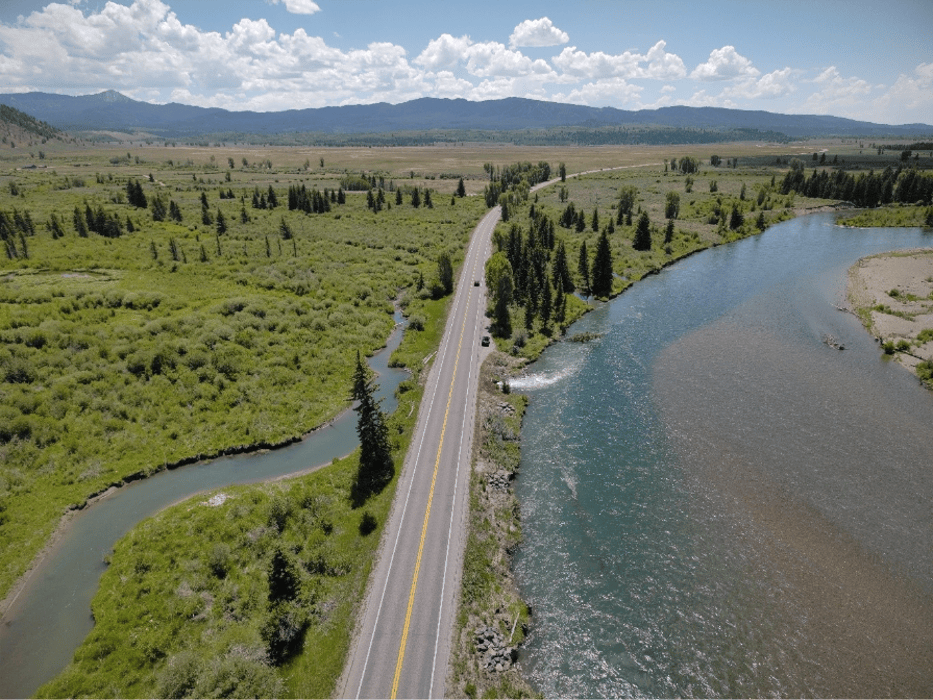
“Protecting this highway is about more than protecting a road,” GTNP Superintendent Chip Jenkins said in the announcement. “This is an essential transportation route for residents, visitors, businesses and communities throughout the region. We need to address the immediate threat while also developing a long-term solution that protects the highway and restores a healthy river corridor.”
Per GTNP, the highway sees roughly 900,000 vehicles per year as they zoom among Jackson, GTNP, Yellowstone National Park and communities across the West.
Work is scheduled to run for 12 weeks from October through December, depending on weather, river flows and site access. Construction will reduce traffic to one lane, with temporary lights and flaggers directing drivers. Delays of up to 20 minutes at a time are expected.
GTNP has seen a busy year for road projects: Moose-Wilson Road is closed for the season while construction is underway; a new roundabout is being built near the park’s entrance, updates to infrastructure at the Taggart Lake Trailhead have changed hiking access; and more parking is being added at the Death Canyon Trailhead. See GTNP’s dedicated park roads website before venturing out.