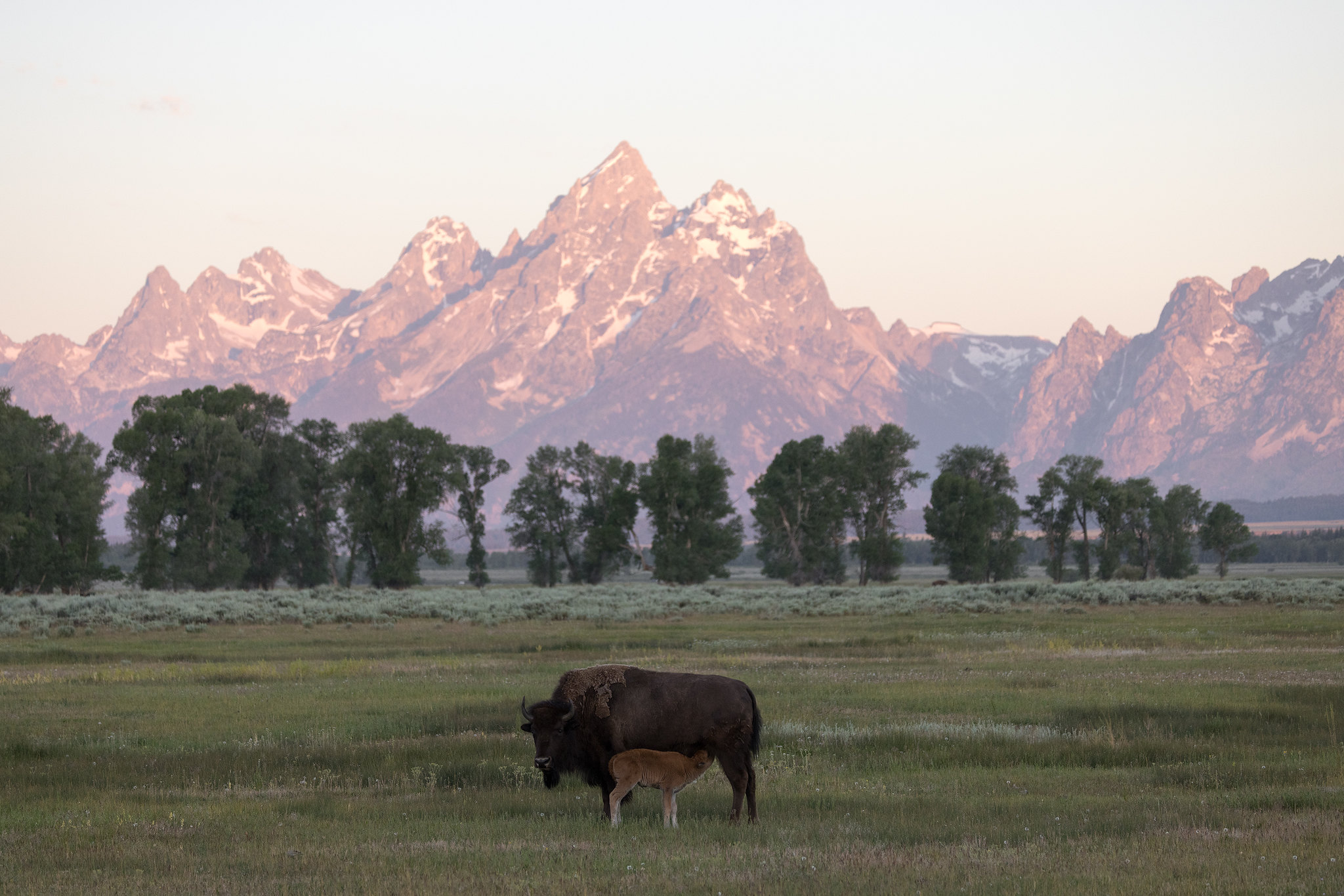
JACKSON, Wyo. — Baby animal lovers, it’s time to thrive.
In the Greater Yellowstone Ecosystem, late April and early May bring bison calves, known as “red dogs” for their reddish-brown newborn coats. They tend to turn darker brown by the end of summer, according to the National Park Service.


Born weighing about 30 to 70 pounds at birth, the calves can keep up with the herd two to three hours after birth. They are well protected by their mothers and other members of the herd and stay with their mothers for the first year of their lives.
Wolves and grizzly bears are bison’s only predators. Bison calves are especially vulnerable, but by adulthood, they can run up to 35 miles per hour.
Male bison can weigh up to 2,000 pounds and be up to 6 feet tall while females can reach up to 1,000 pounds and 4 or 5 feet in height. Bison are the largest mammals in North America.

With a life expectancy of about 15 to 20 years, female bison, called cows, have one calf per year and mate during the rut season, which lasts from July to August each year. The gestation period is about nine to nine and a half months.
An estimated 30 million to 60 million bison roamed North America before the mid-1800s. Native tribes refer to the animal as buffalo or “iinniiwa” by The Niitsitapi (Blackfoot), “tatanka” in Lakota, ivanbito in Diné (Navajo) or “Kuts” in Numa (Paiute).
Bison herds once ranged across the entire continent, from the plains of Mexico to the Appalachian Mountains, but the majority lived on the Great Plains.

With the arrival of European settlers and their expansion west during the 1800s, the bison population was extremely affected. Sport hunting, loss of habitat and a brutal campaign by the U.S Army, directly targeting native peoples’ way of life, nearly eradicated bison in North America.
By the 1970s, there were less than 500 animals left.
In 2018, Yellowstone National Park began to collaborate with federal partners and Tribal Nations to implement the Bison Conservation Transfer Program. The program’s goal is to identify migrating bison that don’t have brucellosis and transfer them to new areas instead of sending them to slaughter. Approximately 100 animals per year are transferred to Tribes in Wyoming.
According to Yellowstone National Park, the bison population in Yellowstone fluctuates from 2,300 to 5,500 animals in two subpopulations, defined by where they gather for breeding. The northern herd breeds in the Lamar Valley and on the high plateaus around it. The central herd breeds in Hayden Valley.

This story runs annually.