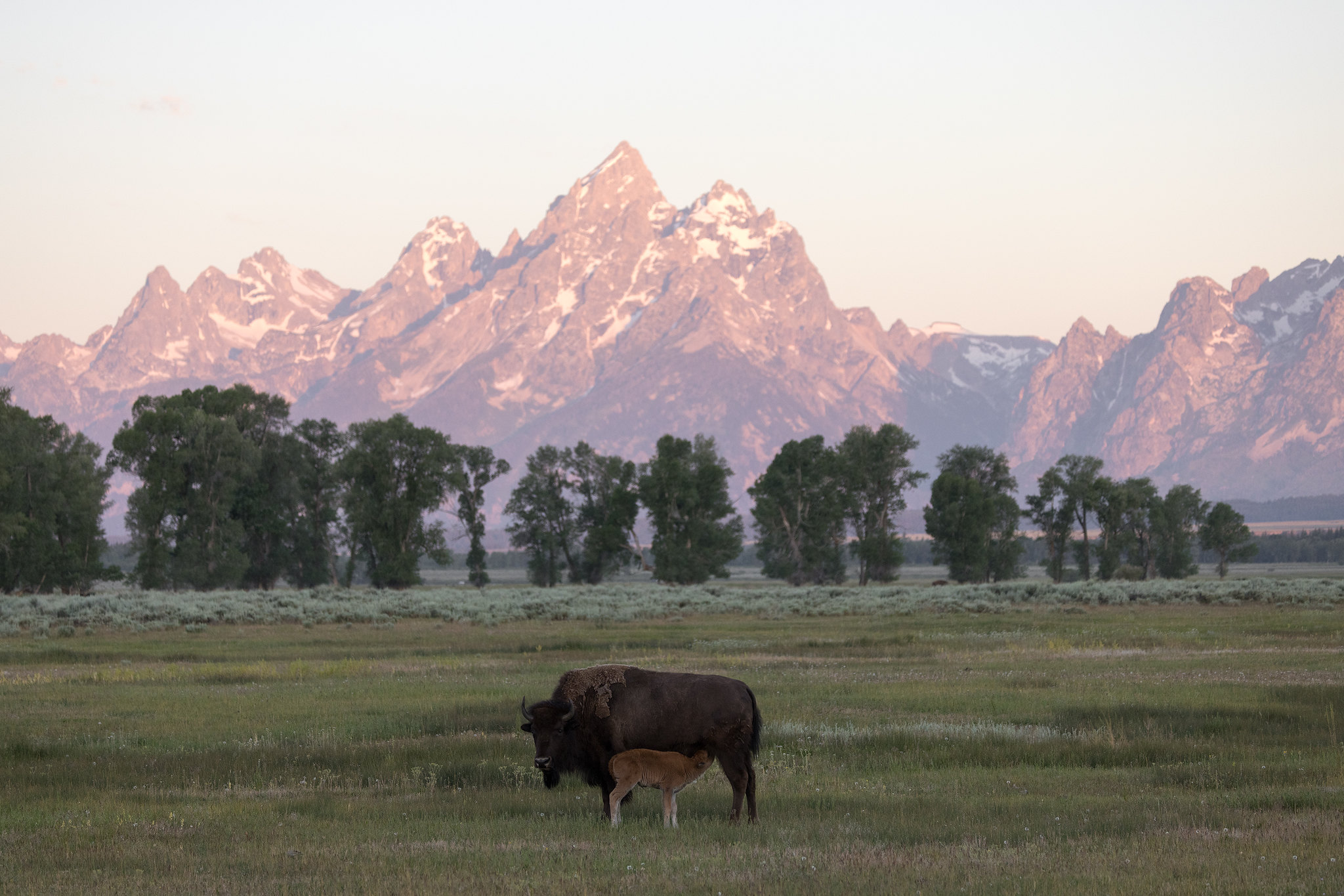
YELLOWSTONE — On, Monday, May 6, Yellowstone National Park (YNP) reminded travelers to slow down when visiting the park, and to be alert for migrating bison that are improving the park’s grasslands with their grazing.
According to YNP, Yellowstone bison comprise of the nation’s largest bison population on public land, and the park is the only place in the United States where the species has lived continuously since prehistoric times. In the spring, it’s not unusual to see hundreds of bison grazing in the Lamar Valley.
According to Unit Leader of the U.S. Geological Survey’s Wyoming Cooperative Fish and Wildlife Research Unit Matthew Kauffman, bison are needed to forage freely on the landscape to lengthen the springtime season of plant growth in Yellowstone. Heavy grazing, along with fertilization from urine and dung deposition, stimulates near-continual new plant growth, resulting in greener and more nutritious grasses.
“Data shows that grasses heavily grazed by bison were more productive compared to areas where bison where not allowed to graze,” Kauffman wrote in a United States Geological Survey (USGS) article. “The mowed-down forage had higher ratios of nitrogen to carbon, a standard measure of nutritional quality. And the green-up was earlier, faster, more intense and lasted longer.”
As a result of springtime roaming bison, YNP tells visitors to drive defensively and cautiously.
“Rush hour traffic can look a little different in Yellowstone, so ‘Enjoy the ride,'” YNP posted on its social media.
Bison herds often block the roads, and patience is needed when going to a destination.
“The park has hazards on the road you aren’t used to at home (like 2,000-lb. bison),” YNP said in its Facebook announcement. “Follow speed limits and stay with your car if you’re stuck in a wildlife jam. When you want to take a photo or look around, use pullouts to avoid blocking traffic and damaging vegetation.”