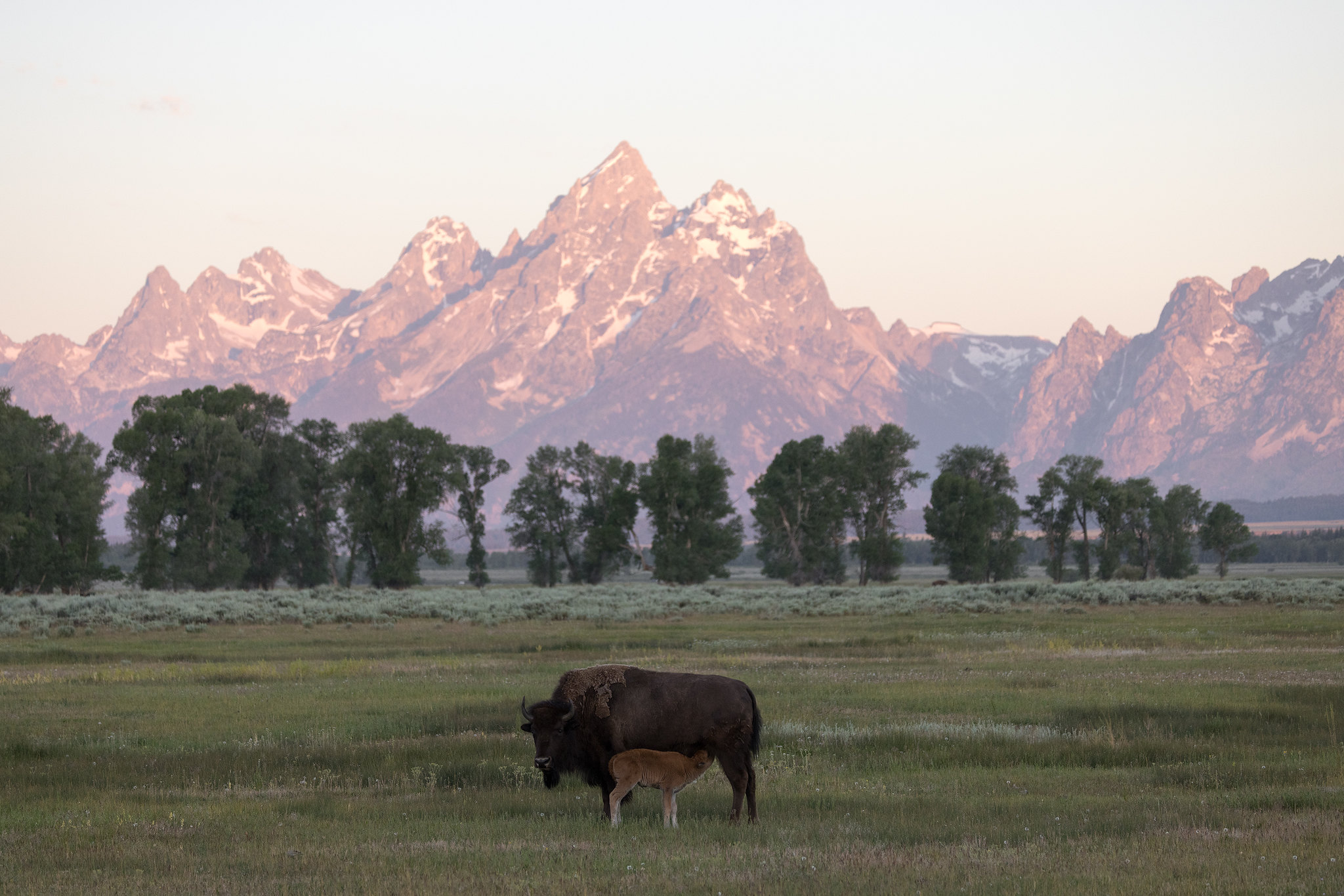
JACKSON, Wyo. — Buckrail photographer Nick Sulzer captured a glorious sunset over the Tetons over the Fourth of July weekend.
As of Monday, July 8, the sun is setting northwest at 9:05 p.m. and the sun is rising northeast at 5:51 a.m. in Jackson, according to the National Oceanic and Atmospheric Administration (NOAA).
According to NOAA, Earth reached its farthest point from the sun, called aphelion, on July 5. During aphelion, the northern half of the planet leans toward the sun, resulting in the longer, hotter days of summer even though Earth is farther away. July is typically the hottest and driest month of the year in Jackson Hole.

Professor of Meteorology at UW-Madison Steven Ackerman attributes the colors of the sunset to a phenomenon called “scattering,” according to ScienceDaily. He says that molecules and small particles in the atmosphere change the direction of light rays, causing them to scatter. Scattering affects the color of light coming from the sky, but the pink, orange, blue and purple-ish hues are determined by the wavelength of the light and the size of the particle.

As the sun begins to set, it’s prime time to keep an eye out for wildlife on the move. Most larger animals, including bears, wolves and mountain lions, bed down in the shade during the heat of the day. Early morning and late evening hours are when most predators are out and about in search of prey.
Remember to maintain a safe distance of at least 100 yards from wolves and bears, and at least 25 yards from all other wildlife.