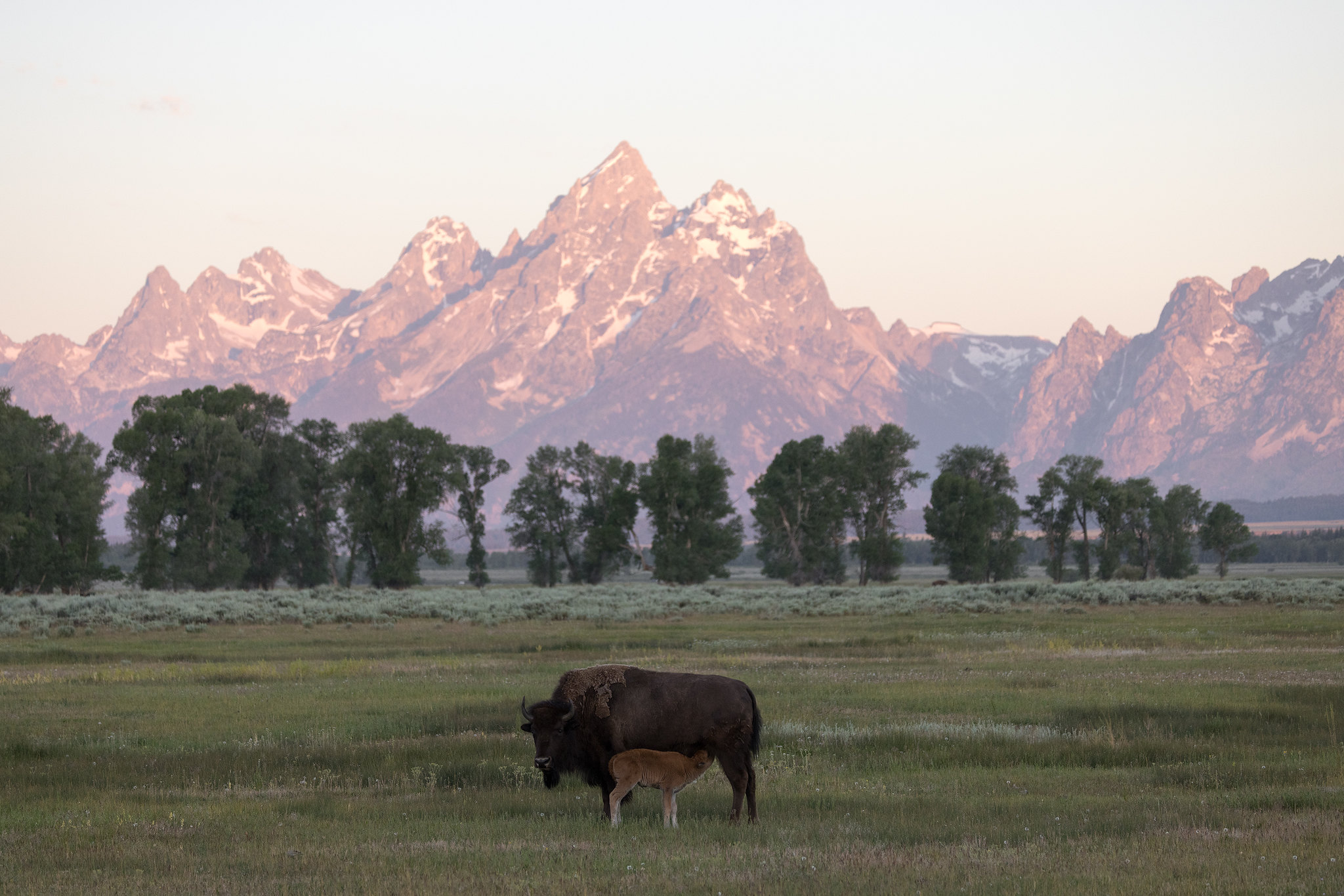
JACKSON, Wyo. — In the spring and summer, elk migrate from the National Elk Refuge (NER) to higher elevations in Grand Teton National Park (GTNP) and the Bridger Teton National Forest.
According to the NER, the elk seek higher elevations to keep cool in warmer temperatures and will typically stay in their summer range through October. The National Park Service (NPS) confirms elk also move up to increase their access to high-quality food.


The elk in GTNP are part of the Jackson elk herd, the largest elk herd in North America. The NPS emphasizes that elk are an important food for bears, mountain lions, wolves and at least 12 scavenger species, including bald eagles and coyotes.
Elk can also influence the diet, habitat selection and demography of bighorn sheep, bison, moose, mule deer and pronghorn through resource competition.


Additionally, elk can affect vegetative production, soil fertility and plant diversity through their browsing.
Changes in elk populations over space and time can alter plant and animal species and have a critical impact on the Greater Yellowstone Ecosystem as a whole.