SUBLETTE COUNTY, WYO – Rain has helped firefighters gain 85% containment on the Roosevelt Fire that is now 61,511 acres with just 299 left working the incident.
Hundreds of firefighters and equipment have been released from the incident as the fire transitions to a local Type 3 Incident Management Team tomorrow at 7am. Only the needed equipment and crews to attain 100% containment and finish fire line suppression repair work are left on the incident.
“It has been our pleasure to get to know you, and to serve you. We wish the best to everyone affected by this fire,” said Great Basin Team 2 incident commander Tony DeMasters.
As of 10am today, all Evacuation Zones will return to the READY level. The BLM will terminate its Fire Closure Order today. Stage 1 Fire Restrictions remain in effect, however with rain falling over much of the area, the danger of new fire starts is greatly diminished. The need for fire restrictions will be evaluated today.

What’s left to do
Fire line suppression repair involves pulling back the berm from dozer constructed fire lines, removing handmade fire line and placing water drainage features in each to prevent natural resource damage from rain and snow. If not all fire line repairs are made before winter hits, the work will continue in the spring. All fire line constructed on the Roosevelt Fire has been recorded using GPS, making identifying and recovering the fire lines very efficient.

The Burned Area Emergency Response (BAER) Team is in place for the Roosevelt and Marten Creek fires. The team will assess the potential post-wildfire risks that may arise in the fire areas. As destructive as these two wildfires were, the flames were not the only hazard that may threaten people and property.
Loss of vegetation from a fire exposes soil to erosion; runoff may increase and cause flooding, and sediment may move downstream and further damage values at risk. The BAER Team addresses these situations with the goal of preventing further damage.
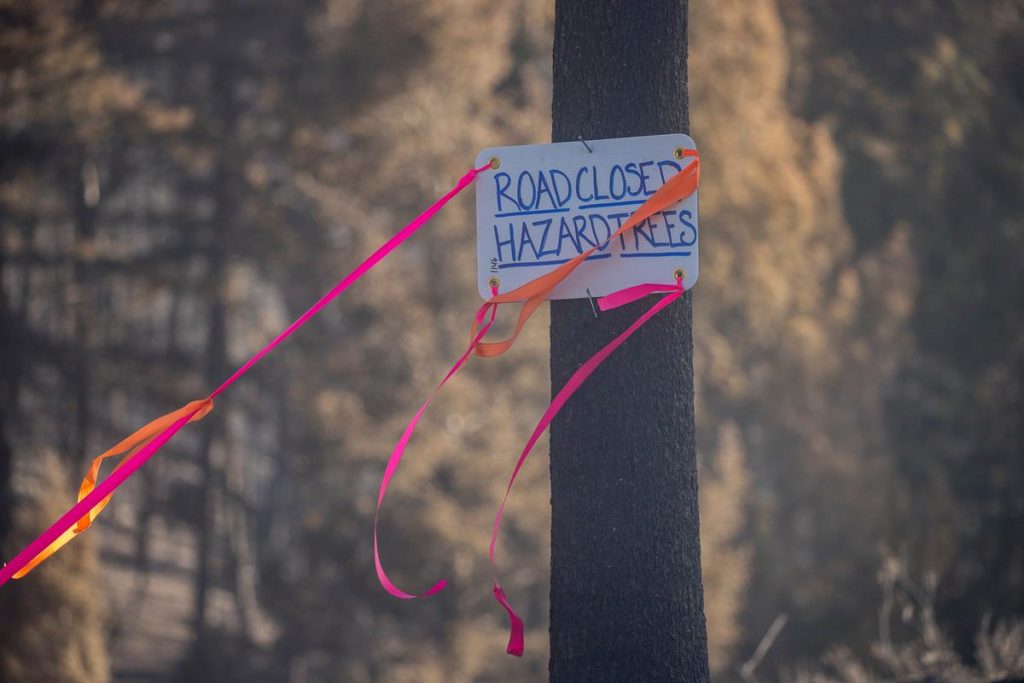
The BAER team of specialists and scientists are currently assessing the location and magnitude of likely post-wildfire hazards, such as flash flooding, stream channel scour, surface erosion and sedimentation, debris flows, introduction of invasive plant species, and prolonged periods of falling trees, snags, and rocks.
Assessment basics
- Identify critical values-at-risk, including people; property; infrastructure; and historic, cultural, and natural resources.
- Identify threats to the values-at-risk, including flooding, landsliding, and falling trees.
- Evaluate whether the severity of the identified threats is major, moderate, or minor to the values-at-risk.
- Develop mitigation strategies to protect those values-at-risk that are severely threatened or require some management action.

BAER Team

- Hydrologist (2x)
- Geologist
- Fisheries biologist
- Archeologists (2x)
- Geographer
- Botanist (2x)
- Trails specialist
- Information officer