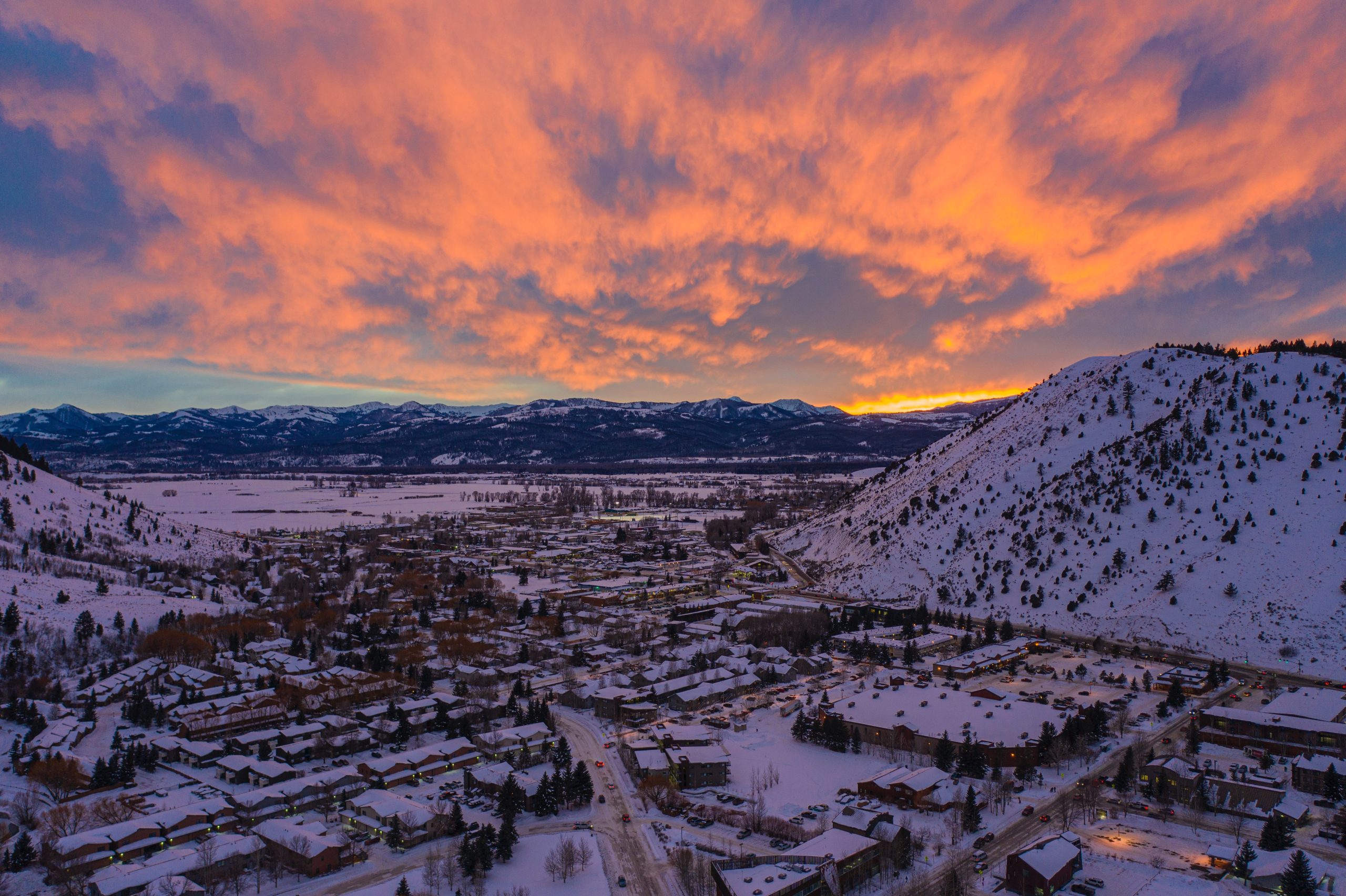
Jackson Hole sits at the heart of the Greater Yellowstone Ecosystem — a 22-million-acre expanse widely recognized as one of the largest nearly intact temperate ecosystems remaining on Earth.
JACKSON, Wyo. — Locals and travelers flock to nature-focused destinations worldwide to experience wildlands and view wildlife. Among them, Jackson Hole stands out as the cultural center of one of the last intact temperate ecosystems in the world—thanks to a century-long commitment to preservation and conservation. The legacy continues today through education, smart infrastructure, and collaboration, much of which is financially supported by the exact force often blamed for depleting natural resources: tourism.
Community engagement
On an August morning, Jackson’s Town Square buzzes gently—not just with hikers, anglers, influencers posing under the famous elk antler arches, and wildlife photographers preparing for the day’s excursions, but also with volunteers setting up a 12-foot tall Smokey the Bear.
Smokey inflated, the volunteers, part of the nonprofit Friends of the Bridger-Teton, retreat to a tented interactive booth on the park’s lawn. For the next several hours, they’ll share practical tips on wildfire prevention, Leave No Trace principles, responsible recreation, why you should never feed wildlife, and more—anything that will help the ecosystem of Jackson Hole and the larger 22-million-acre Greater Yellowstone Ecosystem of which it is a part. Families earn stickers and keychains for demonstrating how to extinguish a campfire and recalling Leave No Trace Principles.
These programs transform environmental education into engaging, memorable experiences for visitors of all ages. “Tourism brings not only crowds, but resources, visibility, and opportunities,” said Scott Kosiba, the executive director of Friends of the Bridger-Teton. “Like the people who live here, visitors come to Jackson Hole for wild landscapes and wildlife. We’ve learned that many want to help protect what makes this place special—giving us real opportunities to work on stewarding these lands we love in an increasing number of ways.”
This commitment is a global trend. In the Alps, regions unite guides, tourists, and residents around treating the landscape with respect. In Banff, Canada, ranger-led talks and social media campaigns nurture visitor stewardship of the ecosystem.
Education as a conservation tool
At the core of Jackson Hole’s, and other nature-forward tourism destinations’, model is messaging. “Responsible recreation messaging is ingrained in everything we do,” said John Bowers, marketing director at Visit Jackson Hole, the official destination marketing and management organization for Jackson, WY. It maintains the popular website visitjacksonhole.com, and has more than 175,000 followers on social media.
Visit Jackson Hole uses lodging taxes to fund educational programs, including the Friends of the Bridger-Teton (FBT) Ambassadors and ambassadors with the Jackson Hole Nordic Alliance and the Teton Backcountry Alliance. Since 2021, Visit Jackson Hole, run by the Jackson Hole Travel & Tourism Board, has granted $3 million of locally collected lodging tax dollars to area nonprofits and events that promote responsible recreation. This past summer, 26 FBT ambassadors at 13 different locations in Teton County made contact with approximately 5,200 visitors.
“It can be stunning and head-scratching to us how ignorant some users, both locals and visitors, can be about being good stewards of and on public lands,” said Julie Butler, who has been a FBT ambassador for five seasons. “We are grateful that we can pass on important knowledge and tips on being responsible, and, happily, people are usually appreciative of our knowledge and suggestions.”
Camina Conmigo, which also receives JHTTB funding, engages the valley’s Spanish-speaking community by providing Spanish-language outdoor recreation programs and education led by guias (guides). During the summer of 2025, the group offered 40 activities that 300 people attended. “Efforts by Camina Conmigo help with stewardship of the GYE by inspiring a new, diverse generation of conservation advocates who bring unique cultural perspectives and a strong connection to the land to the movement,” said Mirian Morillon, Camina Conmigo JH program manager. “Participants leave our experiences with more knowledge about the ecosystem and feeling more connected to the landscape.”
Educating people about the uniqueness of these places—and the threats they face—can inspire them to care. “The Snake River Watershed is the last, best place for cutthroat trout in the entire country,” said Leslie Steen, Wyoming state director of Trout Unlimited. “When we can help people understand why that is and how changes in today’s climate and habitat degradation and fragmentation can harm it, they become more invested in helping protect it.”
Similar efforts thrive elsewhere. New Zealand’s Fiordland National Park offers interactive kiosks that teach about the impact of invasive pests. Australia’s Great Barrier Reef Marine Park pairs tourists with citizen science opportunities to monitor reef health.
Infrastructure: Low impact, high value
Infrastructure upgrades also support ecosystem protection. Jackson Hole is one of the last strongholds of Snake River fine-spotted cutthroat trout. “That intact native fish community we have is incredibly unique,” Diana Miller, a Wyoming Game & Fish fisheries biologist told Jackson Hole magazine. “Most places just can’t say that their native fish are the dominant fish, both game fish and otherwise.”
The Snake River Fund, Teton County Weed and Pest, and Trout Unlimited, among others, collaborate and work tirelessly to safeguard and/or restore sensitive riparian zones. Guided fishing trips often include habitat and stewardship briefings. Guests learn about restoration projects—some funded by voluntary visitor donations, others by public and private grants.
Trout Unlimited has worked with partners on 18 projects that improved the ecosystem, stream habitat, water quality, and users’ experience. Together the projects connected 45.5 miles of native cutthroat streams and restored 16.5 miles of rivers and streams in the Snake River Headwaters. “We realize that what we have is special,” Steen said. “And we want to hang on to it.”
Globally, responsible tourism infrastructure takes varied forms. Whistler, Canada and Lake Tahoe, U.S., run electric shuttles to trailheads to curb emissions and traffic. Costa Rica’s Monteverde Cloud Forest Reserve restricts cars and guides all guests on curated trails to protect sensitive flora.
No matter the region, successful infrastructure projects marry access to preservation—ensuring tourism supports rather than diminishes ecosystem integrity.
Tourism as a conservation force
For some, the notion that tourism could help solve environmental problems still sounds counterintuitive. But, in destinations as diverse as Aspen, Palau, and South Tyrol, local lodging taxes and “green” fees support wildfire prevention, public transit, education, and restoration projects.
Palau, a Pacific island nation surrounded by some of the planet’s most diverse and vibrant marine life, was the first country in the world to amend its immigration policy to support environmental protection. All visitors—the island gets an average of 60,000 annually—sign the “Palau Pledge,” stamped into their passport, agreeing to respect and protect Palau’s ecosystems and cultural heritage. Specific pledge guidelines include using reef-safe sunscreen, not littering, and responsibly engaging with wildlife. Surveys show 96 percent of visitors reported being more mindful of their environmental impact, and 65% actively used the pledge’s principles to educate others during their stay.
Nature-forward destinations across the Western U.S., including Park City, Utah, Lake Tahoe, California, Jackson, Wyoming, and Aspen, Colorado direct money collected via local lodging taxes to wildfire prevention and educational messaging, while South Tyrol offers visitor-supported climate adaptation projects.
“We’re not just protecting the land for guests,” says Kosiba. “We’re safeguarding it for our children, and for wildlife who depend on these decisions.”
Wild places worldwide—from Jackson Hole to Palau, Banff to the Alps—show how tourism can fund conservation and nurture stewardship, ensuring that unique ecosystems endure.