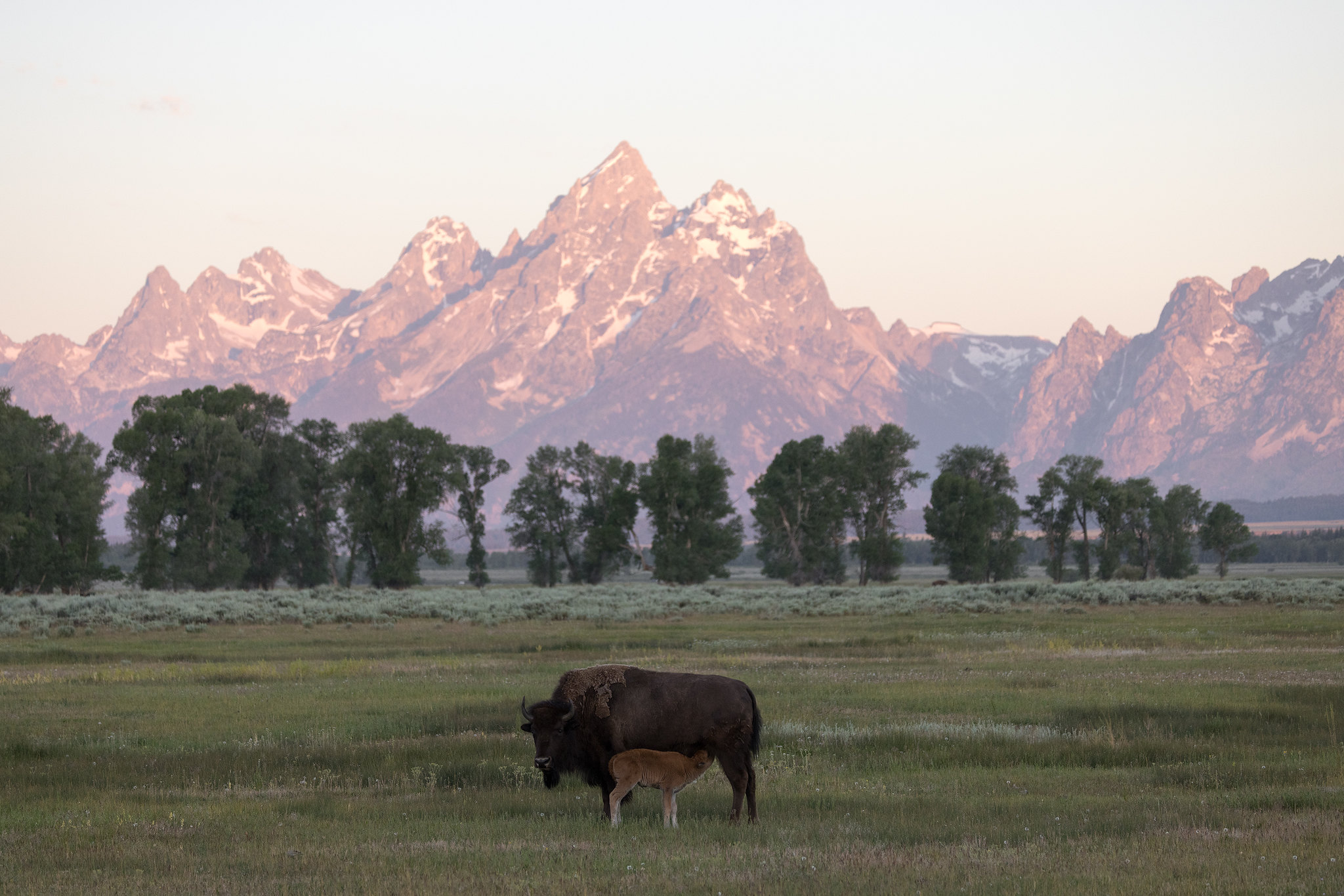
JACKSON, Wyo. — Despite the public land protections in the Greater Yellowstone Ecosystem (GYE), biologists say large-scale conservation is still needed to address critical threats the area is facing.
Douglas Smith, former wildlife biologist for Yellowstone National Park (YNP) and editor of the recently published book Yellowstone’s Birds, says he sees two common narratives with diverging interpretations of the GYE’s future. There are some, including environmental groups, who feel the future is a bleak one for conservation in light of increasing populations and development, and others who feel optimistic because about 70 percent of the GYE is protected national forest and national park land.
While Smith says he thinks there are pearls of truth supporting both sides, he emphasizes that losing the 30 percent of the GYE that isn’t protected could be enough to jeopardize the future of birds and mammals in the area. He tells Buckrail that birds in particular highlight the importance of keeping the GYE intact, as they fly between mountain ranges to find food and illustrate the need for large-scale habitat protection.
These protections include the use of non-lead ammunition and stewardship initiatives, in addition to fire management. Smith says addressing fire policy in the face of climate change is a critical part of ensuring the protection of the most intact temperate-zone ecosystem in the world.
According to Smith, the lodgepole pine, Engelmann spruce and subalpine fir forests that are present in the GYE and provide habitat for a number of bird species are old growth forests, or forests that developed over a long period of time without disturbance. These types of forests burn at a higher rate.
“Old growth forests are the most flammable forest type in the Rocky Mountains.”
Douglas Smith
“Old growth forests are the most flammable forest type in the Rocky Mountains,” Smith says. “Right now, with fire frequency due to climate change, we’re losing more [of it]. That is unique and critical habitat for a lot of birds: great grey owls, ruby-crowned kinglets, a few woodpecker species. If it goes away, they’ve got nothing to use.”
Smith says it takes over 200 to 300 years to replace old growth. The National Council for Air and Stream Improvement notes that those forests store a lot of carbon from centuries of carbon sequestration, or the removal of carbon dioxide from the air by trees during photosynthesis. That sequestered carbon is stored in trunks, branches, leaves and roots, but gets released back into the atmosphere when trees burn.
The National Oceanic and Atmospheric Administration says this release can supercharge the natural greenhouse effect, which causes global temperature to rise.
While older fire management practices trended toward the ideology that all fire is bad, Smith says he believes the pendulum is swinging too far the other way, toward the idea that all fire can be considered a natural ecological process. Smith advocates for a more balanced management of fire frequency that can support the species and diversity that thrives after burns while still protecting necessary habitat.
This is a sentiment that The Nature Conservancy (TNC) echoes; TNC’s fire management initiatives highlight the need for balance between supporting periodic fires that increase biodiversity and suppressing the extent and severity experienced in the western U.S. According to TNC, 2020 and 2021 saw extensive damage to forests necessary for filtering drinking water and sequestering carbon.
Smith says that it’s very important to achieve a common narrative about the direction of the GYE, and agreement on what needs to be done for its continued conservation.
“Right now, opposing forces are fighting each other,” Smith says. “Is the future good or is it not? I think it’s a question we need to come to grips with now, in the next few years.”