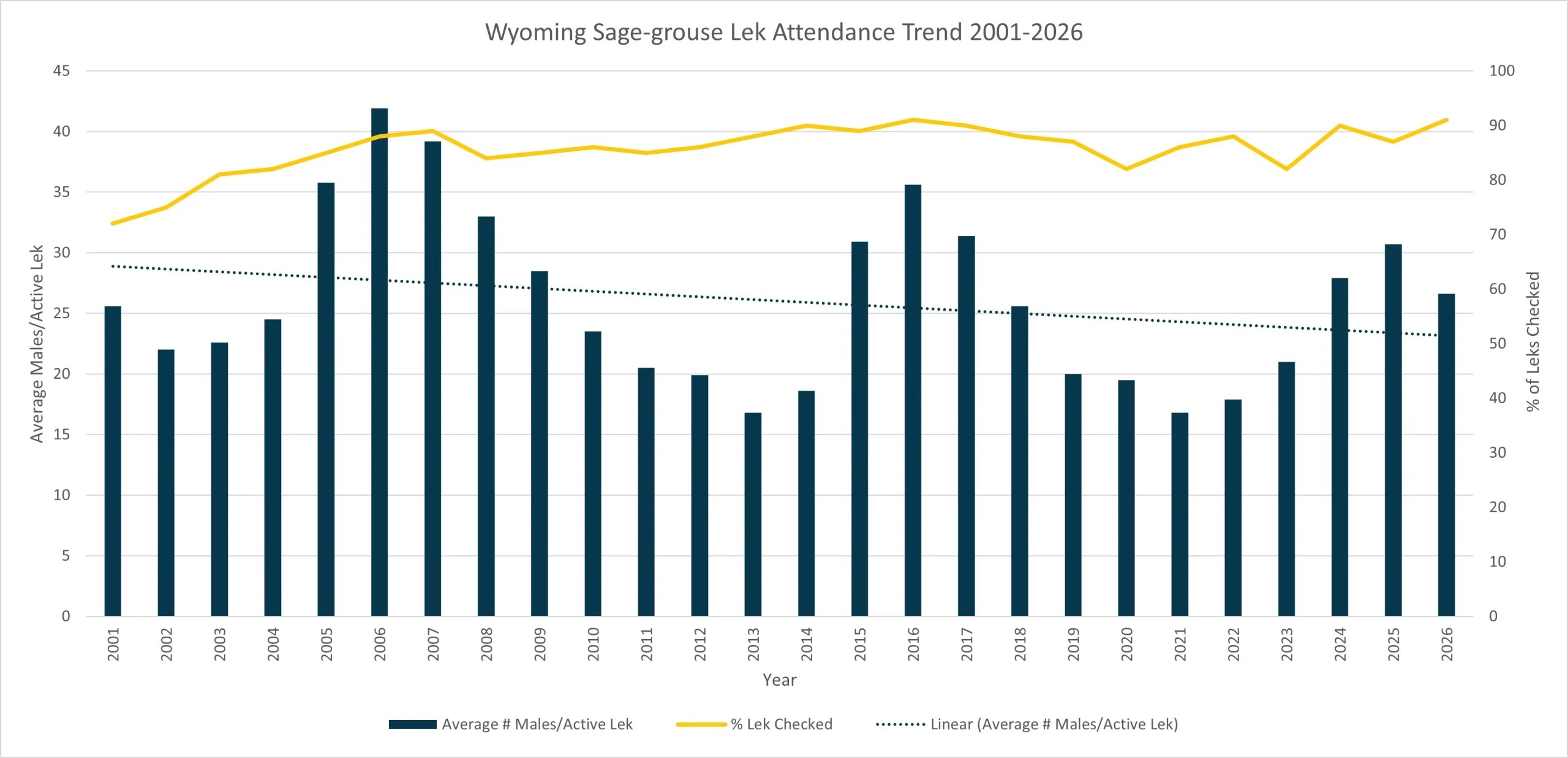
WYOMING — Wyoming’s sage-grouse leks saw decreased attendance during the birds’ spring mating season, down 13% compared to 2025’s attendance, according to new data from the Wyoming Game and Fish Department (WGFD).
Just over 27,000 male sage-grouse were counted in the spring, utilizing 91% of known, occupied leks. An average of 27 male sage-grouse were observed per active lek. Annual observations are performed from a distance on the ground and from the air by WGFD, agency partners, consultants and volunteers. The natural population cycle of sage-grouse, along with habitat conditions, are thought to be responsible for the decline in lek attendance. Nearly 60 years of WGFD data on sage-grouse lek attendance displays the cyclical nature of sage-grouse population.
“Studies indicate Wyoming’s sage-grouse population cycles every seven to nine years,” said Nyssa Whitford, WGFD sage-grouse and sagebrush biologist. “We were expecting to see a decrease this year as we enter the downward portion of the population cycle.”
Whitford said that historical data indicates the downward trend in population can last about three to seven years. Though the cause of these population cycles is not entirely understood, WGFD believes that weather, climate, and availability of food and cover in the sagebrush ecosystem can play a role. Other factors thought to influence the downward population trend include extreme drought, wildfire and poor habitat quality. WGFD also stated that habitat fragmentation, short-term weather trends and invasive grass negatively impact sagebrush habitat.
“Sage-grouse are a sagebrush obligate species and could not survive without intact ecosystems,” Whitford said. “Well-timed moisture and available habitat are paramount to robust sage-grouse populations. In much of the state, this past winter was abnormally dry, and this summer has been exceptionally hot and dry.”
WGFD also found that the percentage of active leks decreased to 75%, which is considered in line with the population downturn. A lek is considered inactive if no birds or signs of strutting are observed under ideal conditions during mating season.