JACKSON, Wyo. — If a flash of yellow flies by, it could be a migrating western yellow-rumped warbler.
Every spring, the western species of the yellow-rumps visits Jackson Hole. Shrubs and trees fill with the streaky brown-and-yellow birds, and their distinctive, sharp whistle or warble can be heard.
Coined “Butter Butt,” a western yellow-rumped warbler flashes its trademark yellow rump patch as it flies away. This bird species also has white spots on its tail and a small yellow patch at side of its chest. The pattern is brightest on spring males, dullest on young females in fall and winter.
In the the spring, the birds molt, which transforms them into an even brighter mix of yellow, charcoal gray, black and bold white.
According to All About Birds, hordes of yellow-rumped warblers will sweep across the continent during their migration. They will make their summer home in conifer forests of the west, including Wyoming. The birds often perch on the outer limbs of trees, and are very conspicuous as they fly out after insects, often making long, aerobatic movements.
To attract them, try putting out sunflower seed, raisins, suet and peanut butter.
While most of its relatives migrate to the tropics in fall, the yellow-rump will head to central and southeastern United States, as it can subsist on different species of berries during cold months.
The U.S. Fish and Wildlife Service posted a photograph of the recent arrival of a yellow-rumped warbler on Tuesday, May 7.
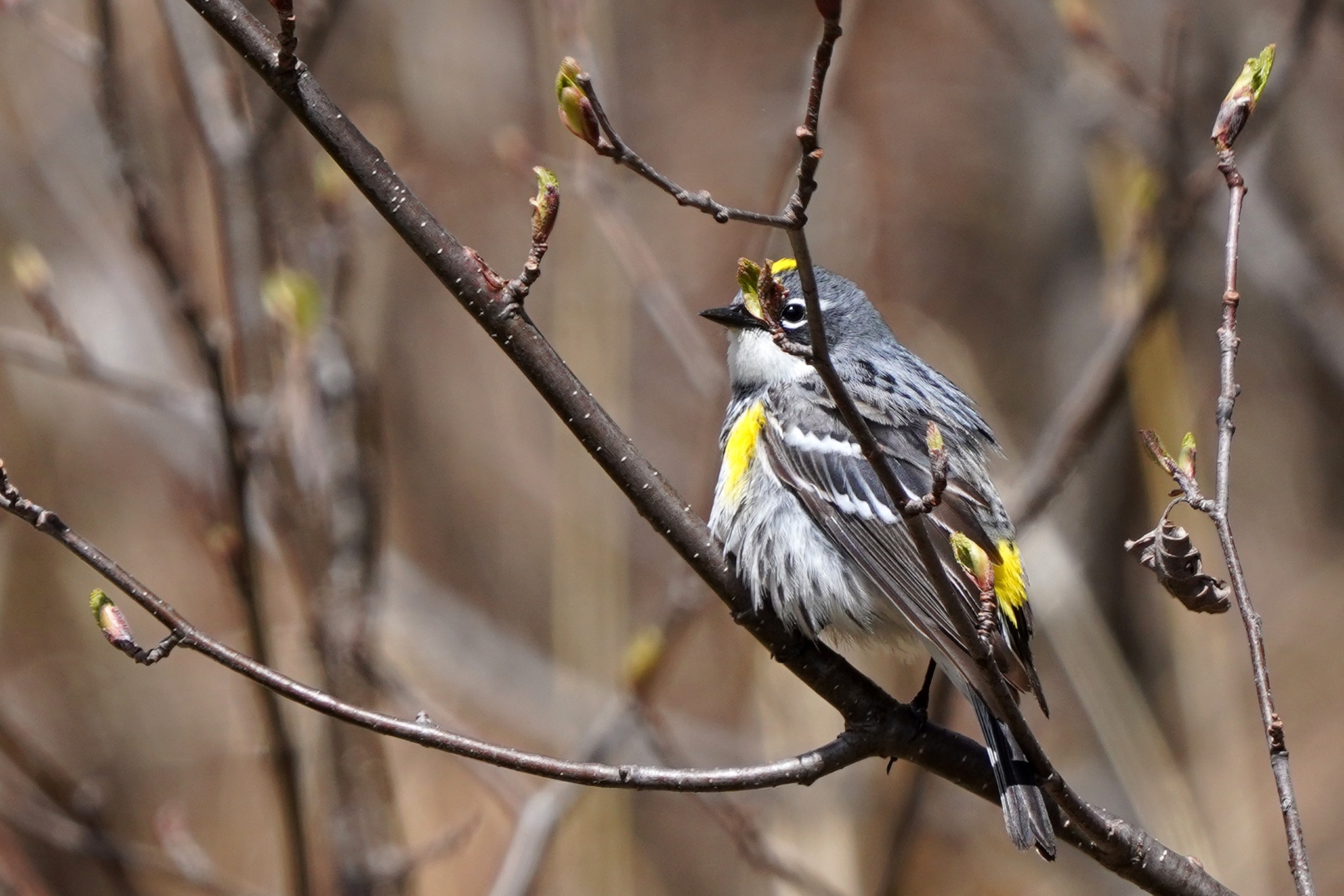
“We spotted this yellow-rumped warbler quickly moving from branch to branch searching for insects to eat,” Fish and Wildlife said via Facebook. “It did eventually appear to catch a spider which was pretty neat.”
All About Birds says on its website that the oldest recorded yellow-rumped warbler was a female at least 10 years old when it was recaptured and rereleased in Wyoming in 2006
Although still numerous, yellow warblers are threatened by habitat loss and the overuse of pesticides.