


JACKSON, Wyo. — Happy Summer Solstice! Sunday, June 21, marks the first day of summer in Jackson Hole and the longest day of the year with 15 hours and 26 minutes of daylight.
In the northern hemisphere, the June solstice signals the start of the summer season and, depending on location, it occurs between June 20 and June 22 annually.
The term solstice comes from the Latin words sol and sistere, meaning “sun” and “to stand still.”
In terms of daylight, June 21 will have about six more hours of sun compared to the winter solstice on Dec. 21. The sun will rise at 5:41 a.m. and set at 9:08 p.m. on Sunday.
What is a solstice?
According to National Geographic, solstices occur because Earth’s axis of rotation is tilted about 23.4° relative to Earth’s orbit around the sun. This tilt drives Earth’s seasons, as the Northern and Southern Hemispheres get varying amounts of sunlight over the course of a year. From March to September, the Northern Hemisphere is tilted more toward the sun, driving its spring and summer. From September to March, the Northern Hemisphere is tilted away, so it feels like autumn and winter. The Southern Hemisphere’s seasons are reversed.
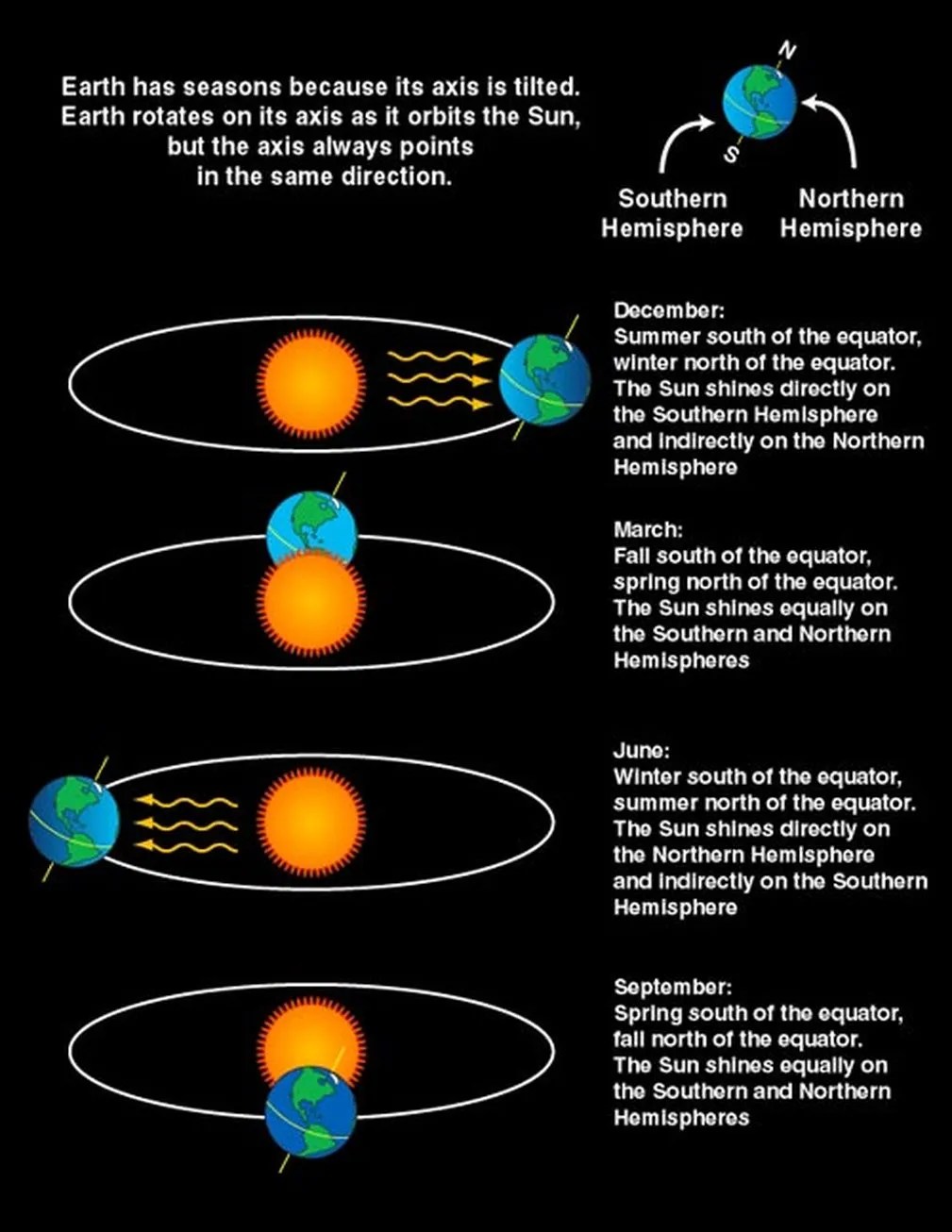
At two moments each year, the December solstice and June solstice, Earth’s axis is tilted most closely toward the sun. The hemisphere tilted closest to the sun sees its longest day, while the hemisphere tilted away from the sun sees its longest night.
“A common misconception is that the changing of seasons is due to the distance from the earth to the sun that changes throughout the year; however, it actually has nothing to do with distance,” Samuel Singer, executive director of Wyoming Stargazers, told Buckrail in a past interview.
In the summer, the sun spends more hours in the sky, allowing more time for the sun to heat the earth; thus, we get warmer in the summertime and colder in the wintertime.
“Length of days and angles of rays, but nothing to do with how far away,” Singer said.
This story runs annually.










