GRAND TETON NATIONAL PARK — Water continues to jet out of Jackson Lake into the Snake River, with no signs of slowing down quite yet.
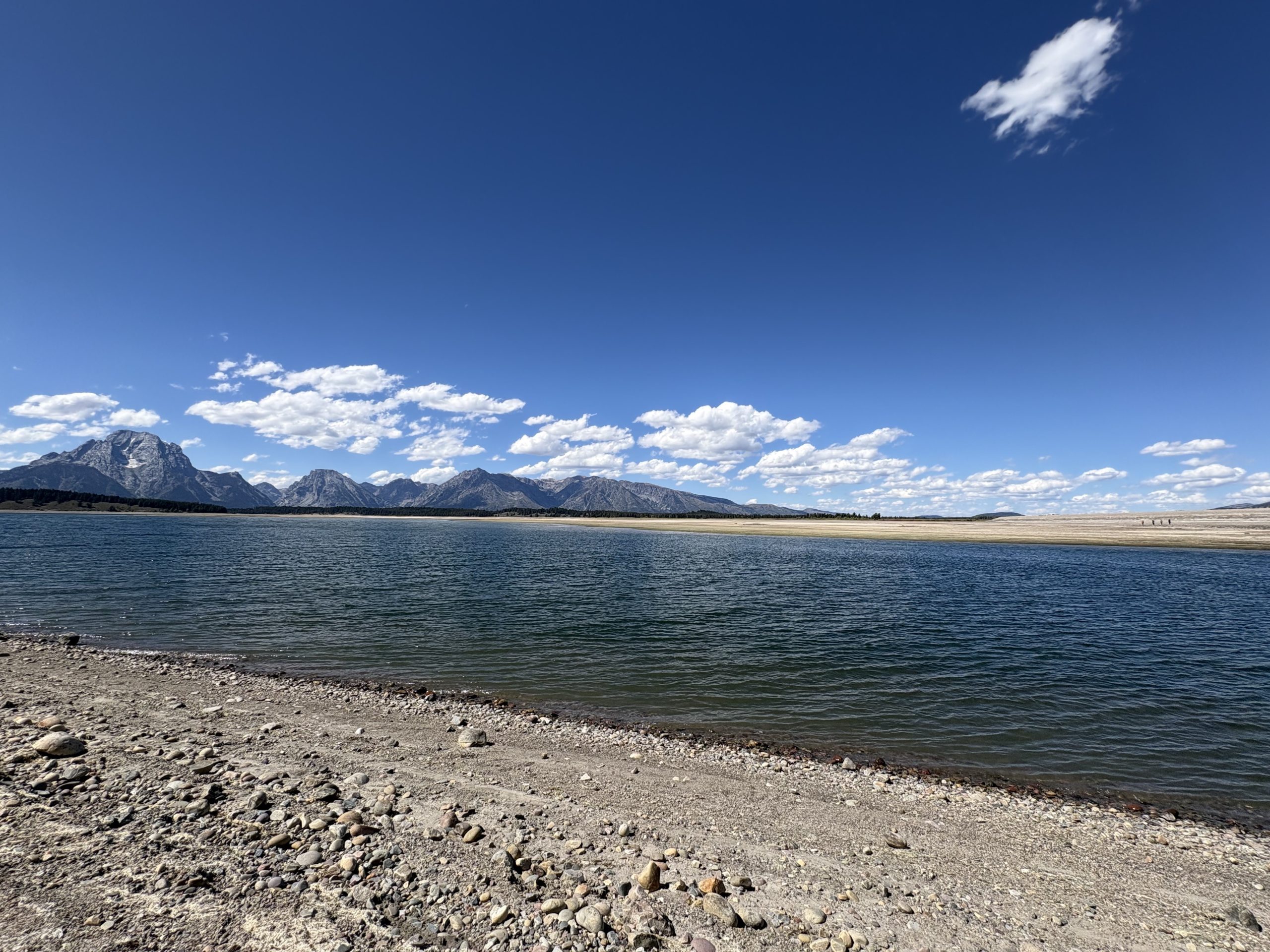
As of Tuesday morning, Jackson Lake was about 18% full. Water surface elevation has fallen nearly 30 feet since its peak of 6,767.92 feet on May 20. The water surface sat at 6,738.05 feet on Tuesday morning, according to U.S. Geological Survey data.
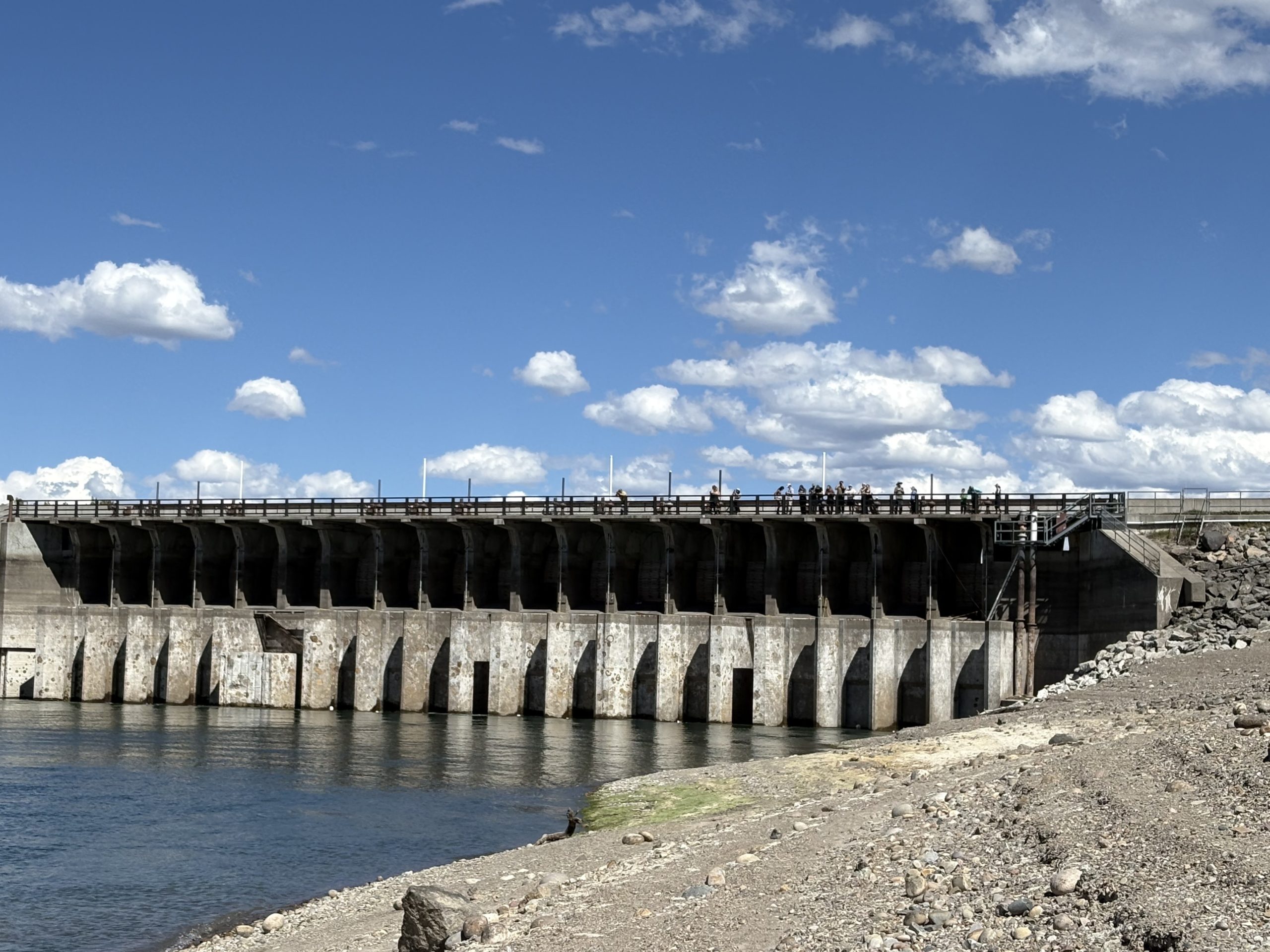
The water release out of Jackson Lake Dam ramped up on June 17 and has remained high all summer, releasing between 4,700 and 5,200 cubic feet of water per second (cfs). In May, water managers predicted that outflow during the summer would remain between 3,000 and 4,500 cfs. Irrigation demand downriver is what drives the release from the lake.
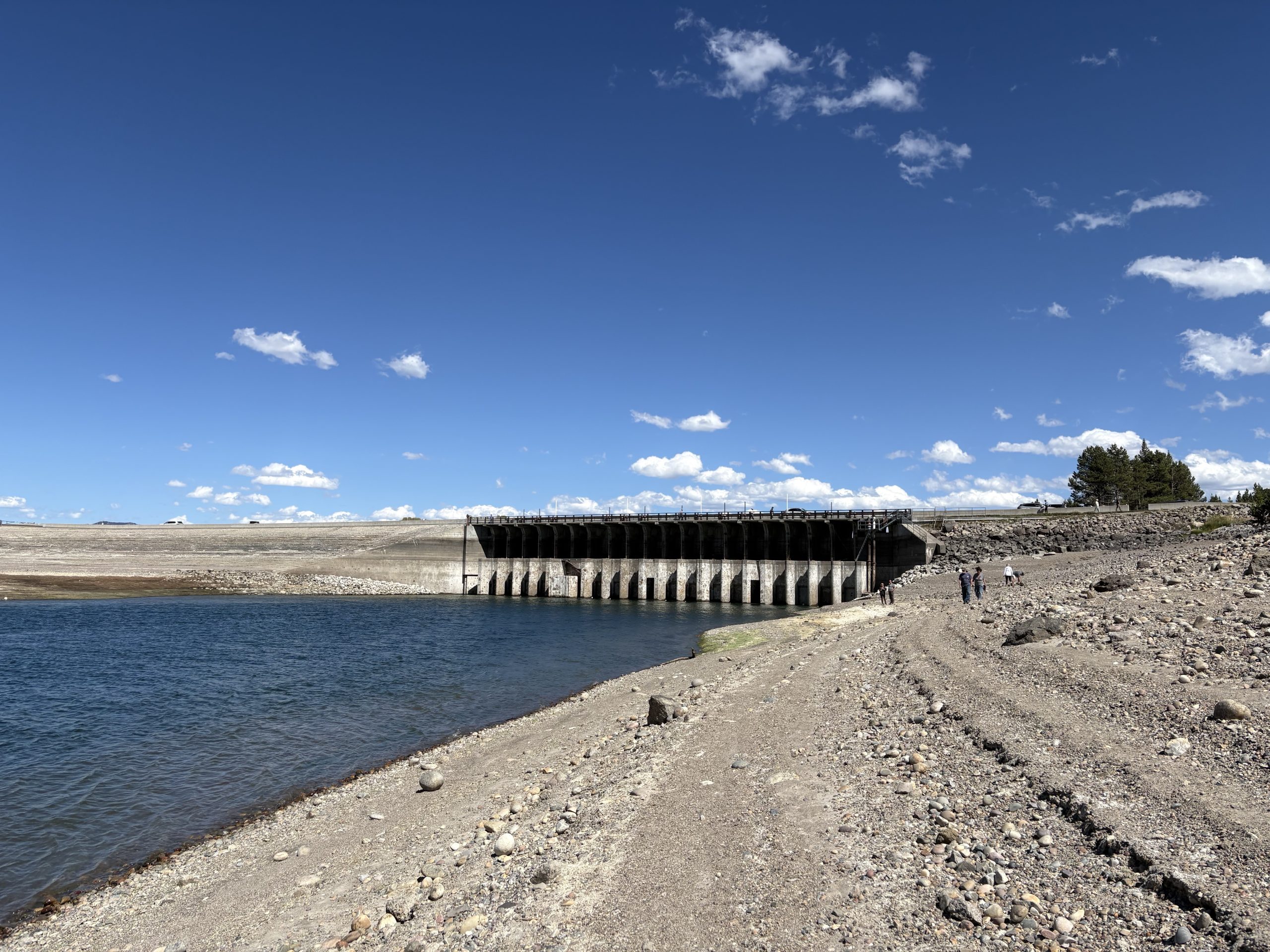
Bureau of Reclamation’s Upper Snake Field Office Water Operations Manager Brian Stevens told Buckrail that Jackson Lake is expected to hit a low of close to 2% full in late September, with 17,000 acre-feet of water remaining. This would likely be the seventh-lowest amount on record for the lake. The Colter Bay Marina closed early this summer due to receding water in the shallow harbor.

Stevens said that there could still be some possible alterations made in order to balance the system’s needs, which will influence when the rampdown of dam flows can begin and end. “Coordination is actively ongoing with the Snake River Agency groups, with the formal fall meeting occurring this Thursday,” Stevens wrote in an email. “Reductions in outflow as part of the rampdown could begin as soon as this week and end as late as October 12.”
The Bureau of Reclamation posted an update for the Columbia-Pacific Northwest Region on Monday, Sept. 7, that listed the Upper Snake River system as 12% full. The system is made up of multiple holding spots like Jackson Lake and Palisades Reservoir. Other locations in the system include Ririe Reservoir, Island Park Reservoir, Grassy Lake, Henry’s Lake and American Falls Reservoir.
According to the Bureau of Reclamation, the average amount of water in the system at this time of year is about 1,772,318 acre-feet, which is around 48% of full. The system has a maximum capacity of 4,045,695 acre-feet. Last year at this time, the reservoir system was about 29% full, after peaking in early June. The entire system hit peak fullness in April this year.