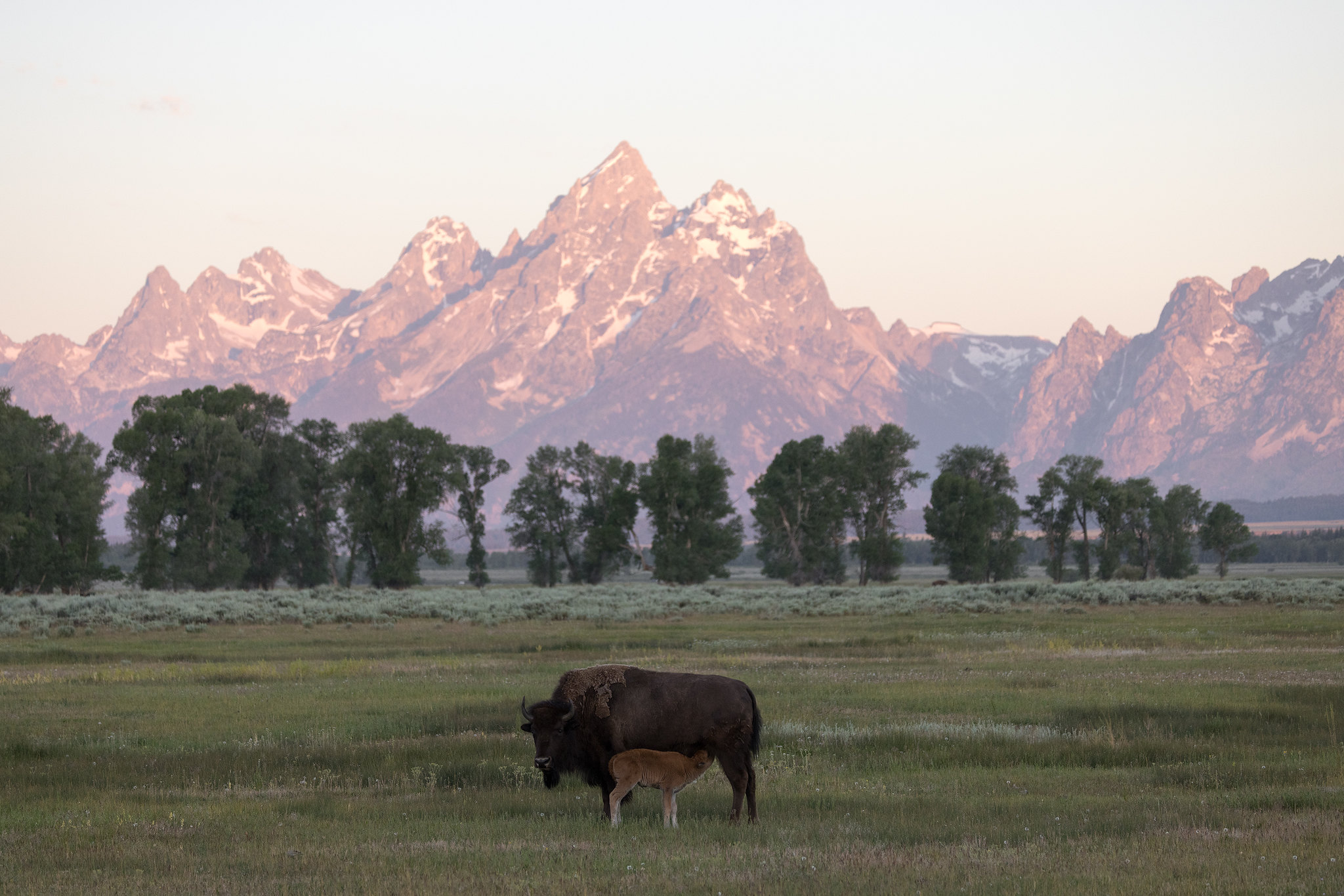
JACKSON, Wyo. — Autumn colors are beginning to paint Jackson Hole in warmer tones. Buckrail photographer Nick Sulzer captured the beginning of fall foliage season in and around Grand Teton National Park this week.

According to the National Park Service (NPS), changing leaves are a result of colder weather.
“In fall, the length of daylight and cooling temperatures cause leaves to stop generating food,” NPS said. “Chlorophyll breaks down and the green color disappears allowing other pigments to become visible like carotenoids that produce brilliant yellow and orange leaves. Some leaves will generate red pigments, anthocyanins, due to excess water and sugars. Temperature and moisture control the intensity and duration of the colors.”

Expect vibrant reds, oranges and yellows to take over local trees later this month.


Fallen leaves make an important contribution to the Greater Yellowstone Ecosystem. According to the Forest Service, dropped leaves are still useful.
“Needles and leaves that fall are not wasted,” the Forest Service said on its website. “They decompose and restock the soil with nutrients and make up part of the spongy humus layer of the forest floor that absorbs and holds rainfall. Fallen leaves also become food for numerous soil organisms vital to the forest ecosystem.”


The muted colors of the trees provide a rich palette for Teton sunsets.