JACKSON, Wyo. — New Year’s Eve might have passed, but the sky is still sparkling.
The Quadrantid meteor shower peaked in the early hours of Thursday, Jan. 4, with approximately 120 meteors per hour between 1 and 5 a.m. at a velocity of 25.5 miles per second, according to NASA. The shower began on Dec. 26, 2023 and will run through Jan. 16. This shower recurs annually.
NASA traces this shower as originating from asteroid 2003 EH1, unlike most meteor showers, which originate from comets. Asteroid 2003 EH1 was discovered in 2003, measuring about two miles in diameter. It is possible that it’s a “dead comet” or a “rock comet,” per NASA.
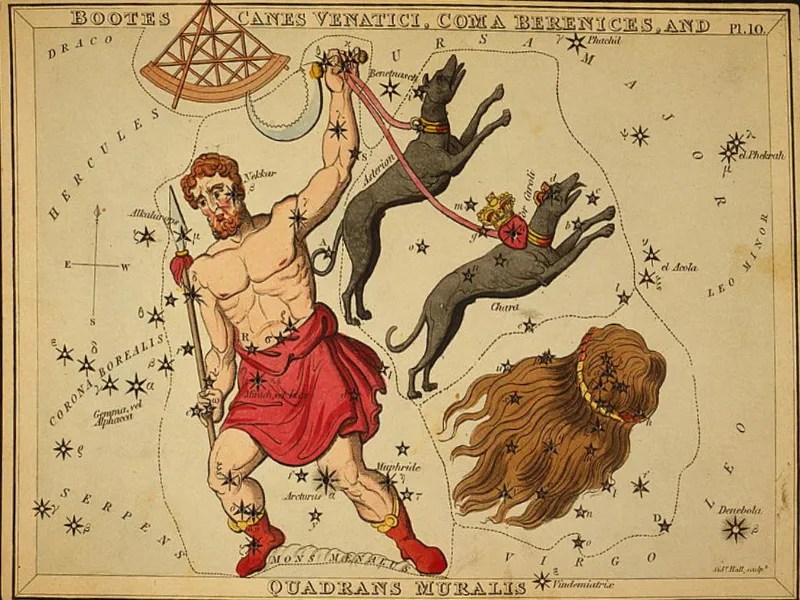
The point in the sky from which the Quadrantids appear to travel, or their radiant, is the Quadrans Muralis constellation, named after the quadrant, an early astronomical instrument. The constellation is now considered to be obsolete. The Quadrantid meteor shower was first observed in 1825, per NASA.
NASA recommends that viewers lie flat with their feet facing northeast for the best shot at seeing a streak. It might take up to 30 minutes for viewers’ eyes to adjust to the darkness.