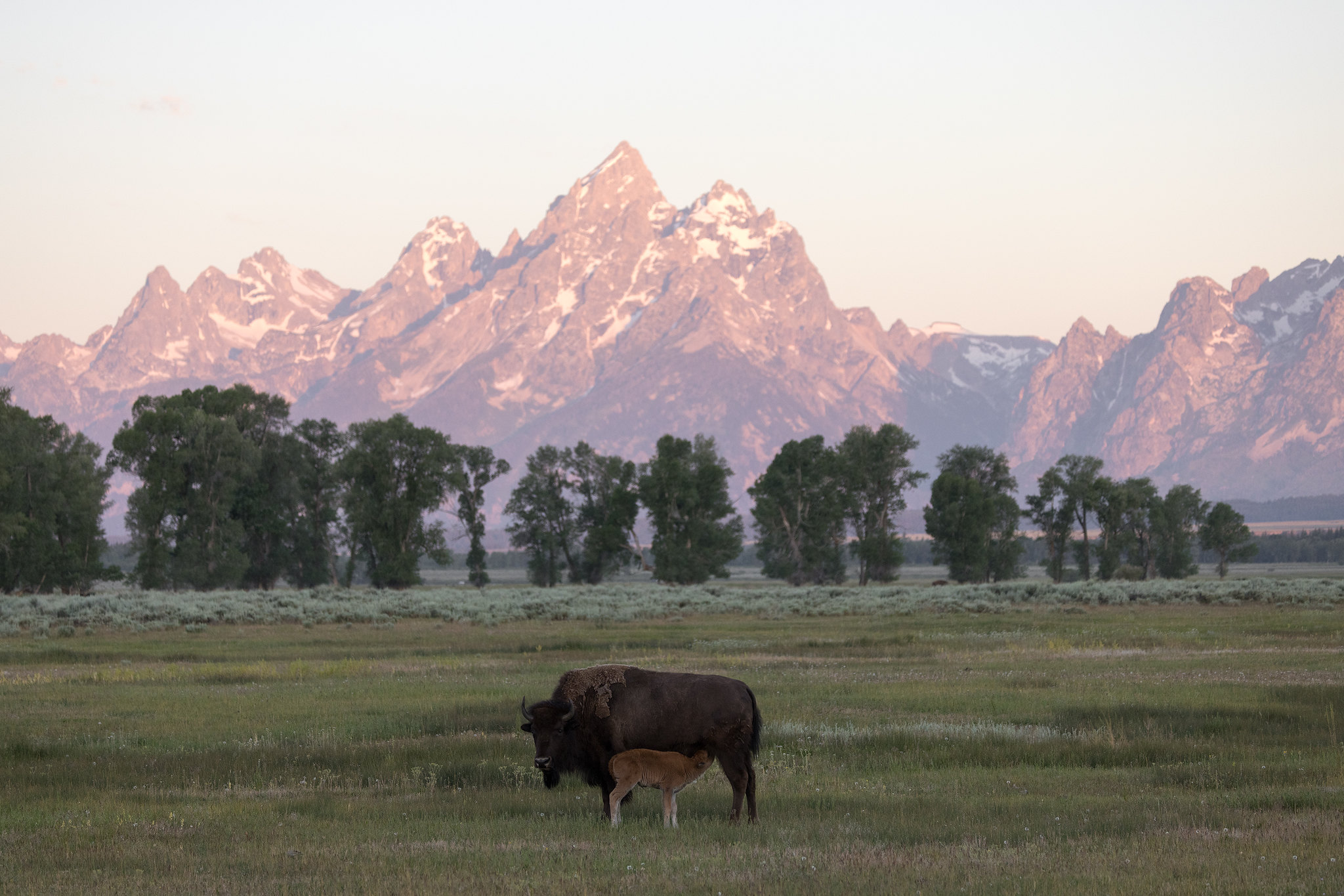
JACKSON, Wyo. — Sheep Mountain, unofficially known as “Sleeping Indian,” is a highly visible peak in Jackson Hole with a history that includes both a natural and unnatural disaster.
While many people currently refer to the peak as “Sleeping Indian” for its resemblance to a chief in a feather headdress lying on his back, the National Park Service (NPS) emphasizes its official name is Sheep Mountain after the bighorn sheep that graze on its slope during the summer months before migrating to lower elevations.
While Sheep Mountain can provide a peaceful, idyllic spot to recreate now, on June 23, 1925, the U.S. Forest Service (USFS) confirms one of the largest fast-moving landslides in generations occurred on its north slope.
“In just three minutes, huge amounts of rock and debris cascaded down the north slope of Sheep Mountain, changing the area forever,” the USFS writes on its website.
According to the USFS, a long-time Jackson Hole native William Bierer predicted this slide years before it happened, selling his ranch on the mountain to a cattle rancher named Guil Huff in 1920. Allegedly, Huff was riding horseback down the slope to the river when he heard loud rumblings; he arrived at the water at 4 p.m. just in time to witness 50 million cubic yards of land mass descending rapidly toward him.
“He and his horse escaped the impact by a mere 20 feet,” the USFS writes.
Along with Huff, two other men witnessed the landslide: Forney Cole and Boyd Charter.
The NPS writes that this landslide dammed the Gros Ventre River and ultimately formed Lower Slide Lake.
Then, in 1927, the natural dam caused by the landslide partially failed and a torrent of water flooded across the valley; water was three feet deep in Wilson at the base of Teton Pass. The NPS confirms that six people were killed by this flood in Kelly.
Still, that wasn’t the last Sheep Mountain saw of misfortune. The Flight Safety Foundation (FSF) published a report in 2000 of a plane crash on the west side of Sheep Mountain on Aug. 17, 1996. According to the report, a U.S. Air Force C-130H collided with the mountain at 10:50 p.m. after departing the Jackson Hole Airport, destroying the aircraft and killing eight crew members and a passenger.
The U.S. Air Force Accident Investigation Board deemed the cause of the accident “crew error,” reporting that “unfortunately, mountainous terrain in all quadrants and a short runway at high altitude presented too great a challenge to crew members accustomed to flying in the flatlands of Texas.”
But despite those disastrous incidences, Sheep Mountain remains a favorite habitat for both bighorn sheep and recreationists. Be aware that, according to the Wyoming Game and Fish Department, access up Sheep Mountain is closed during the winter months to avoid disturbing the wintering wildlife. The area is open the remainder of the year for a wide range of recreational opportunities.