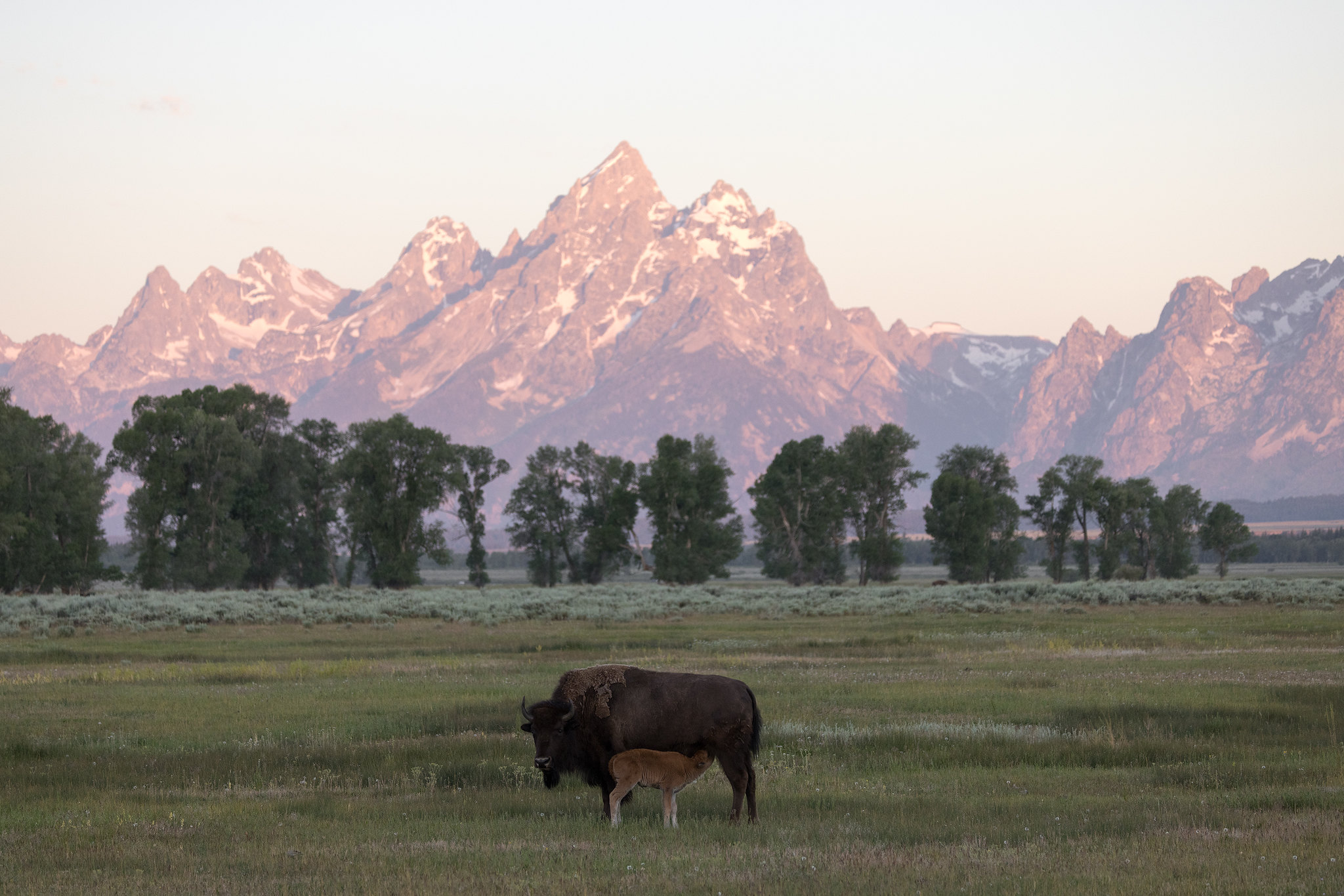
JACKSON, Wyo. — Spring in the valley means migration for many local species. As they move out of their winter habitat, make sure to give animals “a brake.”
For many wildlife species such as elk, deer and moose, spring is peak migration season, meaning more wildlife is likely to be on roadways.
As these ungulates transition from their winter range to calving and fawning grounds and summer habitats, they are often attracted to the roadside because these areas are the first to green up with grasses and forbs.
A consequence of this is an increase in the risk of motorists encountering migrating wildlife on roads and highways.
An average of 200 to 300 large animals are hit and killed annually on Teton County roads, according to data gathered by the Wyoming Department of Transportation, Wyoming Game and Fish Department and the Jackson Hole Wildlife Foundation (JHWF). The actual number is estimated to be two to four times higher, due to the fact that many animal deaths from wildlife-vehicle collisions go unreported.
To avoid wildlife collisions, the public can travel with caution, especially at night, dawn, and dusk when wildlife-vehicle collisions are most likely to occur. Safe and easy driving tips for avoiding dangerous and costly collisions include:
- Drive the posted speed limit, especially at night, dawn, and dusk as these are the times when animals are most active and hardest to see.
- Know that animals are more likely to be found where rivers and creeks cross under roads or are near the road.
- Scan the edges of the road for wildlife, in addition to the road surface, and use high beams at night when there is not oncoming traffic.
- When an animal crosses the road, look for and expect other animals to follow.
- If an impact is inevitable, do not swerve. Try to release your brakes just at the moment of impact, this will scoop the front of the car up and help prevent the animal from coming over the hood of the car.
- Watch for other motorists’ behavior. Braking and flashing lights may indicate animals on the roadway.
- If you do have a collision with an animal, pull completely off the highway on the shoulder. Call 911 if there are any injuries to you or passengers, if the vehicle is unsafe to drive, or if the animal needs to be euthanized. If damage was minimal, still report the collision to the Jackson Hole Wildlife Foundation’s wildlife-vehicle collision database at (307) 739-0968.
View JHWF’s most recent wildlife-vehicle collision hotspot maps for moose, elk and deer here.
This story runs annually.