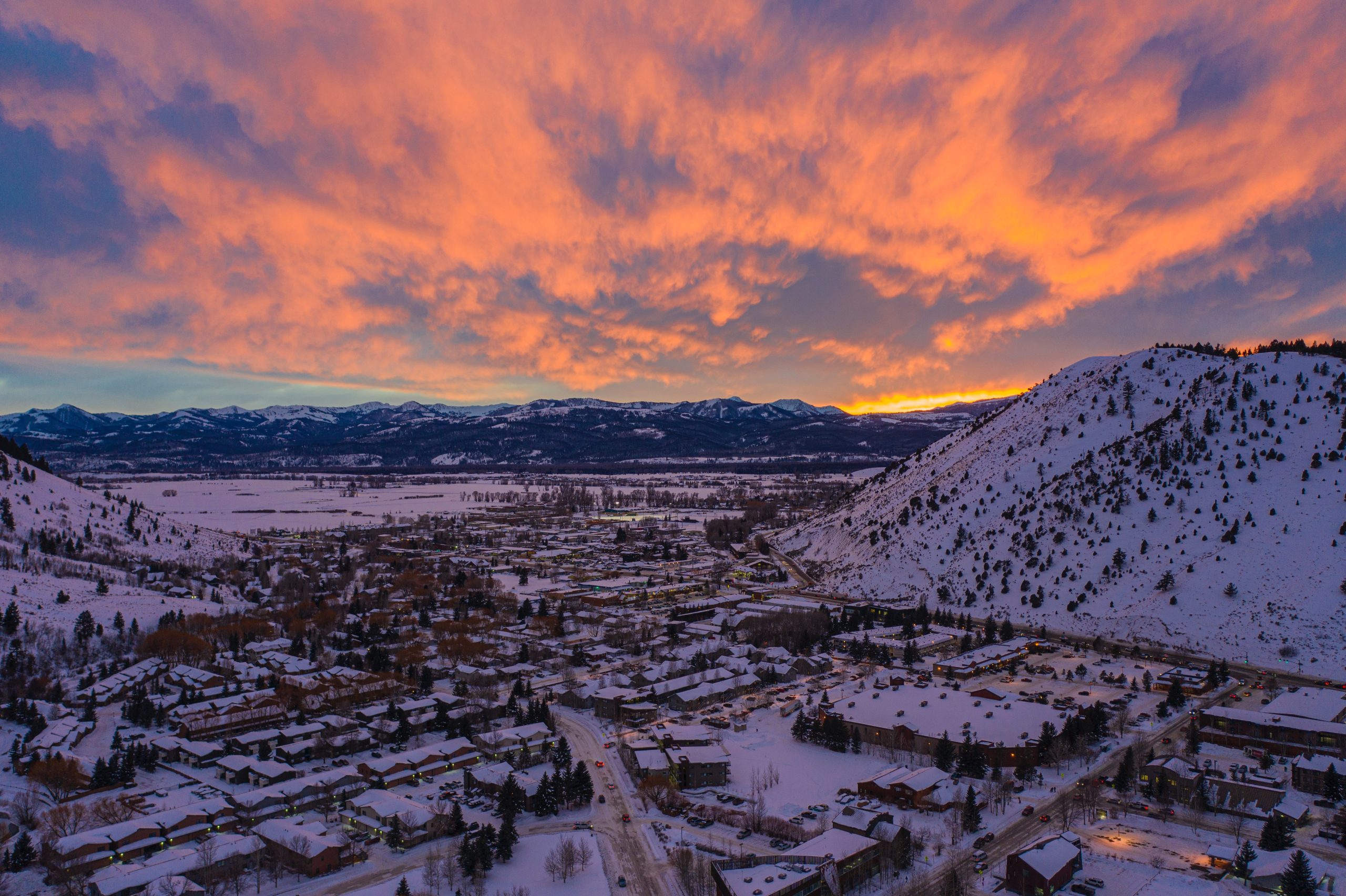
JACKSON, Wyo. — Spring has arrived and it’s time to start thinking about how this year’s snowpack will affect the upcoming whitewater rafting season. Read on to learn how winter snowpack, spring temperatures and the timing of snowmelt all influence the spring runoff. Enter to win a raft through Dave Hansen’s High Water Heyday Contest for a chance to win a new raft!
The Snake River Canyon’s runoff in Wyoming can be influenced by various weather factors, including precipitation and temperature. Warmer temperatures typically lead to earlier snowmelt, which can result in an earlier and potentially more intense runoff.
Conversely, cooler temperatures or late-season snowstorms may delay the onset of runoff and result in a slower, more gradual increase in water levels. Additionally, heavy precipitation events can cause rapid runoff by accelerating snowmelt or causing rain-on-snow events.
Last years peak, despite a substantial snow pack, was a lot less than what people were anticipating. The reason being was the Bureau of Reclamation held back dam releases in an effort to fill Jackson Lake. So the peak of 16,024 cfs ended up being almost all natural flows with only about 280 cfs coming out of Jackson Lake Dam.
This season will be a little different. While the area might not have the snowpack that we had last season, Jackson Lake is at 82% capacity and, as of yesterday, the Bureau of Reclamation has started to increase outflows that will eventually hit 2,000 cfs out of Jackson Lake by the end of the week.
After a wet start to our May, the combination between high flows out of Jackson Lake Dam and any sudden jump in air temperature definitely can bring to us a great high water season!

Peak winter snow depths relative to average
First, there is the obvious connection between peak snow depths and peak river levels. Typically, if the snowpack is above average, peak river levels will also be above average.
However, sometimes this is not always the case. In 2019, the snowpack was above average and peak river levels were below average. The explanation for the lower stream levels in 2019 is that temperatures were colder than average temperatures in May, which slowed the rate of snowmelt.
Spring temperatures relative to average (particularly in May)
Spring temperatures have a significant influence on snowmelt rates, which in turn influences river levels. Snowmelt rates are at their highest during the month of May, so temperatures relative to average during May are the most highly correlated to river levels.
WHEN snowpack reaches its maximum depth
The other key factor that influences river levels is when the mountain snowpack reaches its peak. Years when the snowpack reaches its peak before April 1 tend to result in lower river levels compared to years when snowpack peaks later.
Predicting the High Water Mark for 2022
The remaining question mark is what happens with temperatures over the next four to six weeks.
Using the above data, what do you think the high mark will be during 2024? Enter your guess for a chance to win a raft down below.
Dave Hansen’s High Water Heyday Contest