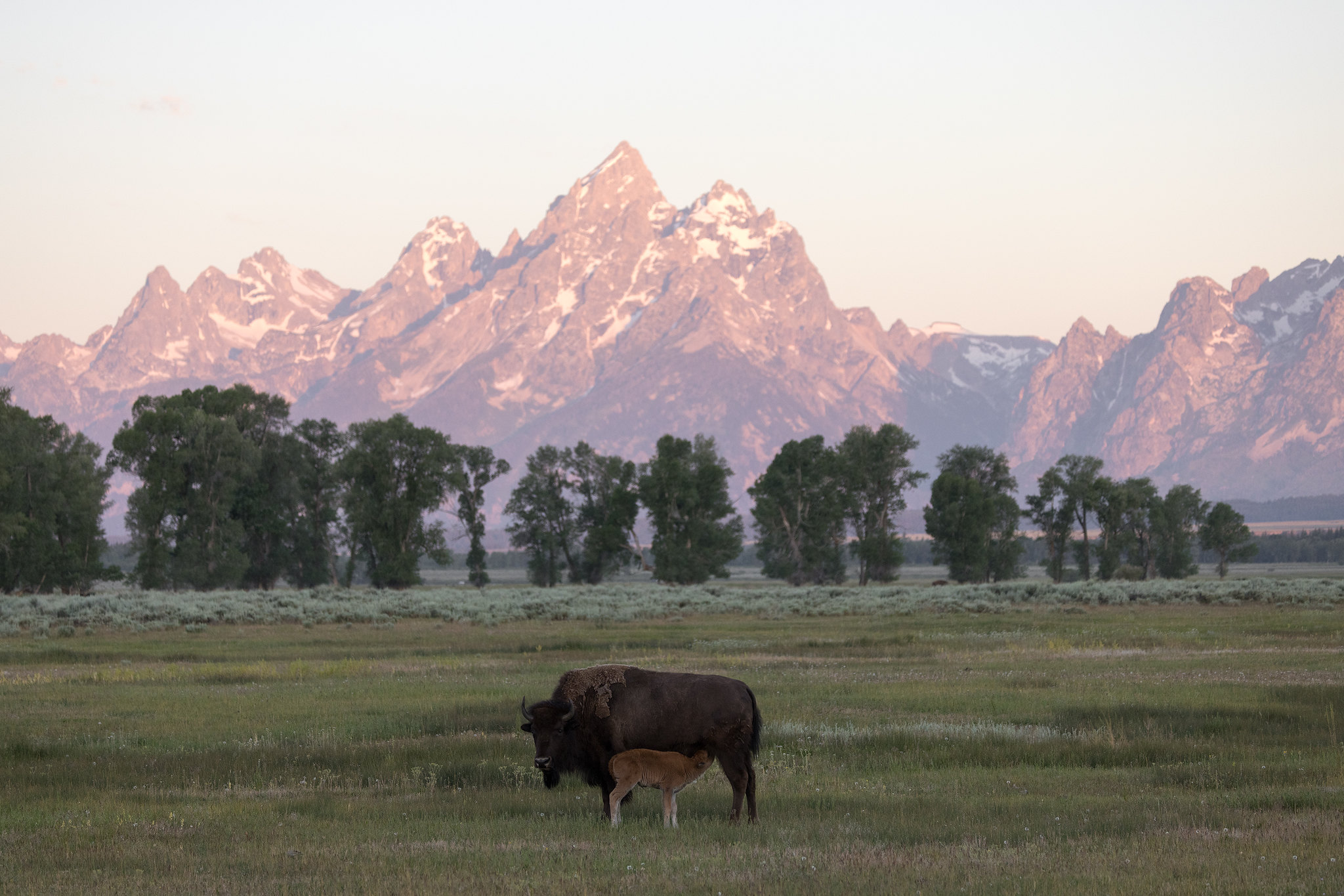
JACKSON, Wyo. — A successful hunting season can mean a lot of different things. For some hunters, it’s seeing lots of game, but being selective in the take. For others, it might mean spending time outdoors with friends and family, harvesting second to the memories made. Whatever the definition, Wyoming’s fall hunting season offers it up for grabs to those who head outdoors.
Forecasts from each region are based on data and observations from the field by department biologists.
Before heading out, Game and Fish reminds hunters to review the 2022 hunting regulations for any season changes. Again this fall, Game and Fish is asking hunters to help with chronic wasting disease management. Hunters are a key part of CWD management.
Hunters and recreationists are reminded to be mindful of the spread of invasive plant species and to report locations of cheatgrass to the county Weed and Pest District. If drought conditions persist, this could affect daily patterns of big game and may require hunters to devote additional effort to locating animals.
As always, big game hunters are reminded that hunt areas denoted with an asterisk (*) have limited public hunting access and are largely comprised of private lands. In these areas, hunters should get permission to hunt private land before applying for a license, or at least recognize that hunting small isolated parcels of public land can be difficult and frustrating at times.
Pronghorn
The Jackson Region harbors a small migratory segment of the Sublette antelope herd in Hunt Area 85. Due to the small number of pronghorn, few licenses are offered, and the distribution of pronghorn and public access opportunities, most hunting occurs in the Gros Ventre River drainage. New for 2022 — Hunt Area 85 hunters will have the opportunity to hunt pronghorn on the National Elk Refuge. The process for obtaining a permit on the refuge is similar to that for elk, and instructions can be found online through the Wyoming Game and Fish Department’s Access Yes! Hunter Management Area program. Population estimates for the entire Sublette herd are currently below desired levels, but hunters lucky enough to draw licenses in Hunt Area 85 will have a great hunt and should experience high success rates.
Mule deer
Portions of the Sublette and Wyoming Range herds are managed in the region, including Hunt Areas 150-152, 155-156 and 144-146. Both herds include large populations with special management strategies designed to provide high-quality hunting opportunities for older age-class bucks. While harsh winters have complicated herd recovery, hunters willing to put in the time and effort should be rewarded with an opportunity to harvest a trophy-class buck from the abundant public lands. Antler-point restrictions were lifted in 2020, so hunters will again have more flexibility in their choice of deer to harvest, while still maintaining older age-class bucks. The Jackson Region also includes the Targhee mule deer herd (Hunt Area 149) and Hunt Area 148 of the Dubois mule deer herd, both of which contain low deer densities and see limited hunter numbers and harvest.
White-tailed deer
Small populations may be found near riparian habitats throughout the region, and all hunt areas in the region offer the opportunity for hunters to harvest deer during the general season. Seven hunt areas were recently combined (148-152, 155-156) to offer limited quota Type 3 any white-tailed deer and Type 8 doe/fawn white-tailed deer license holders more places to hunt during the Sept. 15-Nov. 30 season. Type 3 and Type 8 hunting opportunities also exist in Hunt Area 145 in the Star Valley.
Elk
The region manages four herds (Jackson, Fall Creek, Afton and Targhee) that currently contain at least 18,000 elk and are at management objectives. These areas provide a wide range of hunting opportunities, from early-season rifle hunts for branch-antlered bulls in the Teton Wilderness to late-antlerless seasons on private lands in several areas to address elk damage to stored crops and co-mingling with livestock.
Moose
All or parts of the Jackson, Sublette and Targhee herds are found in the region, and all are managed under a special management strategy to provide recreational opportunities while maintaining a harvest of older age-class bulls. While moose numbers continue to remain below desired levels, hunters lucky enough to draw a license should experience high success and have a good chance of harvesting a bull.
Bighorn sheep
The Jackson (Hunt Area 7) and Targhee (Hunt Area 6) bighorn sheep herds are found in the region. Sheep numbers in Hunt Area 7 are currently above management objectives so Type 1 any-sheep license numbers were increased, and a Type 6 ewe/lamb license was created. Past experience in this herd has shown increased potential for a pneumonia outbreak when sheep numbers approach their current levels. Still, hunter success and the average age of harvested rams are expected to be high. Due to the fact most sheep in the Targhee herd reside in Grand Teton National Park and are unavailable to hunters, only one license is issued each year in Hunt Area 6. In 2022 this license will go to a resident hunter. This makes for a very challenging, but exceptional opportunity to hunt sheep in a spectacular setting.
Mountain goat
Mountain goat numbers in Hunt Area 2 are at desired levels. Hunter success is usually high at between 90%-100% and made up primarily of older age-class billies. This will be the fourth year for the new Type A license in Hunt Area 4. This was created to reduce mountain goat numbers in the Teton Range and minimize the expansion of mountain goats into important bighorn sheep habitats of the Targhee herd. Unlike mountain goat Type 1 and Type 2 licenses, Type A licenses are not once-in-a-lifetime and hunters could potentially draw a license and hunt mountain goats every year. Due to the success of past hunting seasons in Hunt Area 4 and Grand Teton National Park efforts, mountain goat numbers are extremely low throughout the Teton Range. License numbers were reduced for 2022, but hunter success is still expected to be low in 2022. To provide maximum opportunity and flexibility, in 2022 Hunt Area 4 Type A license holders also will have the opportunity to hunt in Hunt Area 5 and vice versa.
Bison
Numbers are currently near the management objective of 500. Mild weather and aversion to hunting pressure on the National Elk Refuge have resulted in delayed or little to no movement of bison from Grand Teton National Park into the open hunt area on the refuge. These conditions make it difficult to achieve harvest objectives and can create challenges for hunters. Some bull hunting occurs on national forest lands, but bison availability there is intermittent and low.
Upland/small game
Due to the small and isolated population of sage grouse in the region, no hunting seasons are offered. Hunters interested in upland game birds, however, can find some of the best blue (or dusky) and ruffed grouse habitats in the state, and seasons run from September through December. Late-season hunters need to be mindful of winter range closures in some areas that begin in December.
Although normal summer conditions have begun to dry things out, a wet spring created improved forage conditions in many areas, which could affect the distribution of animals as well as their daily and seasonal movements.
Migratory Game Birds
Much of Wyoming continues to be in moderate to severe drought. Precipitation in spring and early summer helped conditions in parts of the state, including the Wind River Basin, but some of Wyoming’s biggest waterfowl hunting areas like Goshen and Platte counties remain very dry. There could be below-average success for local broods and reduced habitat to pull in migrants in the fall and winter. Conditions in the Prairie Potholes of the U.S. and Canada are variable but below average. This area breeds the bulk of ducks harvested in Wyoming. Migration chronology and weather, as well as hunter efforts of scouting for birds and obtaining permission to hunt private land when necessary, will influence the success of migratory bird hunters throughout the state.
Ducks
Most of Wyoming’s migrating ducks come from the U.S. and Canadian prairies. Initial reports indicate dry conditions in southern Alberta, eastern Montana and parts of the Dakotas. Prairies in North Dakota and parts of South Dakota are holding significant amounts of water, but overall habitat conditions do not look favorable for duck production. Lower than average duck numbers can be expected.
Dark Geese
Canada geese harvested in the state come from two populations. The Rocky Mountain Population can be found west of the Continental Divide in the Wind River and Bighorn River basins and in western Carbon and Natrona counties. Large geese found in eastern Wyoming belong to the Hi-Line Population. Goose numbers in recent years have been consistently high. Canada goose numbers during hunting season are usually driven by winter conditions and there should be plenty of geese present should the weather cooperate.
Mourning doves
Production within Wyoming in 2022 was average to below-average based on anecdotal reports. The majority of doves will migrate out of the state with the first cold snap, which usually occurs between late-August and mid-September. Doves from northern areas do migrate through the state in mid-September and good hunting can still be found after the first few days of the season.
Sandhill crane
Cranes that migrate through eastern Wyoming — Hunt Area 7 — are primarily from the Mid-Continent Population, which has been relatively stable since the early 1980s and exceeds the established objective range of 349,000–472,000. Cranes that breed and stage in central and western Wyoming —Hunt Areas 1-6, and 8 — are from the Rocky Mountain Population. The fall pre-migration survey in 2021 remained high. Cranes in Hunt Areas 4 and 6 tend to roost and feed in the same locations every year. Roost locations in Hunt Area 4 are Hidden Valley, Riverview Valley and the south side of Ocean Lake. Roost locations in Hunt Area 6 are north of Worland, the Otto area, from Powell to Ralston and Ralston Reservoir. For best success, scout for cranes prior to the season and obtain permission to access the fields they use.
Sage Grouse
The 2022 sage grouse hunting seasons for Wyoming are similar to last year with the exception of a date shift to keep opening day anchored to the third Saturday in September. Hunt Area 1 covers most of the state and is open Sept. 17-30. A three-day season in northeast Wyoming is set for Sept. 17-19 in Hunt Area 4. Sage grouse numbers will be down compared to the last few years and hunters should expect low rates of success. Sage grouse populations appear to be in the midst of a downward swing within their population cycle. The number of birds harvested each year is strongly related to hatching success and over-summer chick survival. Drought conditions from previous years have impacted populations and should statewide conditions continue, chick survival will be limited.
The public can view the 2022 hunting forecast for all eight regions around the state here.