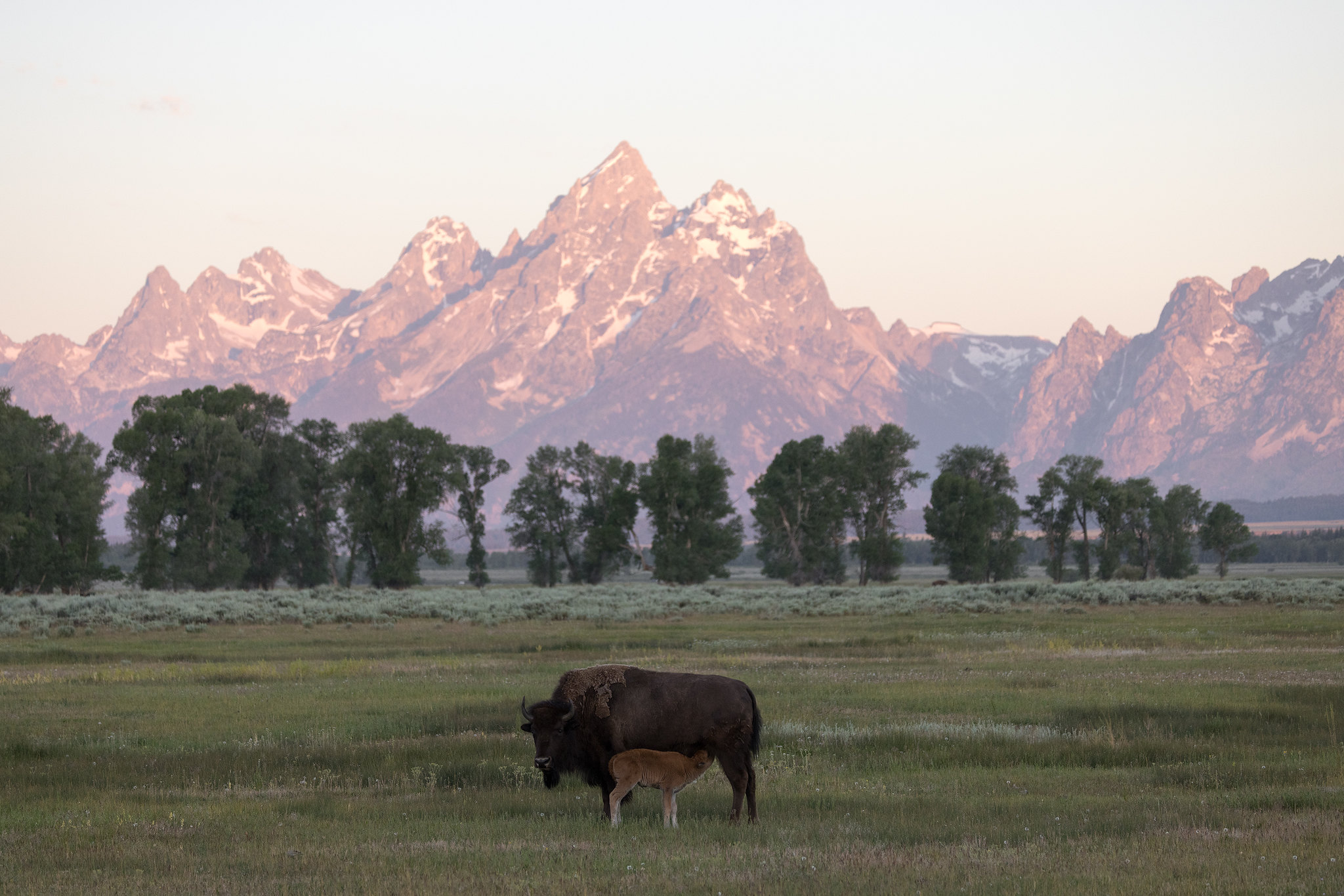
JACKSON, Wyo. — Bears across Teton County are becoming active with the spring transition, and Bear Wise Jackson Hole is reminding residents and visitors to be very bear aware.
According to Bear Wise, adult male grizzly bears begin emerging from their winter dens in March, while females with young generally emerge between April and early May. Bear Wise confirms that March 19 marked the first confirmed grizzly bear sighting of the 2025 season in Grand Teton National Park, 10 days after the first grizzly bear tracks were confirmed by Yellowstone National Park on March 9.
“Seeing a bear in its natural habitat is an awe-inspiring experience,” Bear Wise writes in a press release, “However, living and recreating in bear country requires awareness and actions on our part to keep bears wild and people safe. As the grizzly bear population expanded within the Greater Yellowstone Ecosystem, bears dispersed across their historical range but also in proximity to more populated areas. All of Teton County is now in occupied grizzly bear habitat.”
Bear Wise highlights that 2024 was a challenging year for the human-bear interface in Jackson Hole. According to the release, bears can be attracted to anything associated with human or domestic animal foods, including coolers, cooking equipment, bird feeders and pet dishes that are easily accessible. Once a bear becomes conditioned to human foods, the bear is likely to exhibit increasingly bold behavior, which Bear Wise writes increases risks to the bear and humans and limits management options.
Ways residents can reduce bear conflicts:
- Look around properties and identify any unsecured attractants.
- Store all garbage in bear-resistant containers or in a secure building. Teton County requires IGBC-certified bear-resistant garbage containers in all unincorporated areas of the county. The Town of Jackson requires IGBC-certified garbage containers within designated zones.
- If possible, keep garbage containers indoors until the morning of trash pickup.
- Secure livestock feed, chicken coops, pet food, compost and beehives. Electric fences are effective for securing many of these types of attractants; contact Bear Wise Jackson Hole for assistance.
- Hang birdfeeders in a way that makes them inaccessible to bears. See examples on the Bear Wise Jackson Hole website.
Ways visitors to public lands, such as a national park or national forest, can reduce bear conflicts:
- Never leave food unattended unless it is properly secured.
- Keep a clean camp and adhere to all food storage orders. Store all attractants, including coolers, cooking gear, pet food and toiletries, inside a bear-resistant food locker (i.e. bear box) or a hard-sided vehicle with the windows rolled up.
- Properly store garbage until it can be deposited into a bear-resistant dumpster.
- Do not eat or cook in tents, and never keep food or other scented items in tents.
- Respect all wildlife closure areas.
- When a bear is seen, give it space and always stay at least 100 yards away. Use a spotting scope, binoculars or telephoto lens to maintain an appropriate distance while wildlife watching. Park in designated areas, and never block travel lanes. Follow the directions of staff in places where bears are sighted.
Ways those exploring the backcountry can reduce bear conflicts:
- Be alert and aware of surroundings and avoid wearing earbuds.
- Make noise, especially in areas with limited visibility or when sound is muffled (e.g., near streams or when it is windy).
- Carry bear spray, know how to use it and keep it readily accessible.
- Hike in groups of three or more people.
- Do not run. Back away slowly if a bear is encountered.
Wyoming Game and Fish Department (WGFD) Large Carnivore Supervisor Dan Thompson also previously shared ways to be bear safe this season and 2024 conflict statistics with Buckrail; read more about that here.