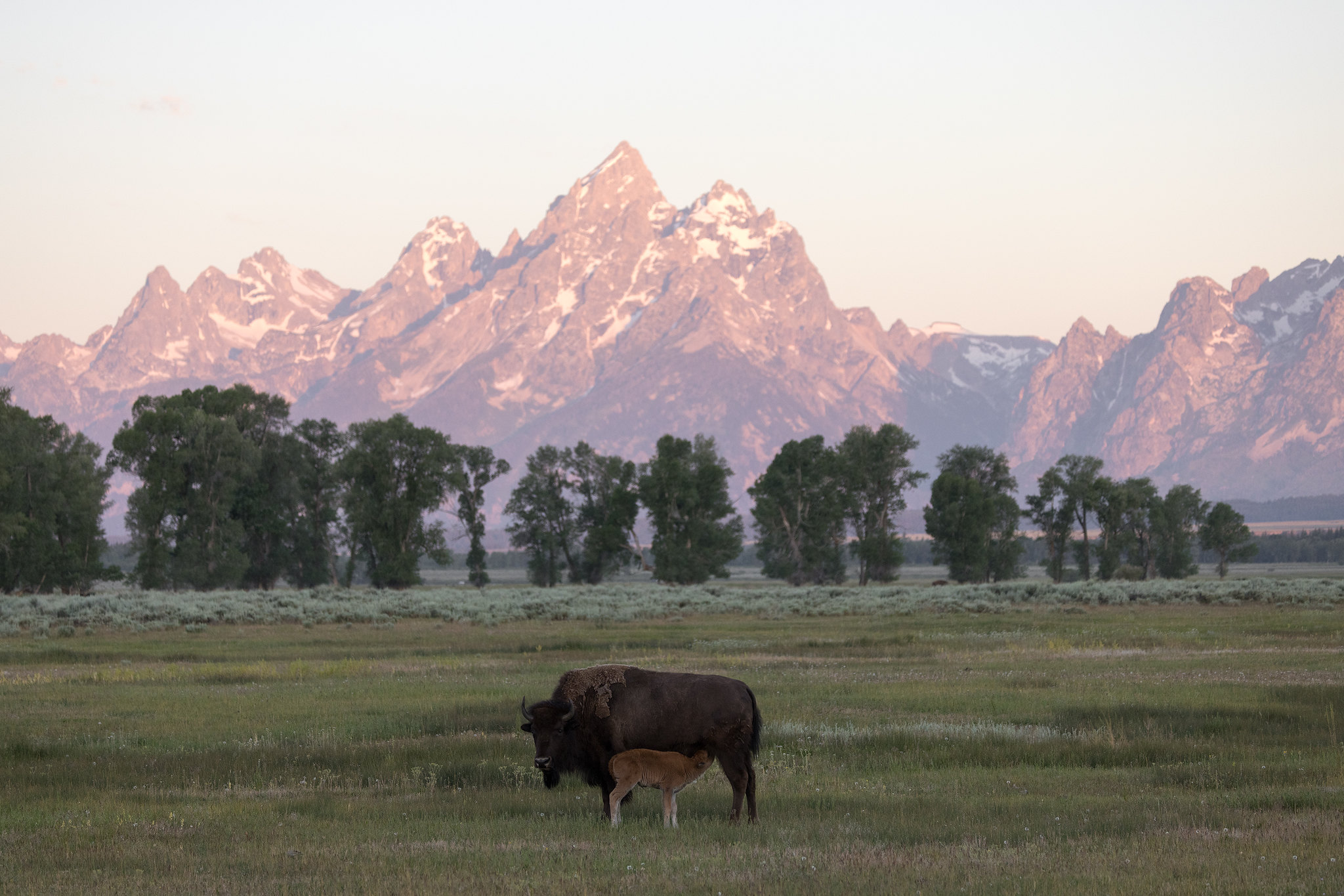
Giles LaJevic-Augustine said skiing in the northern reaches of Grand Teton National Park is like heading into a black hole.
“You can’t really take the data that we get in Teton Village and take it to Jackson Lake,” the Exum backcountry ski guide said. “You’re pretty much out there on your own.”
The winter storms that come through the region can vary widely in terms of snow deposited, wind speed and even temperature, which can wreak havoc on an outing when you’re not prepared.
The data currently offered by the Bridger-Teton Avalanche Center goes as far north as Jackson Hole Mountain Resort, which sits on the southern boundary of the national park, and Grand Targhee Resort on the western side of the range. Stations are also set up near Togwotee, but there’s a big gap between.
The Bridger-Teton Avalanche Center and Grand Teton National Park, through the Grand Teton National Park Foundation, are raising $25,000 to purchase weather stations to expand the avalanche forecasting coverage area. But they’ve got to do it by September 1.
Bob Comey, the avalanche center’s executive director, said the main priority will be to get a weather station installed in the northern end of the park.
“This will fill in a data gap,” he said.
Comey is expecting two of the stations to be automated, which can send direct raw data back to the lab. But he warned that you can’t rely on it too heavily because it’s not being field checked every day.
“The purpose here is to enhance the data coming from that area inside the park,” he said. “This weather station stuff is awesome, and the data will hopefully have value, but more than anything it’s going to enable the avalanche center to have more presence in the national park and interact more with people up in the park.”
If the funds are raised by September 1, the weather stations will be installed this year and be in use for the 2018-19 winter.
More and more people are venturing into the national park during the winter months, and many are exploring deeper. Especially in the northern part of the park, LaJevic-Augustine said the lines are big. When the reward is so high, so are the consequences.
“You have to feel 100 percent,” he said, “and if you had more information you could get closer to that feeling.”
More information and donations can be made at gtnpf.org/initiatives/forecast.