YELLOWSTONE NATIONAL PARK — In the Monday, Dec. 23, edition of Yellowstone Volcano Observatory’s (YVO) Caldera Chronicles, Scientist in Charge Michael Poland explores what Yellowstone National Park (YNP) looked like before volcanoes started to erupt.
According to Poland, YNP has been a site of persistent volcanic activity for over two million years, shaping the iconic landscape of geysers, colorful hot springs, lakes, meadows, mountains, valleys, forests and grasslands. To understand what the region looked like before volcanic activity, Poland says geologists have looked at the characteristics of the areas bordering the Yellowstone region: the mountain ranges, rock types and faults that make up areas like the Tetons, Jackson Hole, the Gallatins and Paradise Valley in Montana.
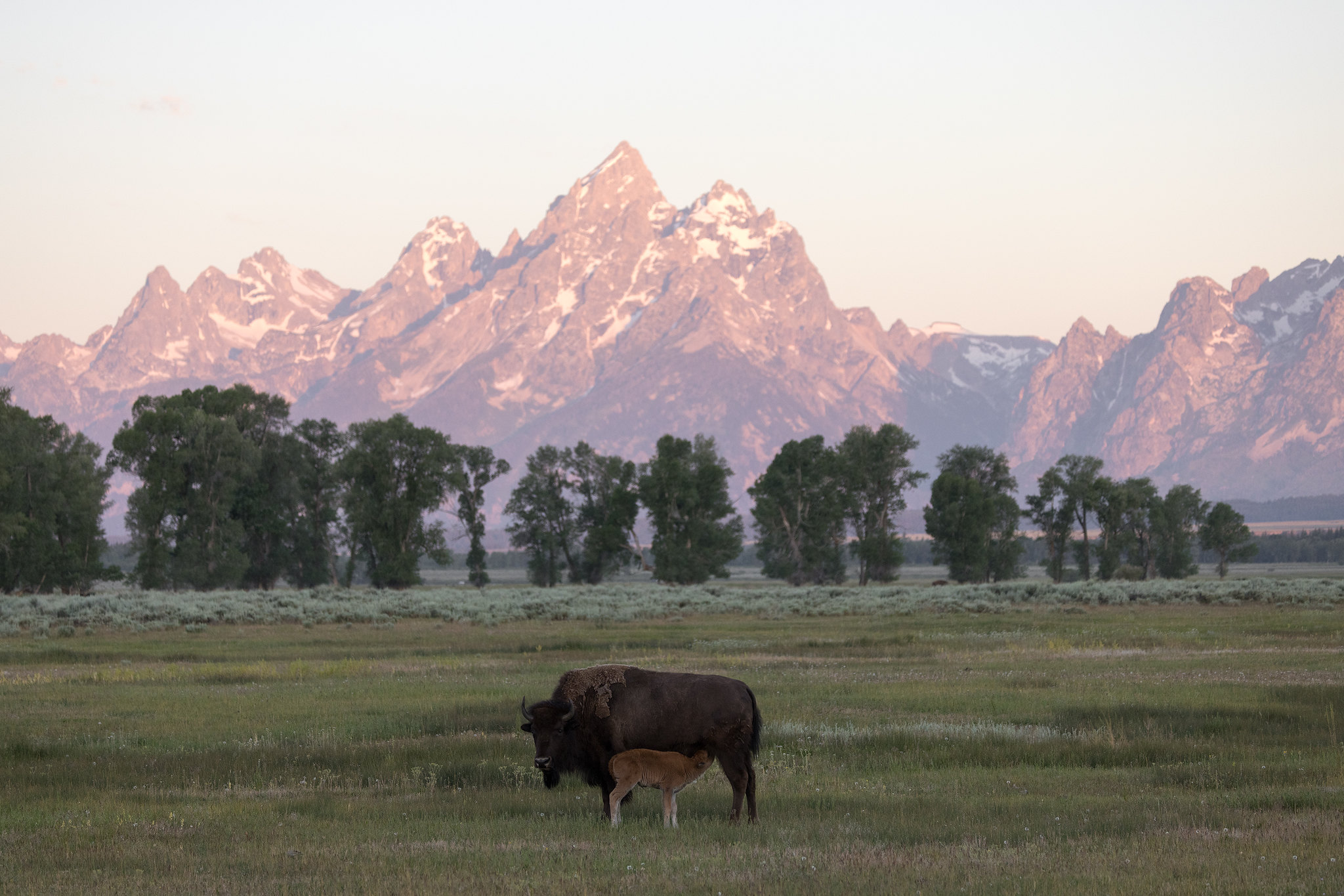
Poland writes that the pre-volcanic YNP landscape was mostly made of high-elevation areas without the basin that is present today. Instead, mountain ranges ran mostly north-northwest to south-southeast across the region, and today’s Gallatin and Madison ranges in the north were most likely connected to the Tetons and other mountains to the south.
Seismicity maps show several north-northwest to south-southeast bands of earthquakes beneath Yellowstone Caldera, Poland confirms, which he says possibly delineates the still-existing faults that controlled the mountain ranges blown apart when the large explosive eruptions began in the YNP region.
“Because there were mountains throughout the Yellowstone region before the big explosions, erosion was an important process,” Poland writes. “The high mountain ranges were gradually being ground down, and sediments eroded from these peaks accumulated in valleys at the bases of the ranges. Some of these sediments still exist today, capped by thick blankets of ash from caldera-forming eruptions of the Yellowstone system.”
According to Poland, the first volcanic eruptions from the YNP region began at least 2.2 million years ago. The first of three great caldera-forming eruptions occurred 2.08 million years ago, which caused thick ash to spread over an area larger than the state of Connecticut to dramatically alter the landscape.
Today, Poland recommends visitors driving to YNP from the north, south or west take a moment to appreciate the landscape that exemplifies what the Park used to look like a few million years ago.