DUBOIS, Wyo. — The Wyoming Game and Fish Commission met in Dubois on May 21, and voted to approve an additional $500,000 towards the construction of wildlife crossings situated along U.S. 26/287, spanning all the way from the Wind River mountain range region to the Grand Tetons region.
The project study area includes eight mitigation segments between mileposts 48 to 73, east and west of Dubois. The funding will construct three new underpasses, one overpass and improve construction on three existing underpasses.

According to the Wyoming Game and Fish Department (WGFD), this stretch of highway is one of the most dangerous and costly in the state regarding wildlife-vehicle collision (WVC) risk. It has been identified as a top priority in the Wildlife and Roadways Initiative. From 2015 through 2019, WVCs accounted for 74% of all vehicle crashes between mileposts 48 to 73 on U.S. 26/287. Each year, on average, 28 reported wildlife-vehicle crashes are reported to law enforcement, and an additional 131 recorded animal carcasses are removed from this section of roadway. The annual cost of these collisions is estimated at $791,400, including property damage, accident response, cleanup costs and the value of the wildlife killed in the crashes.
Once fully completed, the Connecting Wildlife on the Togwotee Trail Dubois project is expected to result in an 80% to 90% reduction in wildlife-vehicle collisions, saving an average of more than $800,000 in vehicle damage and human injury costs per year, according to the WGFD.
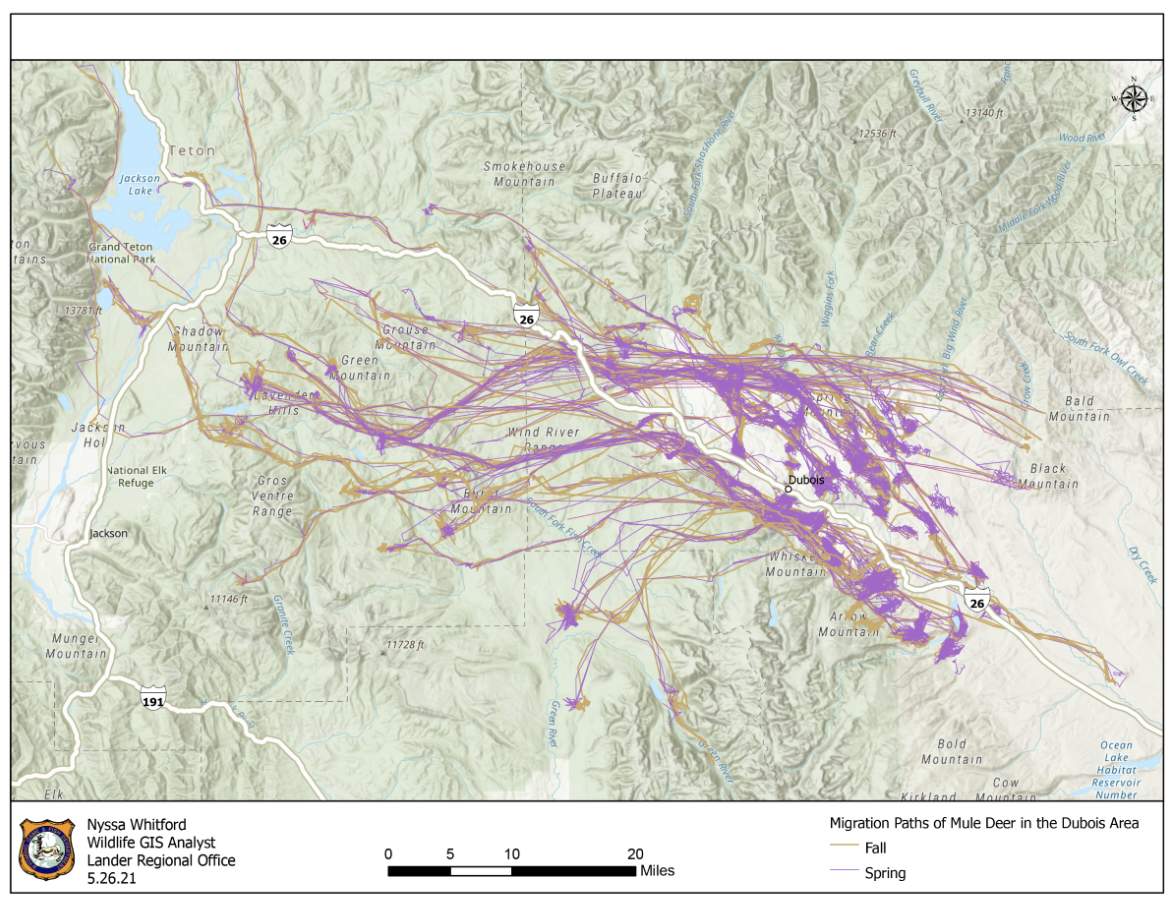
These crossings will maintain habitat connectivity for mule deer, elk, bighorn sheep, white-tailed deer, moose and pronghorn. Mule deer from northwest Wyoming migrate through Dubois and cross U.S. 26 multiple times. About 5,000 mule deer winter in the Upper Wind River Valley and cross the highway daily for food and water.
Elk, moose, white-tailed deer and pronghorn also winter in the region, and many stay year-round. Bighorn sheep near Red Creek frequently cross the highway and are often seen foraging or licking road salt along the right-of-way. The WGFD says that the Togwotee Trail Dubois project will help reduce to wildlife-vehicle collisions with all of these species crossing U.S. 26.
The wildlife crossing project is a result of a collaborative effort between the Northern Arapaho and Eastern Shoshone Tribes and partners.