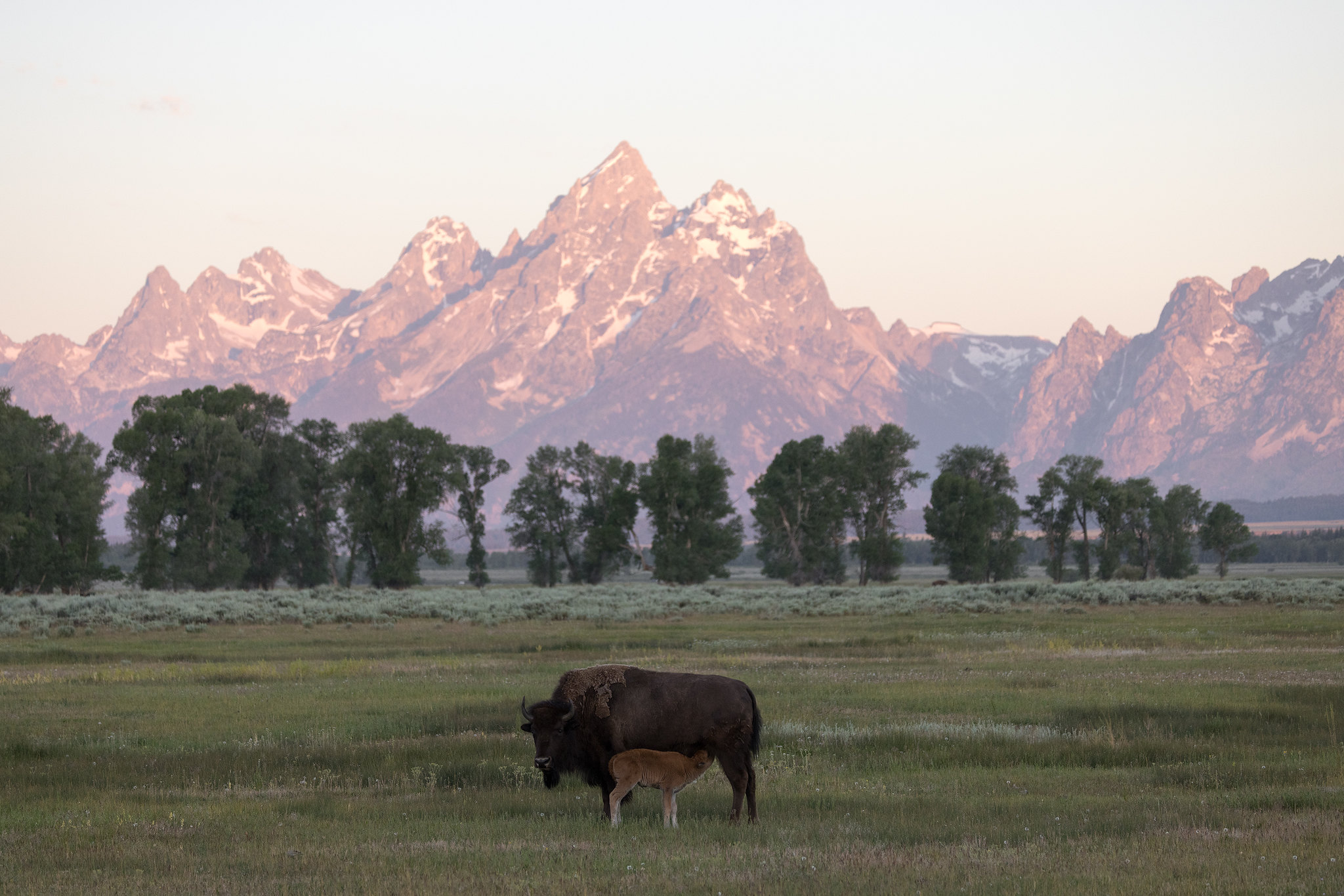
JACKSON, Wyo. — This past week, Buckrail’s photographer Nick Sulzer traveled around Jackson Hole to observe how much wildfire smoke has drifted into the valley.
Sulzer captured a hazy layer of smoke sitting above the resident bison herd, Slide Lake, the Kelly Warm Springs and a local herd of horses grazing on the permanently protected Kelly Parcel.


The lingering smoke has blown in from various regions across the state where multiple wildfires are currently burning forests and vegetation. Governor Mark Gordon has issued two emergency Executive Orders, in response to the Red Canyon Fire in Fremont County, the Spring Creek Fire near Ten Sleep, the Sleeper Ranch Fire near Meeteetse, the Dollar Lake Fire in the Green River Lakes area in Sublette County and the Willow Creek Fire near Smoot.
According to GTNP, wildfire smoke can increase the particulate matter in the air, impacting its Class I airshed. The Teton Conservation District wrote on its website that particulate matter is the main health hazard attributed to wildfire smoke, causing microscopic particles to aggravate respiratory systems, asthma and chronic heart and lung diseases.

Animals in Grand Teton National Park (GTNP) can be impacted by smoke similarly to humans. Air pollution can cause animals to experience difficulty breathing, eye irritation, disorientation and fatigue, per GTNP.

The National Park Service wrote that some wildlife species, from elk to grizzly bears to rodents, can also benefit from vegetation regrowth after a fire. Depending upon fire severity, certain plant species can resprout from their roots or germinate from seeds, including lodgepole pine, aspen and various shrubs. Many birds in particular rely on the insects that come to feed in newly burned forests, and they also use standing dead trees for nest sites.

As of Wednesday, Aug. 27, downtown Jackson’s air quality index of 90 falls into the “Moderate” category, according to AirNow’s Fire and Smoke Map.
Bridger-Teton National Park forecasts continued rain and elevated humidity through Thursday, which could help remove smokey particles and gases from the atmosphere.