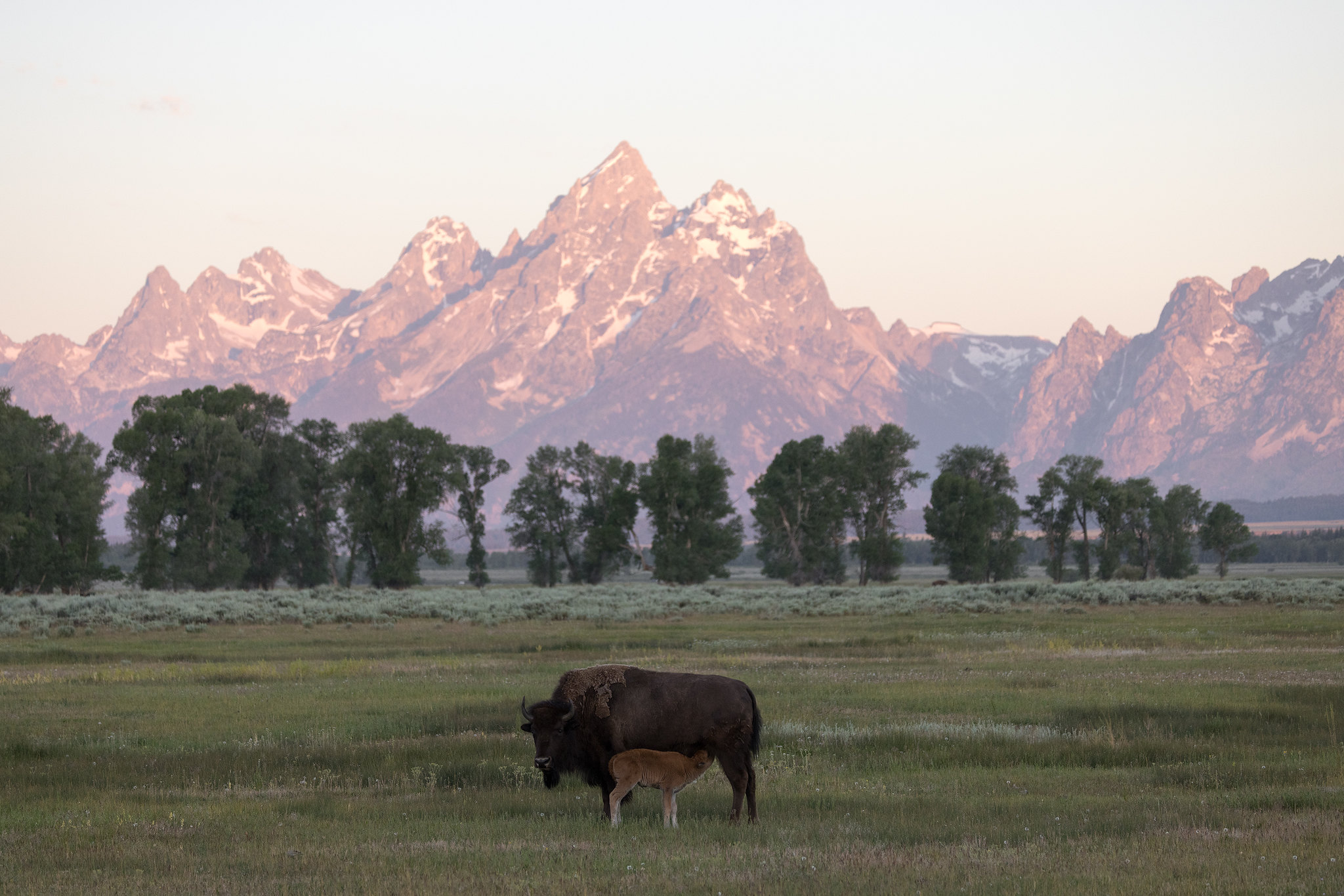
MOOSE, Wyo. — Fall is a time of migration, which means many animals can be more active near Grand Teton National Park (GTNP) roadways and cross the roads unexpectedly.
As fall transitions to winter, days become shorter and it’s more difficult to see wildlife on the roads. Drivers should use caution and slow down, especially at dawn, dusk and during the night when visibility is reduced.
According to GTNP, around 75 to 100 large animals are hit by vehicles annually in Grand Teton National Park.
“Don’t kill your wildlife,” GTNP said via its website. “Park staff work tirelessly to preserve the diversity of animals found within Grand Teton. So, join us in protecting the wildlife that visitors come from all over the world to see by slowing down, keeping alert and saving a life.”
Visitors and local residents should obey posted speed limits and maintain a safe following distance from other vehicles. Follow the nighttime speed limit of 45 miles per hour on U.S. Highway 26/89/191. The reduced speed limit gives drivers and wildlife more time to react.
Many animals are good at hiding along roadsides and it is important to be aware that animals are around, even when they can not be seen. Speeding is not the only cause of wildlife collisions; animals are often hit because drivers are not paying attention to their surroundings.
When an animal is hit, wildlife management staff are sent to respond. Depending on the circumstances, this pulls staff members away from their other duties for a considerable amount of time in order to perform carcass removal, biological sampling and clean up. This directly impacts park staff’s ability to protect other wildlife.
Call Teton Interagency Dispatch Center at 307-739-3301 to report wildlife-vehicle collisions, or harassment of wildlife in the park.