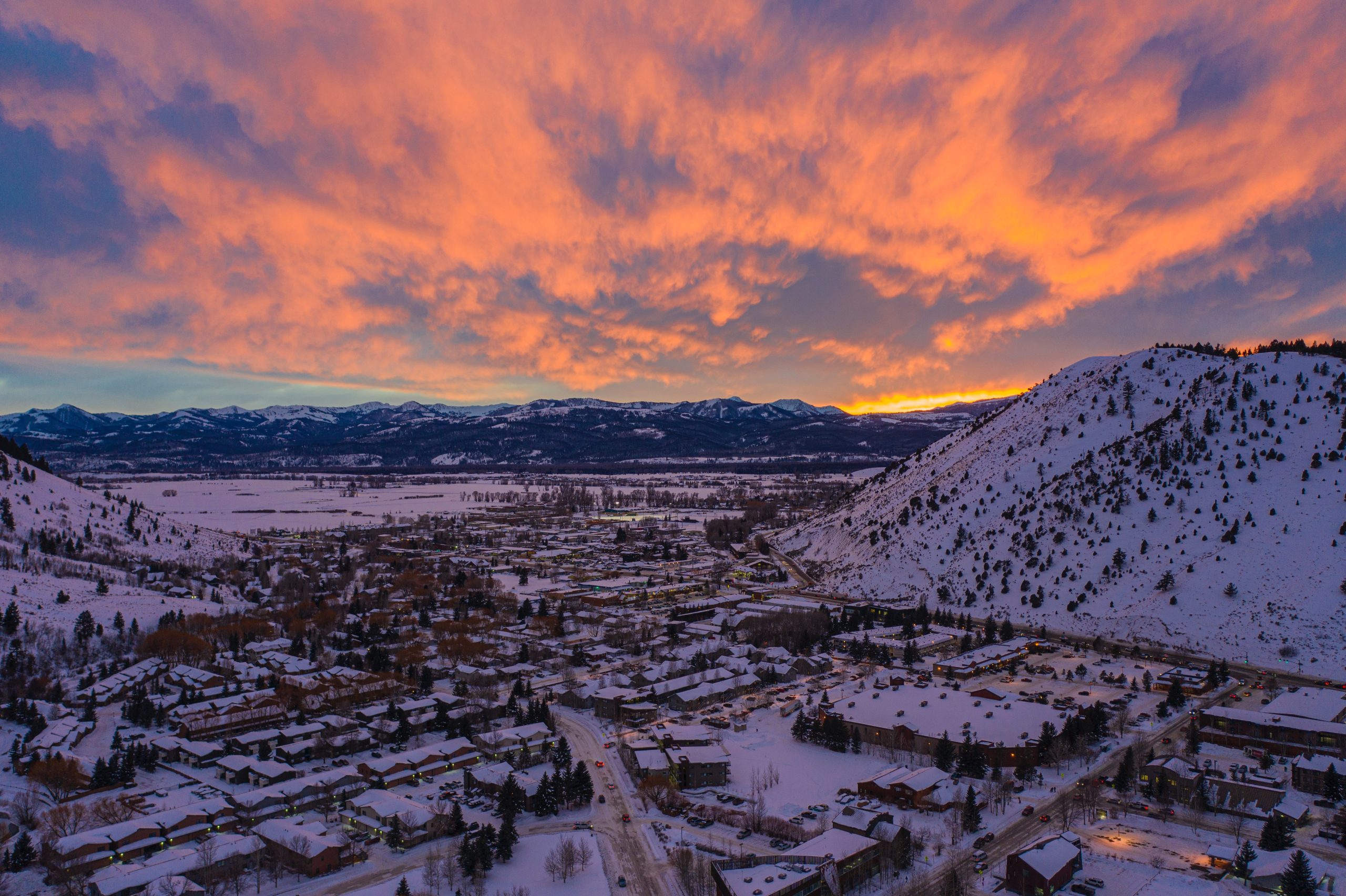
JACKSON, Wyo. — The community has just received big news from the Wyoming Department of Environmental Quality (WDEQ) — Fish Creek, the beloved Snake River tributary renowned for its historically robust cutthroat trout fishery, has been officially listed as impaired due to nutrient pollution. This is a big deal: Fish Creek is the first flowing waterbody to be nutrient-impaired in the entire state of Wyoming. This listing is also a very good thing: it drives action to restore a degraded watershed.
Nutrient pollution is caused by excess nitrogen and phosphorus in water. When too much nitrogen and phosphorus enter the environment, water quality can change for the worse. Nutrients fuel the growth of algal blooms, which alter fragile habitats, obstruct human recreation and even threaten the health of humans and wildlife when they turn toxic. Warmer water temperatures, driven by climate change and human manipulation of the water cycle, only exacerbate these changes.

The effects of nutrient pollution can reach far beyond the bounds of the river channel as well. Nitrate, in particular, is a threat to human health when consumed in drinking water.
A few weeks ago, WDEQ finalized its Wyoming’s 2022/2024 Integrated 305(b) and 303(d) Report, a biannual report submitted to the U.S. Environmental Protection Agency (USEPA) under jurisdiction of the Clean Water Act, summarizing the condition of Wyoming’s surface water quality and identifying specific waterbodies that do not meet the state’s water quality standards.
Fish Creek and its adjacent wetlands were first designated as Class 1 waters by the WDEQ in 1978. While this is the highest level of protection offered by the state, stewardship of this treasured community resource has necessitated decades of grassroots conservation efforts and technical research. Residents began to notice and complain about higher levels of algae in the 1990s and early 2000s. As a result, several studies were conducted to characterize the declining water quality in the creek and identify the drivers behind these changes. Fecal bacteria (indicated by E. coli) and nutrients (nitrogen and phosphorus) have been the focus of nearly a dozen studies over the past quarter-century. Thanks to organizations like Teton Conservation District (TCD) and the United States Geological Survey carrying out studies utilizing cutting-edge methods, it is clear that the primary sources of these pollutants are lawn fertilizers, domestic animal waste and human wastewater.


The work to characterize Fish Creek’s changing water quality and aquatic habitat provided an opportunity for WDEQ to develop methods that can hopefully be applied across the rest of Wyoming. Together with Tetra Tech Inc. and the USEPA, WDEQ released the Fish Creek Nutrient Assessment in the fall of 2023. Due to Fish Creek’s unique hydrology and the rapid uptake of nutrients by the algae living on the bottom of the creek, it took several years of diverse data collection to document a shift in the stream’s physical, chemical and biological characteristics in a way that justified a new impairment listing. Section 303(d) of the Clean Water Act requires states to develop pollution control strategies to restore water quality in the form of a watershed plan. Currently, TCD, private consultants, WDEQ and the USEPA are working diligently on the Fish Creek Watershed Plan, which will serve as an Advanced Restoration Plan to shape management and restore designated uses for the creek.

Despite knowing that lawn fertilizers, domestic animals and human wastewater are the primary drivers of nutrients and bacteria entering the creek, the community within the Fish Creek watershed has yet to holistically and intentionally implement best management practices to reduce nutrient pollution in surface water and groundwater. In a 1979 quote to the Jackson Hole News, Bill Resor of Snake River Ranch said, “If you’re going to protect water quality (in Fish Creek), you might as well protect all the tributaries.” Indeed, it will take everyone working together to achieve the widespread incremental change necessary to fully restore this cherished ecosystem to its former grandeur.
Learn more from Protect Our Water Jackson Hole.