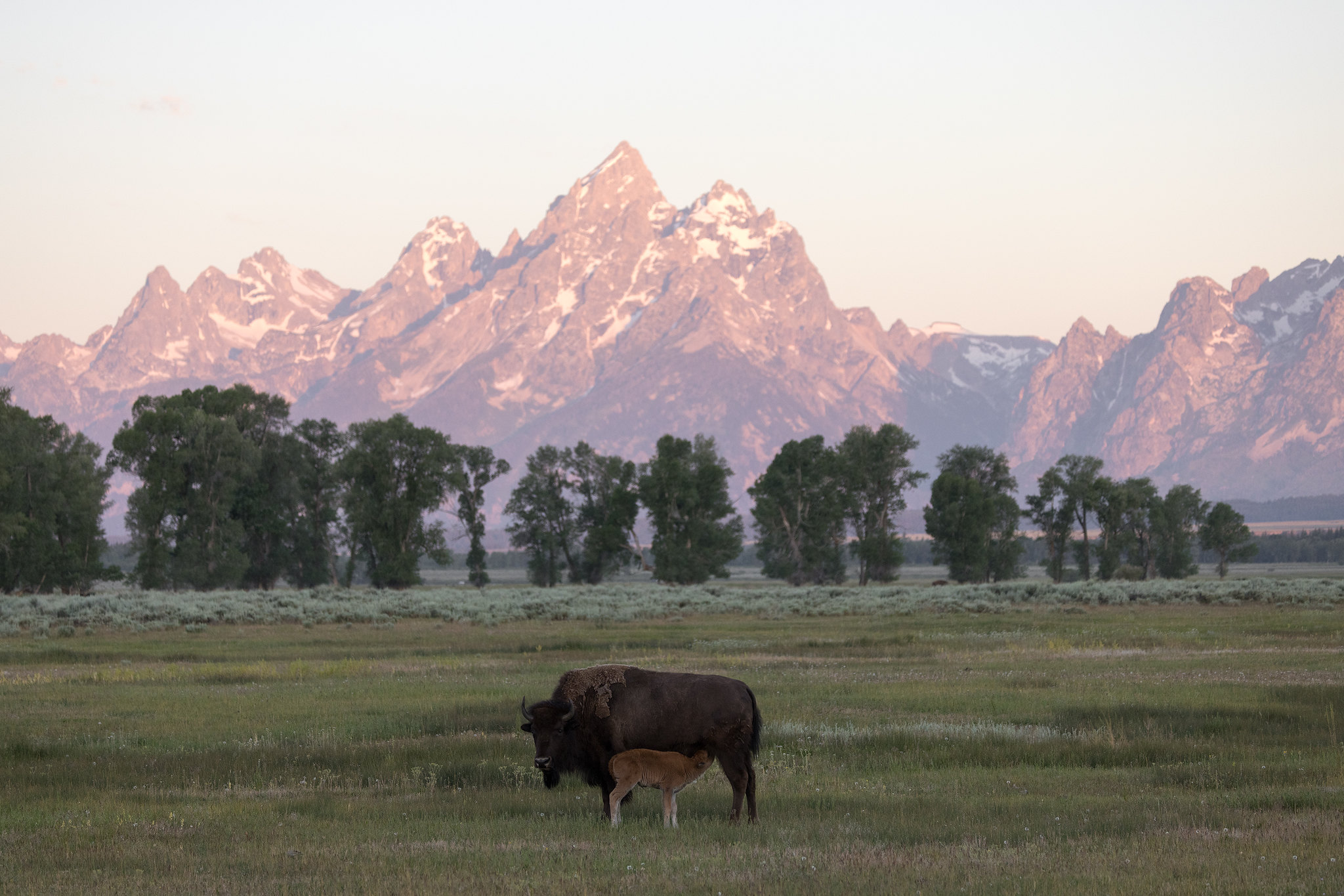
JACKSON, Wyo. — On Friday, Jan. 17, Montana-based conservation groups the Alliance for the Wild Rockies (AWR) and Council on Fish & Wildlife (CFW) sued Yellowstone National Park (YNP) over its 2024 Bison Management Plan (BMP) for what they claim is “senseless harassment and pointless slaughter” of the national mammal.
This lawsuit comes three weeks after the state of Montana filed a 51-page lawsuit against the National Park Service (NPS) also in response to the BMP, demanding the bison population in YNP be reduced from an estimated 5,400 animals to 3,000 to prevent the spread of brucellosis and claiming the state did not receive adequate cooperation in the development of the plan.
When Buckrail reached out to YNP regarding this pair of lawsuits, its Public Affairs Office stated that the NPS does not comment on litigation. However, in response, YNP did share a letter sent to the state of Montana by YNP Superintendent Cameron H. Sholly in July 2024 addressing the state’s concerns.
“We should be realistic about what is possible right now,” the letter reads. “Your recent letter called our offer to meet with you again ‘disingenuous,’ which is unfortunate. You’ve had multiple visits from me, senior DOI leadership and Yellowstone’s wildlife team, at your request. Over two years ago, I offered to consider and include a State alternative in the analysis (April 13, 2022 – IBMP meeting). That offer was never followed up on. Regardless, many of the State’s concerns around available winter habitat and disease transmission outside the park were considered and included, even if other State demands were found to be unrealistic. Additionally, many of the cooperating agencies, tribes and most public commenters disagree with the State’s position on this plan.”
The letter confirms that if YNP had started the winter of 2022/2023 with 3,000 bison, like Montana demanded, the population would have decreased to less than 1,500, an unacceptably low number for multiple reasons outlined in the Environmental Impact Statement (EIS).
The letter goes on to confirm that low numbers of bison could diminish the ecological role of bison as habitat engineers, nutrient redistributors, plant growth pattern alterationists, biodiversity improvers and meat for predators, scavengers and decomposers. Most tribal hunting opportunities would also be eliminated.
The second suit alleges that YNP’s plan will not protect or expand the range of its resident bison, and argues that the focus on brucellosis transmission is misplaced. According to a statement by the AWR that was published to its website on Monday, Jan. 20, while tens of millions of wild bison once roamed across western North America, wild bison today occupy less than one percent of their former range.
Further, the AWR points to the U.S. Department of Agriculture’s Animal and Plant Health Inspection Service’s commissioned National Academies of Science, Medicine and Engineering study that found over the past 20 years it has been wild elk, not wild bison, that transmitted brucellosis to livestock 27 times. Wild bison were not responsible for a single transmission.
The AWR claims that the NPS’ BMP ignores the National Academies’ recommendations to switch the focus for brucellosis management in the Greater Yellowstone Ecosystem from wild bison to wild elk, and the new plan’s EIS fails to address the proven source of brucellosis transmissions to livestock as elk, not bison.
“This is why we sued,” the statement reads. “The Park’s new management plan fails to provide any rational reason whatsoever to continue hazing, capturing and slaughtering the nation’s last herd of wild bison.”
While YNP told Buckrail that the NPS does not comment on litigation, the Park’s 2024 letter does state its commitment to “increased bison conservation and restoration opportunities” and notes that a larger bison population could not be supported “given the lack of available winter habitat outside of the park and State restrictions around external tolerance.”
Buckrail will continue to report on this story as updates become available.