JACKSON HOLE, WYO – One of the best ways to slow or stop the spread of brucellosis to domestic cattle is to reduce the size of the elk herd in the Greater Yellowstone Area (GYA), according to a new study—the first update to the Revisiting Brucellosis in the Greater Yellowstone Area since the original was released in 1998.
A committee to revisit brucellosis in the GYA released a report this week for the National Academies of Sciences, Engineering, and Medicine that singled out elk, not bison, as the threat to cattle getting the highly contagious zoonotic infection, which can then be transmitted to humans.
The panel admitted “much has changed in the 19 years since the previous report. There is now clear evidence that transmission of B. abortus to domestic livestock in the GYA has come from infected elk, not bison, posing greater challenges for control of transmission to domestic species.”
The disease has been well-contained in the US with the exception being the region comprising and surrounding Yellowstone National Park. “The only remaining US reservoir of B. abortus infection is in the Greater Yellowstone Area (GYA), where wildlife transmitted cases spill over into domestic cattle and domestic bison. Yet this spillover is now occurring with increasing frequency, raising the possibility of brucellosis reoccurrence outside the GYA,” wrote the committee chair Terry F. McElwain.
The report stated that while there was no single approach to fighting the spread of brucellosis, the battle has to include a focus on elk and reducing their numbers. A strategy that could be achieved by hunting, contraception use, and removal of infected animals.
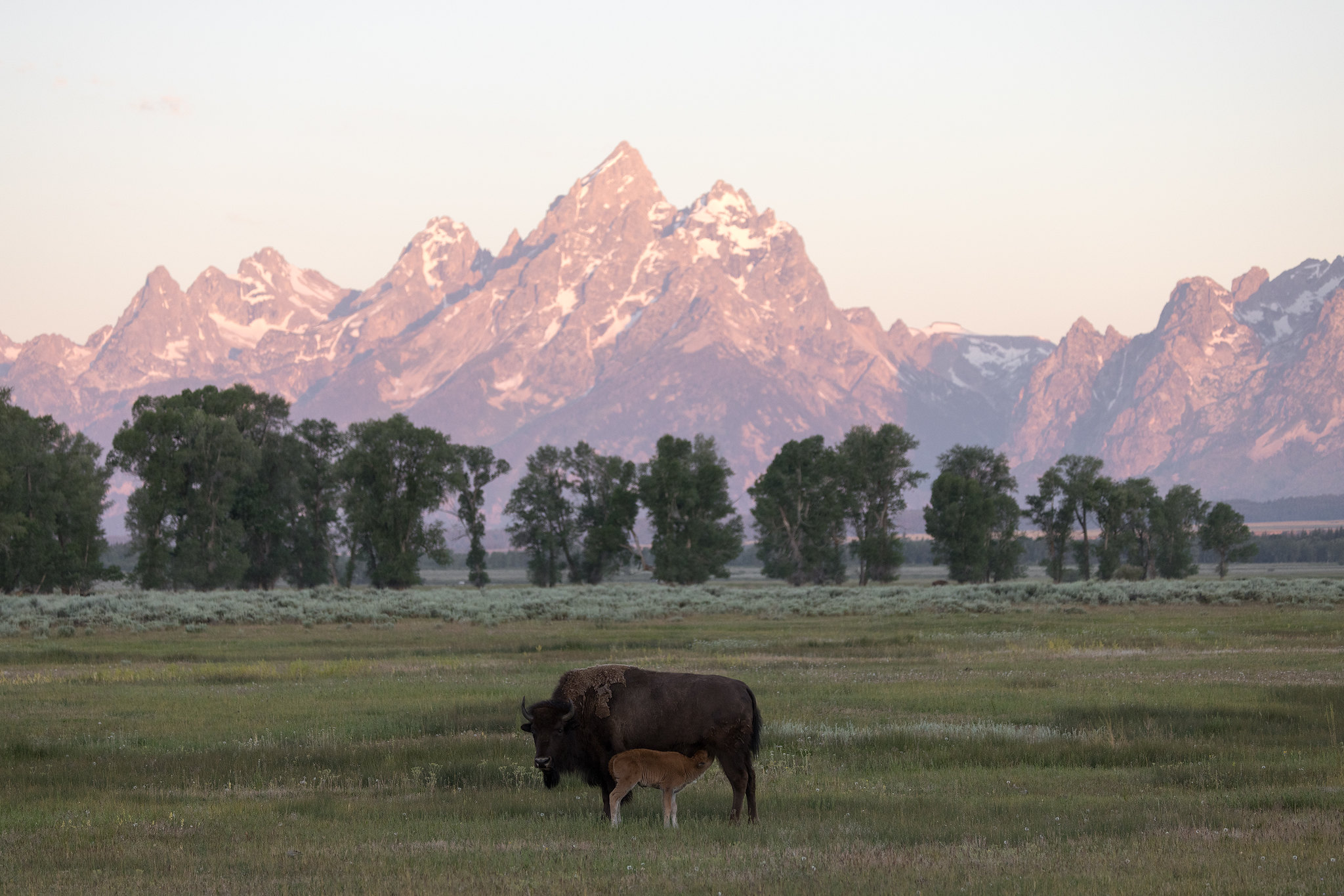
The study showed the GYA is home to more than 5,500 bison that are the genetic descendants of the original free-ranging bison herds that survived in the early 1900s. It also plays host to more than 125,000 elk whose habitats are managed through interagency efforts, including the National Elk Refuge and 22 supplemental winter feedgrounds maintained in Wyoming.
Since the National Research Council (NRC) issued the 1998 report Brucellosis in the Greater Yellowstone Area, brucellosis has re-emerged in domestic cattle and bison herds in the GYA; from 1998-2016, 22 cattle herds and 5 privately-owned bison herds were affected in Idaho, Montana, and Wyoming. During the same time period, all other states in the United States achieved and maintained brucellosis class-free status.
Tough choices ahead
The report’s authors admitted supplemental feeding is a controversial issue. Feedgrounds have been a useful conservation and hunting tool for managing elk populations and have certainly helped keep elk away from ranch/farm haystacks and cattle. “However, it is widely accepted that feedgrounds promote transmission of B. abortus among elk and are likely responsible for causing and maintaining elevated seroprevalence in those areas,” the authors stated.
The group suggested weaning elk from supplemental feedgrounds beginning with ceasing feeding earlier each spring.
“Closure of feedgrounds appears to be an obvious approach to control brucellosis in the GYA, but there are impacts of feedground closure that will need to be considered and assessed,” the report said.
Brucellosis was first discovered in the Yellowstone region in 1917. It is thought domestic cattle spread the disease to elk, that then transmitted it to free-ranging bison. The disease has now come full circle. Mostly eradicated from domestic cattle but the danger exists now in elk or bison “giving the disease back” to livestock.
Read the full Brucellosis Report.