JACKSON, Wyo. — Grand Teton National Park (GTNP) scientists are documenting the migrations of mule deer moving between their summering grounds in the Park to crucial wintering areas throughout the Greater Yellowstone Ecosystem (GYE).
Mule deer populations “escape the extreme winters by traveling to the far-off high deserts,” GTNP said via Facebook on Friday, Nov. 15.
According to the National Park Service (NPS), mule deer struggle to survive in the extreme winter snow of the GYE, so populations will move together across the landscape to distant wintering areas. Mothers teach their fawns a route that is passed down through generations. The University of Wyoming says fawns learn by watching and accompanying their parents during the migration seasons.
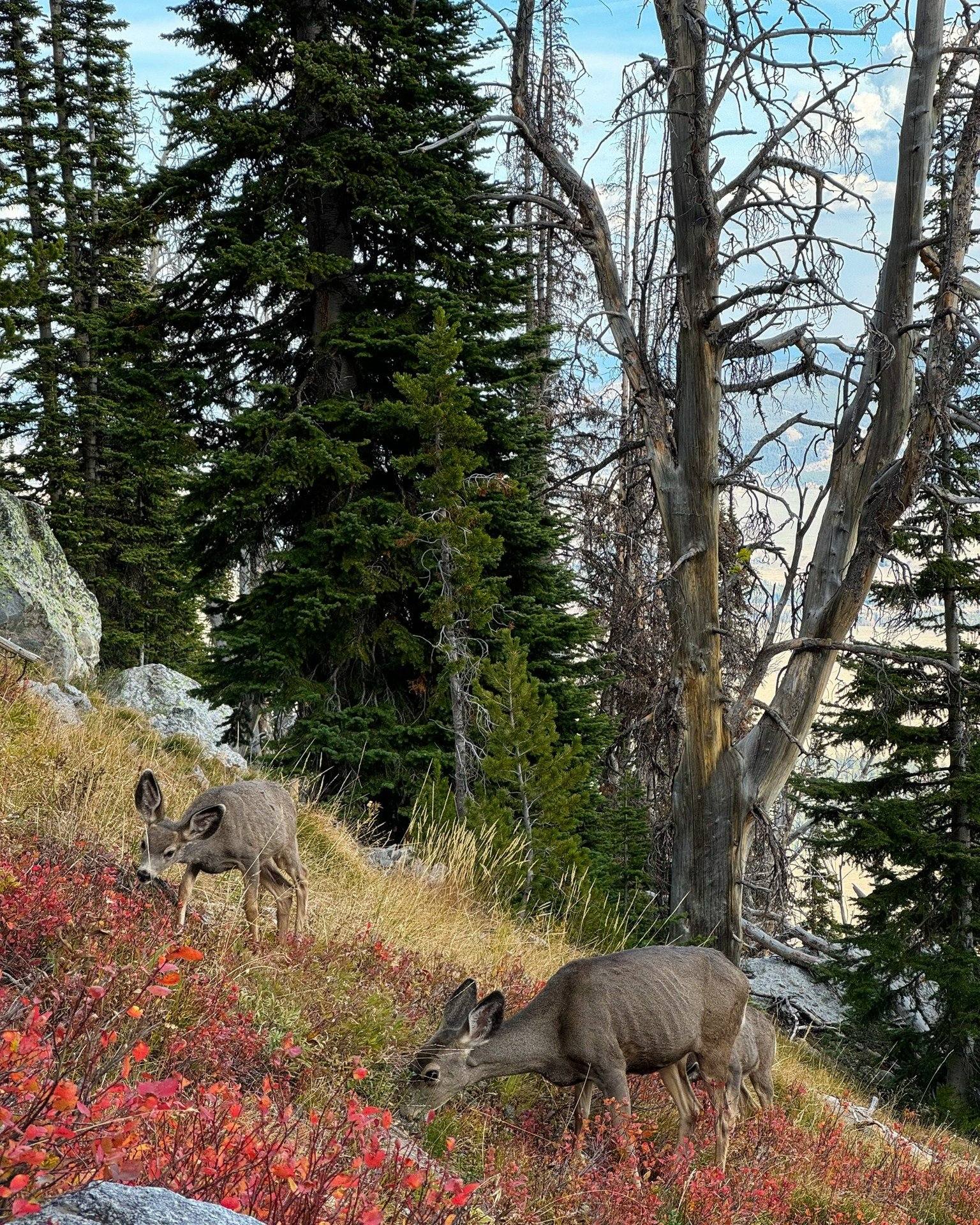
Twice a year, mule deer from GTNP travel as short as 40 miles or as far as a couple hundred miles, writes the NPS. Populations will cross a number of waterways, including large rivers such as the Snake, Yellowstone and Green rivers. According to GTNP, the migration encompasses a wide variety of habitat types from sand dunes and sagebrush steppe to montane forest and alpine meadows.
To date, the mule deer migration research project recorded that the longest migratory movement was a mule deer traveling 190 miles between its summer range near Spalding Bay in GTNP to wintering grounds northeast of Rock Springs.

“We know that on their routes, thousands of deer move across a patchwork of public and private lands, roads, farms, through towns and over mountains,” NPS said via its website. “Elevations within the eight corridors ranged from 5,000 feet on wintering grounds to over 10,000 within the mountainous routes.”
The Park’s research project identifies migration routes, seasonal use areas, movement barriers, stopover areas and conservations needs. According to the NPS, mule deer migration is threatened by roads, fences and development.
“We need to understand how mule deer migrate if we are to help them survive,” NPS said via its website.
The Park says it will continue to document migration movements as an first step to conservation actions.