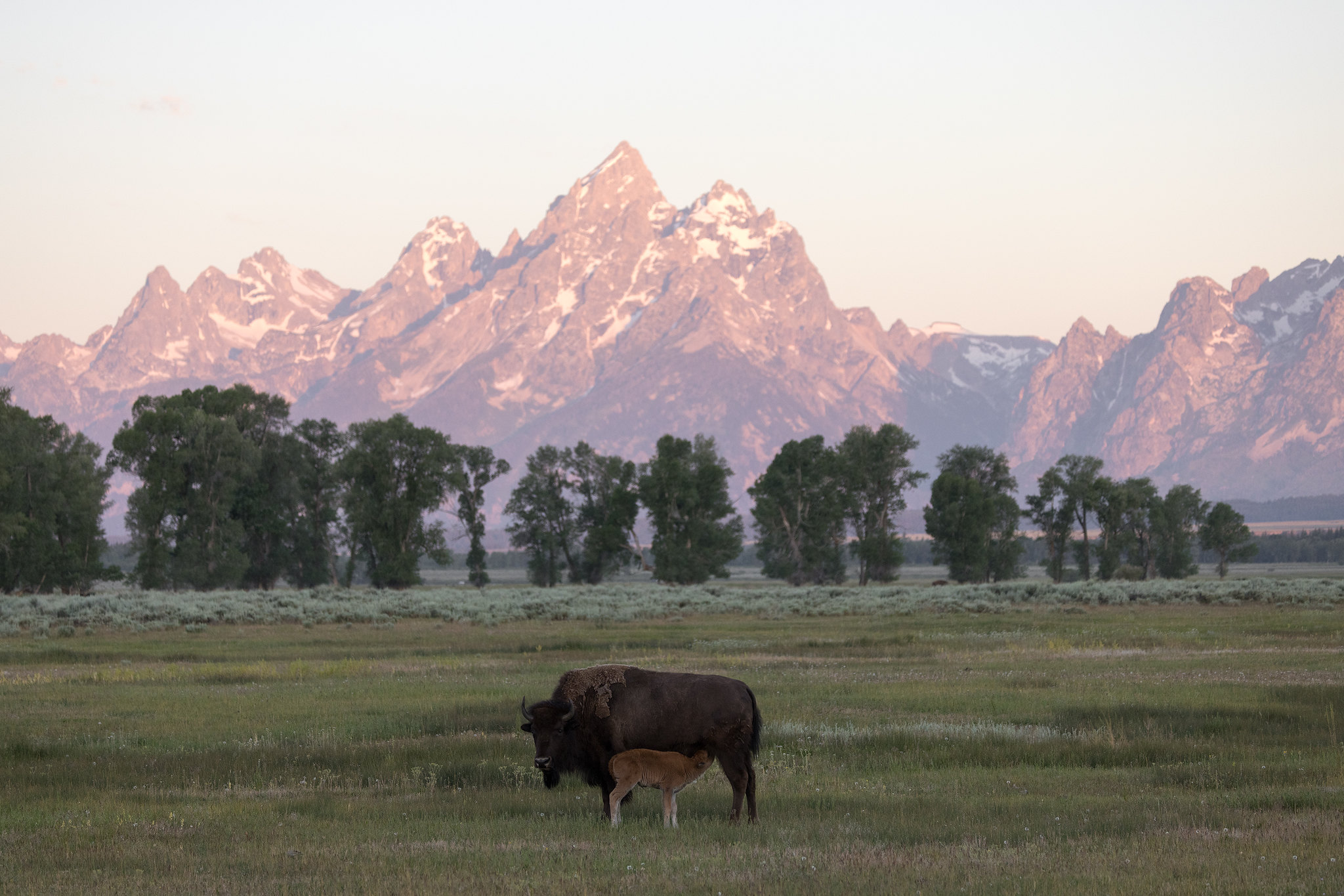
MOOSE, Wyo. — To protect wildlife, Grand Teton National Park (GTNP) officials are asking visitors and local residents to practice vigilance and slow down while driving on park roads.
On Wednesday, June 28, GTNP reported a yearling male black bear was struck by a vehicle along Highway 89 in the northern part of the park and had to be euthanized due to the extent of its injuries. The young bear was likely one of the triplets recently weaned from a family group many visitors had the opportunity to observe this spring.
According to GTNP, the individual(s) who hit the bear fled the scene.
In addition to the yearling, in the last week GTNP also reported three deer were hit by vehicles traveling on park roads.
“With the Fourth of July weekend approaching, one of the busiest times of the summer, motorists are urged to do their part to protect these animals.”
Grand Teton National Park
“Seeing wildlife in their natural habitat is one of the many unique opportunities that make the park a special, awe-inspiring place,” GTNP emphasizes in a press release. “With the Fourth of July weekend approaching, one of the busiest times of the summer, motorists are urged to do their part to protect these animals.”
Wildlife are often active near park roadways, difficult to see and can cross the road unexpectedly. GTNP reminds visitors and local residents:
- Obey the posted speed limit and maintain a safe following distance from other vehicles.
- Use caution and slow down, especially at dawn, dusk and at night when visibility is reduced.
- Follow the nighttime speed limit of 45 miles per hour on U.S. Highway 26/89/191. The reduced speed limit gives drivers and wildlife more time to react.
- Pay attention to your surroundings. Speeding is not the only cause of wildlife collisions; park wildlife are often hit because drivers are distracted.
- Call Teton Interagency Dispatch Center at 307-739-3301 to report wildlife-vehicle collisions or harassment of wildlife in the park.
About 75 to 100 large animals are struck by vehicles each year in the Park.