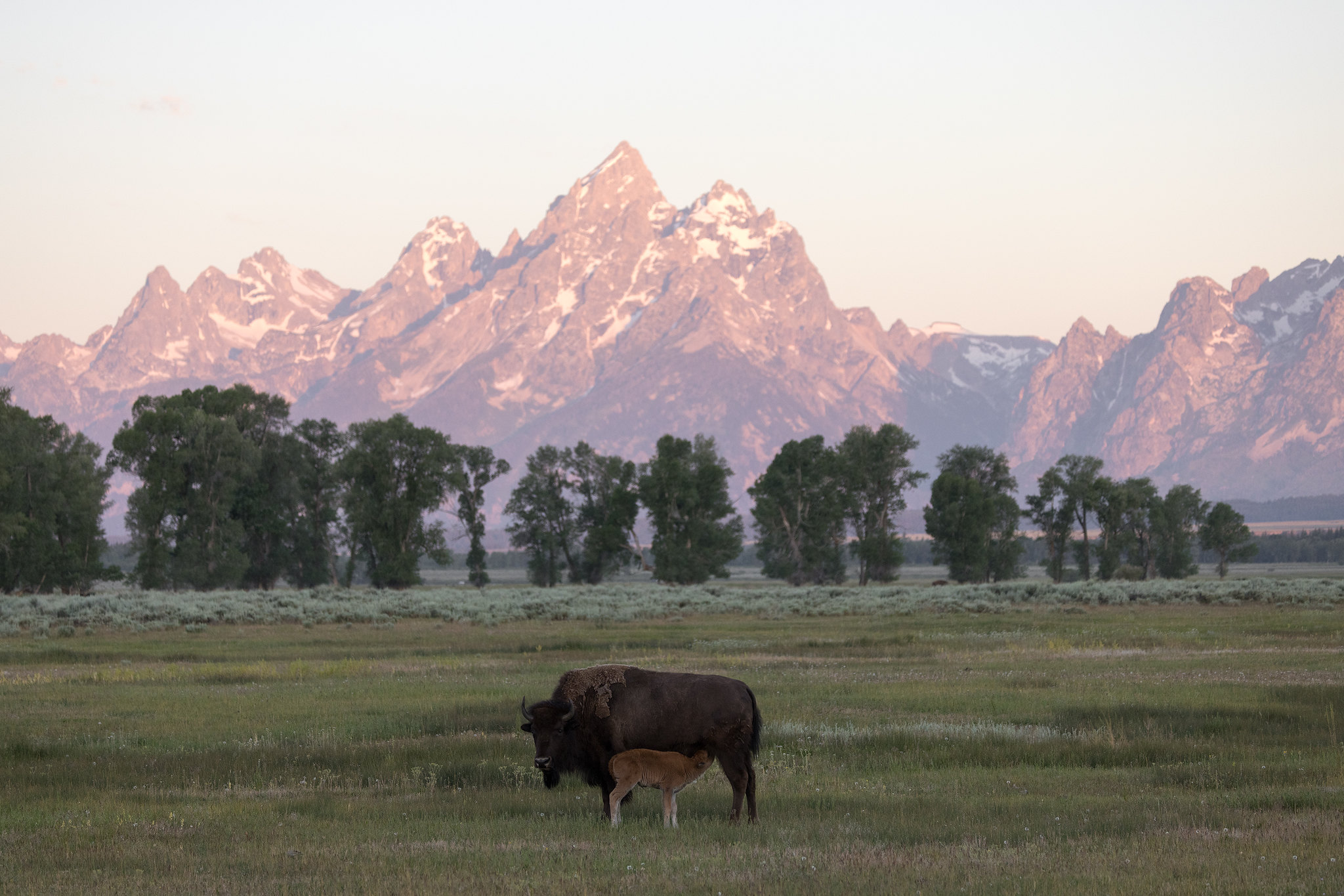
Whether the Wyoming Caucus or Freedom Caucus triumphs Tuesday will impact policies ranging from public education and mental health care, to energy and wildlife
By Madelyn Beck, Dustin Bleizeffer, Katie Klingsporn, Mike Koshmrl and Maggie Mullen, WyoFile
Wyoming voters will decide on dozens of individual legislative races when they head to the polls Tuesday. But the one contest that won’t show up on any ballots could be the most influential: control of the statehouse.
With so few Democrats running for the Wyoming Legislature this year, Tuesday’s primary election will decide the majority of statehouse races, likely cementing the balance of power between the two factions of the state’s Republican party for the next two years.
The hard-line Wyoming Freedom Caucus aims to take a majority in the House, building on the momentum of the 2022 election when it bolstered its ranks.
Meanwhile, the traditionalist Wyoming Caucus intends to keep its spot at the helm of the statehouse and stave off the push from its right flank. It officially coalesced last year in direct response to the Freedom Caucus, and is ideologically aligned with the majority of the members of the House.
Currently, about 26 of Wyoming’s 62 representatives are either members of the Freedom Caucus or consistently vote alongside the group. Accounting for less than half of the chamber, the caucus currently relies on the support of other lawmakers to pass legislation. To shed that dependence, the caucus would need to add at least six members and occupy 32 seats.
That said, the Freedom Caucus now possesses enough members and allies to block bills on introduction during a budget session when two-thirds support is needed. That power was on full display during the 2024 session.
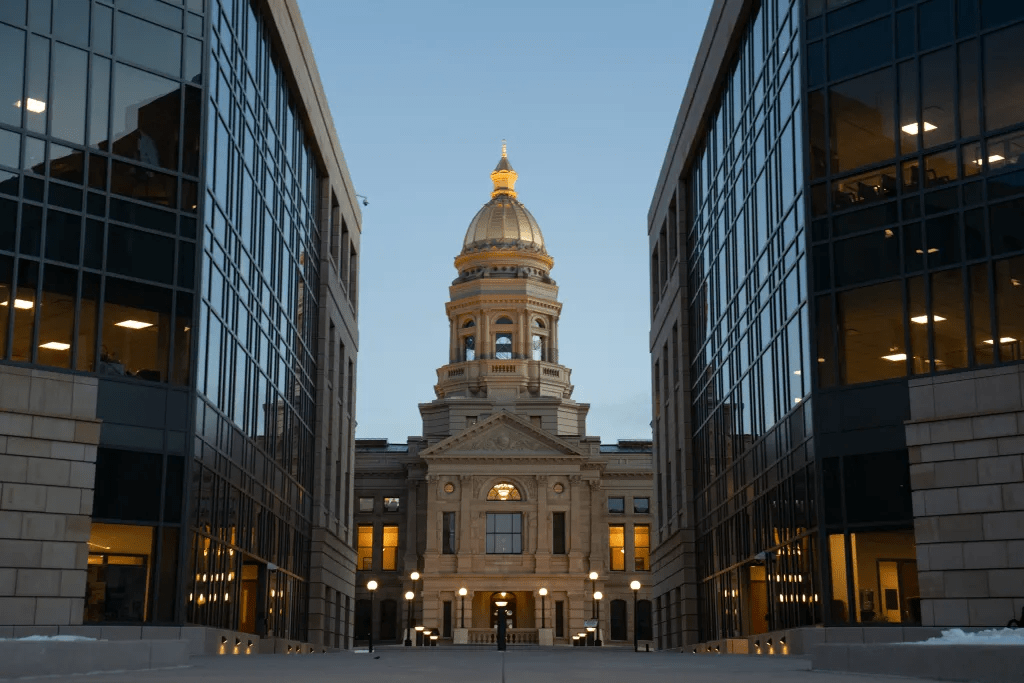
If the Freedom Caucus collects enough seats to gain a majority in the House, its powers will extend beyond voting margins.
The group will be in a position to decide leadership, including speaker of the House and majority floor leader. Both positions come with significant sway. The former, for example, decides committee members and chairmanships.
Those assignments are also powerful since committee approval is required of all successful legislation.
While Freedom Caucus member Rep. Chip Neiman (R-Hulett) secured the position of majority floor leader last term — by a single vote — the group has not yet chaired any committees.
Whether the Wyoming Caucus or Freedom Caucus comes out on top on Tuesday will impact policies ranging from public education and mental health care, to energy and wildlife.
WyoFile’s beat reporters break it down topic by topic.
School choice, parental rights
In the education realm, hard-right control of the statehouse would likely lead to broader support for universal-school-choice and parental-rights policies.
A fight over a bill to create education savings accounts illustrates the will of the Freedom Caucus for school vouchers. The group introduced legislation during the 2024 session that would have given $6,000 per child to Wyoming families to pay for private education or homeschool costs. The Freedom Caucus touted it as “universal school choice,” while critics called it unconstitutional.
The Wyoming Constitution prohibits the use of public dollars to pay for private education.
The Freedom Caucus is also a strong advocate for parental rights in schools. Members supported an unsuccessful 2023 bill that would have restricted public school teachers from discussing sexual orientation or gender identity with K-3 students.
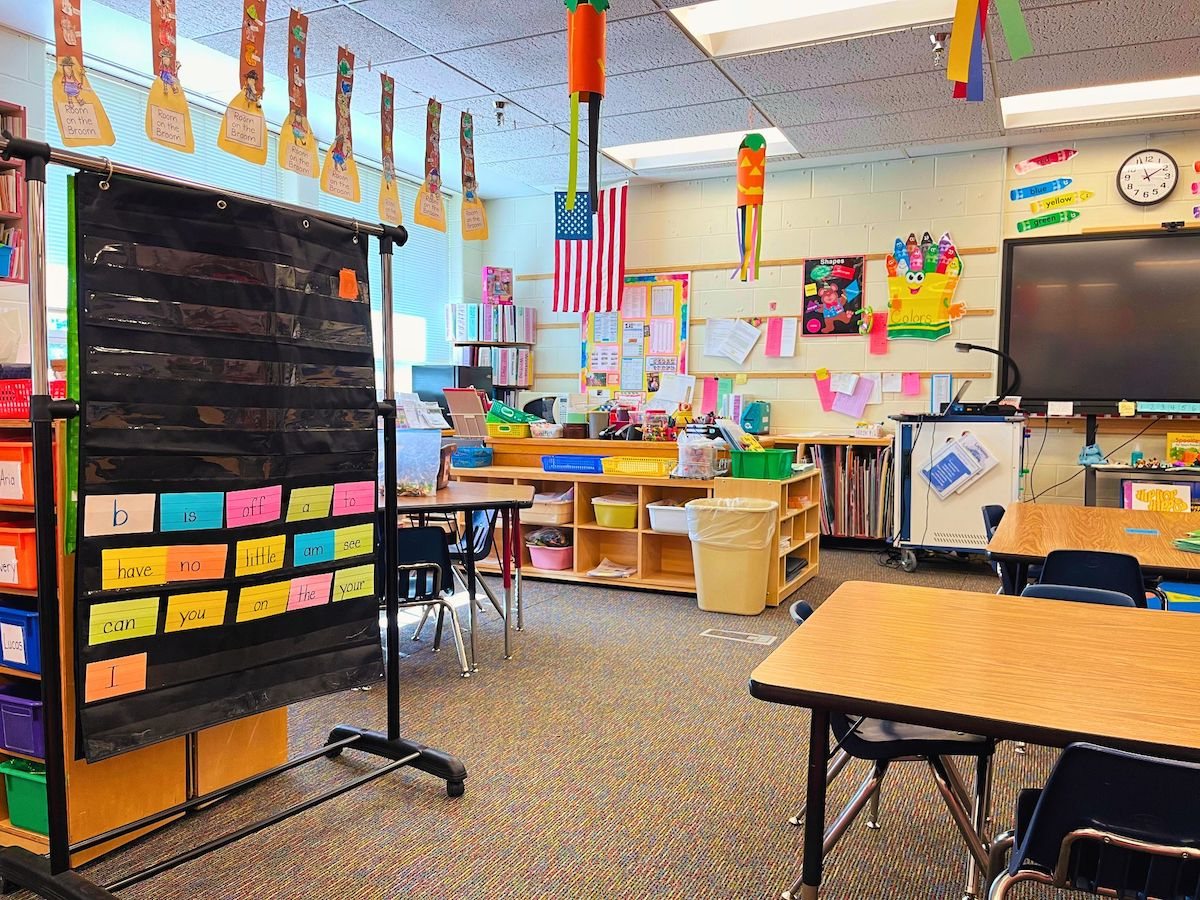
A related 2024 law, Parental rights in education-1, requires school districts to adopt policies “to reinforce the fundamental right of parents and guardians to make decisions regarding the care and control of their children.”
The law, which was overwhelmingly supported by Republicans, also requires districts to notify parents or guardians of services or changes relating to their student’s “mental, emotional or physical health or wellbeing.”
Some communities have struggled to interpret the law’s language as it relates to changes in gender identity.
Mental health services
The Wyoming GOP’s two factions have disagreed on funding mental health and suicide prevention.
Speaking as to why he opposed more funding for K-12 mental health, Rep. Jeremy Haroldson (R-Wheatland) said, “It’s not the role of government.”
“We have to ask ourselves, ‘Is it our place as the government to try and fix this problem?’” he asked fellow lawmakers on the House floor in 2024. “I would go as far as to say we can’t, that’s an impossibility.”
The Freedom Caucus used its voting bloc to keep $37 million in grants to address K-12 mental health from being introduced during this year’s session, but the legislation was revived to some extent in a budget amendment.

While the 988 Suicide and Crisis Lifeline’s trust fund did receive some funding last year, it also wasn’t funded at the requested $40 million, which would have safeguarded its operations indefinitely. Instead, lawmakers authorized $10 million in support.
There were efforts to protect the fund, but cuts were made, in part, because of the contentious budget negotiations earlier this year.
“Not out of dislike for the trust fund, not out of anything other than just trying to reduce the expenditures in this bill to where both sides would vote on it,” Rep. Lloyd Larsen, an ally of the Wyoming Caucus, told WyoFile in March.
Much of the contention came from butting heads between the two chambers.
Still, Larsen said he expected this fund to receive more money in the future to sustain 988 (operations are funded for the near future via the Wyoming Department of Health and federal grant funds).
However, if Freedom Caucus members band together with new members, they could vote down further trust fund allocations, saying previously they had concerns the money and crisis line don’t address the root of the problem. Advocates contend that the Wyoming-based 988 lifeline has been a help to around 4,000 people who called during its first year, about 1,000 of which were veterans.
Wyoming’s suicide rate is second highest in the nation.
Energy and climate policies
A statehouse shakeup could also have major implications for the state’s energy and climate policies.
Rooted in the false and repeatedly debunked claim that human-caused greenhouse gas emissions are not a major contributor to the global climate crisis, members of the Freedom Caucus took aim at Gov. Mark Gordon for a speech he gave at Harvard University in October in which he acknowledged a need to reduce greenhouse gas emissions.
Their climate-denial criticism includes efforts to potentially roll back the Legislature’s years-long work to mandate carbon capture at coal-fired power plants in the state — policies that many Freedom Caucus members say they believe are unnecessary and too costly for Wyoming ratepayers.
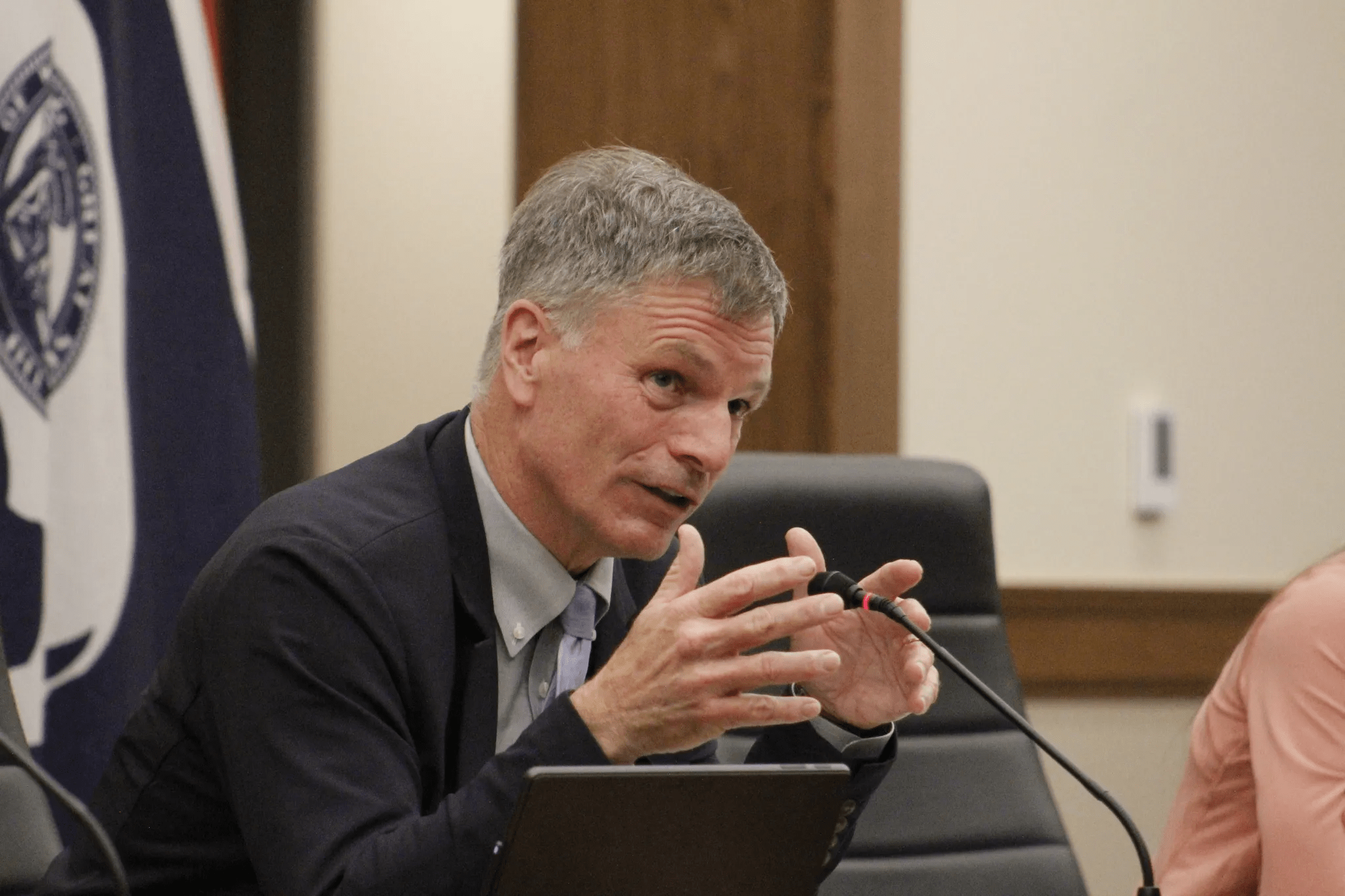
Freedom Caucus members also led an effort during this year’s budget session to defund and block additional appropriations to the state’s Energy Matching Funds program, which Gordon maintains control over to support various energy projects — many of them to bolster low-carbon strategies. Sen. Cheri Steinmetz (R-Lingle) brought the measure, Senate File 1 amendment 1S-3041, which passed in the Senate on a vote of 16-15 with support from many senators who align with the House’s Freedom Caucus.
The amendment was ultimately stripped during budget negotiations between the two chambers.
Freedom Caucus members also claim that Gordon hasn’t been aggressive enough in challenging the Biden administration’s climate and land management policies in court. (Since he took office in 2019, Gordon’s administration has initiated or taken part in at least 57 lawsuits either challenging federal “natural resources” policies or defending them in litigation brought against federal regulatory agencies by public health and conservation groups, according to a list his office provided to WyoFile.)
Far-right lawmakers championed Senate File 13 – Federal land use plans-legal actions authorized, which earmarked $75 million for the Legislature — and potentially counties — to bring legal action against the federal government over land-use plans, such as the Bureau of Land Management’s draft resource management plan for 3.5 million acres in southwest Wyoming. Gordon vetoed the bill, explaining that taking on the federal government in court is not the job of lawmakers, but lies solely with the executive branch.
Many local officials in the heart of Wyoming coal country joined far-right lawmakers in lodging a similar complaint against Gordon over the BLM’s proposal to end coal leasing in the Powder River Basin.
Gordon has repeatedly insisted the state will sue the federal government to overturn the BLM’s proposal, but explained that the state must first follow administrative protest measures to gain legal standing to do so. But Gordon’s efforts touting his aggressive legal attacks against such federal policies still don’t sit well with far-right lawmakers and local officials in coal country.
Wildlife
When it comes to policy guiding Wyoming’s wildlife, the stakes of the 2024 election are not especially clear.
“Honestly, I don’t think that [the balance of power] is going to have big implications for conservation and wildlife,” Sen. Larry Hicks (R-Baggs) told WyoFile. “I just don’t see it.”
The reason, he said, is because “Wyoming is such a hook-and-bullet state.” If a faction were to go after funding for wildlife management, he said, they’d risk reaping the consequences come the next election.
In terms of policy, bills that most observers say are bad for wildlife management have emanated from members of the Wyoming Freedom Caucus and their allies, as well as traditional Republicans who’ve long held power in Cheyenne. The old-guard has a history of pushing through bills that limited the authority of the Wyoming Game and Fish Department and inserted politics into wildlife management.
During the 2021 general session, for example, Rep. Albert Sommers (R-Pinedale) — who became speaker of the House for the 67th Legislature — spearheaded legislation that successfully stripped wildlife managers of the authority to close elk feedgrounds.
Today, the Wyoming Livestock Board and governor must OK a feedground closure, which vastly reduces the chance it’ll ever happen. By keeping the feedgrounds open in the face of chronic wasting disease, lawmakers have likely ensured a future where there will be fewer and sicker elk, according to the latest science.
Likewise, during the Legislature’s 2022 budget session, a group of traditional Republicans shepherded much-contested legislation requiring Game and Fish to authorize a sage grouse farming operation, despite a scientific consensus that the tactic will never bolster wild populations — and in fact poses a disease threat.
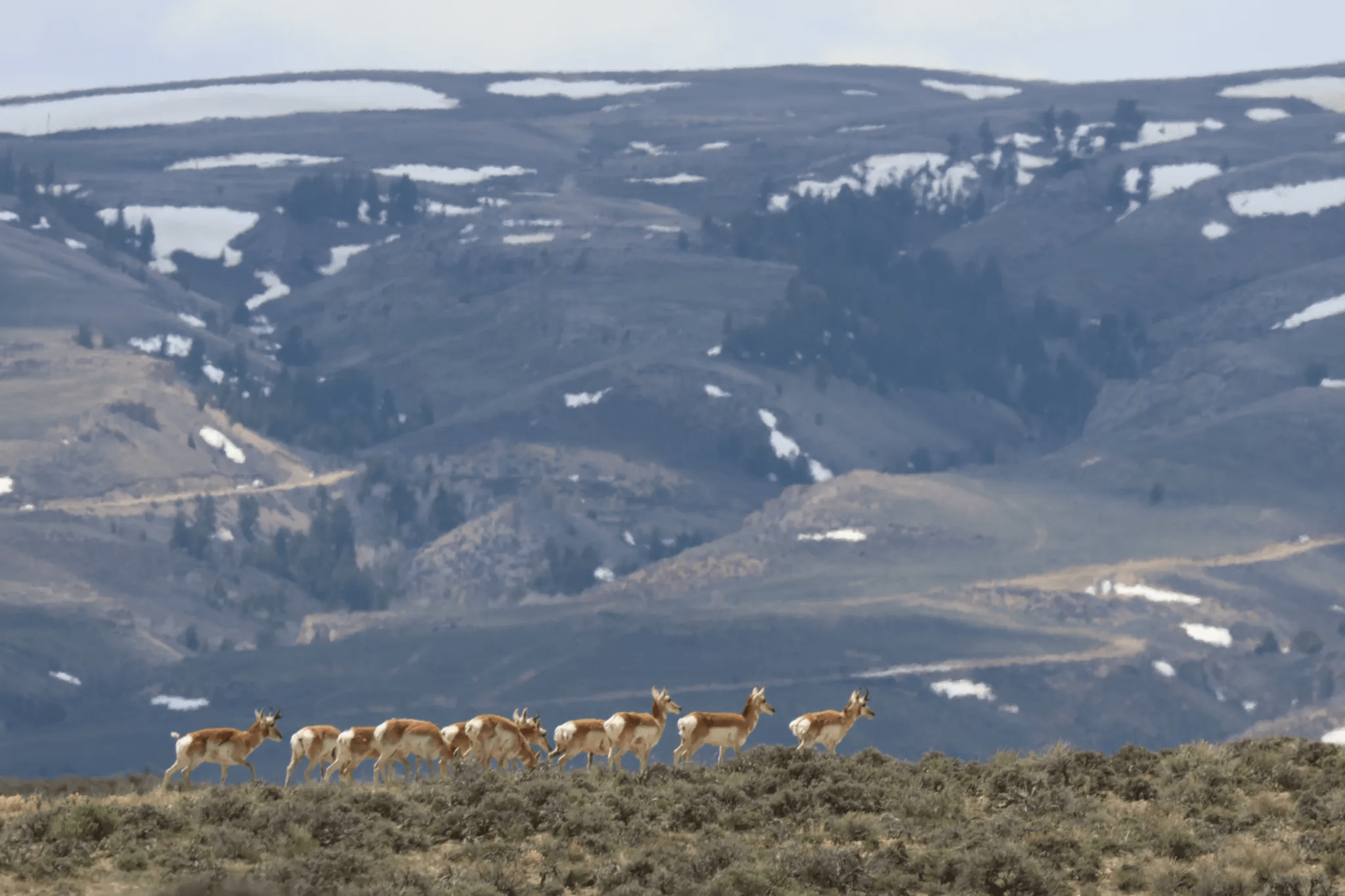
Legislation considered problematic for the Wyoming Game and Fish Department has also emerged from the growing, but minority faction of the GOP that often labels itself farther right. During the 2024 budget session, the far-right dominated Joint Agriculture Committee advanced legislation that would have required state wildlife managers to compensate landowners for grass lost to overpopulated elk herds.
That bill died at the hands of Hicks, but in the aftermath Wyoming Game and Fish is essentially voluntarily emulating the requirements in its regulations in an apparent effort to keep the Legislature at bay.
Outgoing Rep. Cyrus Western (R-Big Horn), who’s aligned with more traditional Republicans, told WyoFile he does perceive notable wildlife policies differences between the two GOP factions.
When he pushed through a bill in the 2021 session that raised the cost of a “conservation stamp” to fund public access, Freedom Caucus members “actively tried to sabotage it because it was a fee increase.”
The Sheridan County representative also worries that Freedom Caucus control of the House could mean the erosion of wildlife managed in the public trust.
“It’s right there [in statute] — Title 23, section one — ‘Wildlife is the property of the state,’” Western said.
“Most of those guys fundamentally disagree with that. They say all wildlife should belong to the property owner.”
Rep. John Winter (R-Thermopolis), who typically votes with the far-right bloc, disagreed with that assessment.
“From my perspective, the Game and Fish is doing a good job on most issues,” he said. “I think [a Freedom Caucus majority] is going to work with Game and Fish.”
The primary election is Tuesday. WyoFile will be teaming with the Associated Press to bring readers live district-by-district results of Wyoming’s congressional and legislative races.
WyoFile is an independent nonprofit news organization focused on Wyoming people, places and policy.