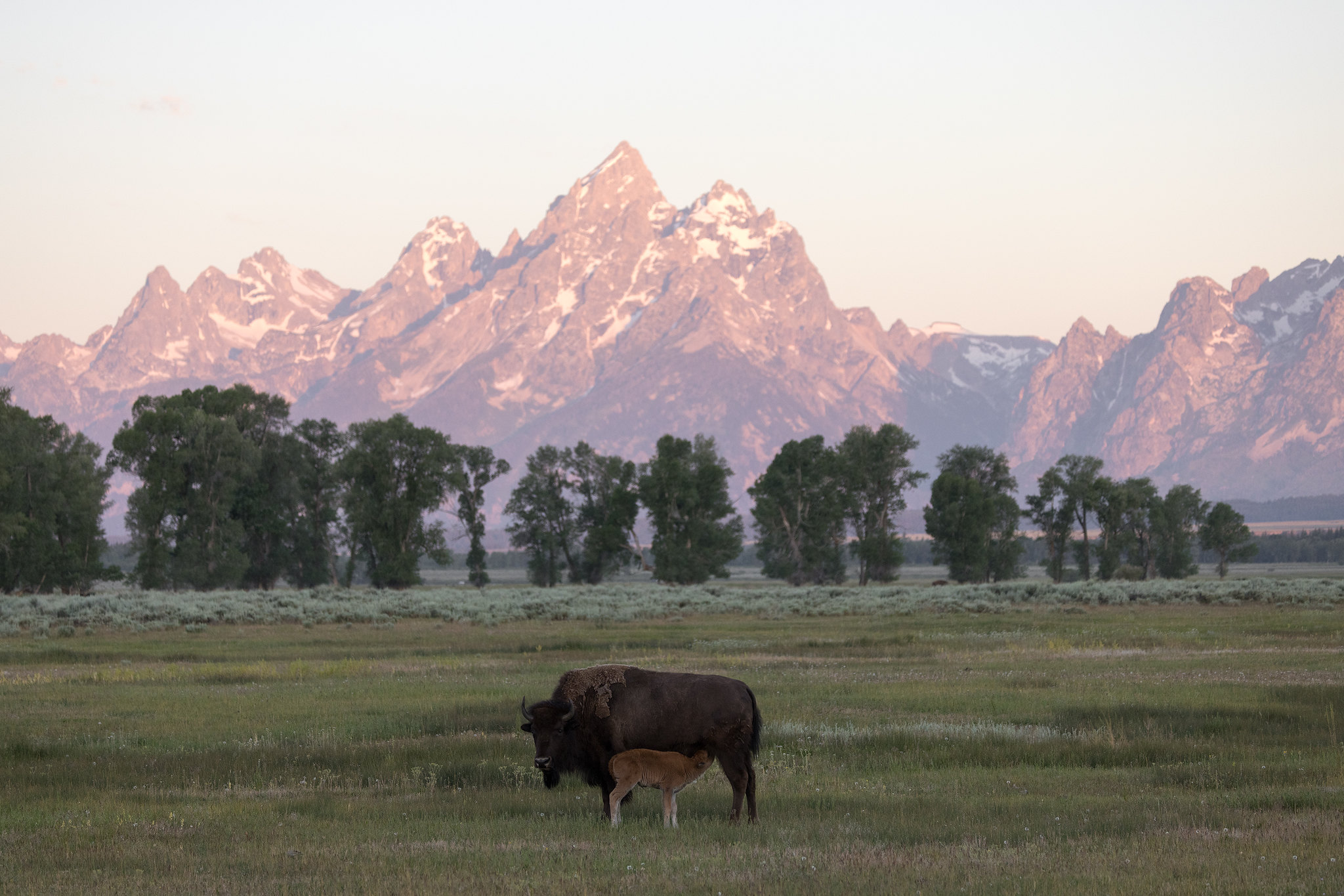
JACKSON, Wyo. — The past week has been spectacular in Jackson Hole with comfortable temperatures, dry conditions and long, sunny days with no rain. Even though we’re now in the warmest month of the year, we saw some chillier than average mornings last week with a low of 35 at the Jackson Hole Airport on Thursday (July 9).
Temperatures did warm back up over the weekend with a high of 83 on Saturday and 82 on Sunday at the airport.
Cooler than Average Start to the Summer
While much of the U.S. has experienced a very hot start to the summer relative to average — especially in Midwest and Northeast — temperatures have actually been running cooler than average in Jackson Hole and Northwest Wyoming. The 30-year average high in Jackson in July is 82 degrees, but so far this month, average highs around Jackson have only been in the upper 70s.
Through the first 11 days of July, temperatures have been about 1-4 degrees below average across Northwest Wyoming, thanks in part to a more active than usual jet stream across the Pacific Northwest and Northern Rockies for this time of year. For outdoor recreation, the temperatures have been just about perfect lately.

Looking back to last month, temperatures were below average in Jackson Hole as well during the month of June as well, in contrast to the well-above-average temperatures east of the Continental Divide.

We’ve had some warm days so far this summer, but no sustained warm spells yet, which in Jackson Hole entails high temperatures in the mid 80s or above for extended periods.
A Very Dry Start to July – Should We Be Worried?
Despite the cooler than average temperatures recently, the pattern has turned bone dry in July following a wet finish to June. The weather stations in the town of Jackson and at the Jackson Hole Airport have not recorded any rainfall since July 2, and the last time we had thunderstorms in Teton County was on July 4.
Fortunately, the wet finish to June and the cooler than average start to summer has prevented vegetation and fuels from drying out too quickly, at least so far. Our landscapes are still very green despite the dry conditions over the past 10 days.
Even so, we are in the climatological hottest month of the year and with a lack of rain, vegetation will be drying out in the coming weeks. Over the past week, the National Interagency Fire Center has upgraded Northwest Wyoming (including Bridger-Teton National Forest and Grand Teton and Yellowstone National Parks) to Moderate Fire Danger.
Still, Jackson Hole, the Northern Rockies and the Pacific Northwest are in better shape compared to our southern neighbors, where a hot, dry spring and early summer has led to elevated fire danger.

Weekly Weather Outlook – July 13-19
A trough of low pressure tracking across the Northern Rockies will bring another stretch of cooler than average temperatures over the next few days. A band of high-level moisture is leading to overcast skies on Monday morning, but other than some isolated sprinkles, we won’t see any meaningful rain. Cloud cover should decrease by Monday afternoon.
Otherwise, the dry pattern will continue for the next several days. We’ll see cooler than average but very comfortable temperatures through Wednesday with valley highs in the 70s and lows dipping into the 30s. Late in the week, temperatures will warm back up with highs in the 80s.
Another series of disturbances will approach from Friday through Sunday, and there should be enough moisture to result in a chance of afternoon thunderstorms each day through the weekend. After an extended break from storms, if you have hiking or climbing plans this weekend, don’t forget to check the daily forecasts and to plan your high elevation excursions around lightning potential.
Moving forward, the North American Monsoon looks to get going over the Four Corners states in about a week from now (~ July 20), and by July 23 or so we may start to see some of this moisture work its way north into the Jackson Hole Region. The extent of the moisture that reaches our area will determine whether or not we see beneficial rains with thunderstorms, or “dry” thunderstorms that lead to lightning-triggered wildfires.
Alan Smith, Meteorologist