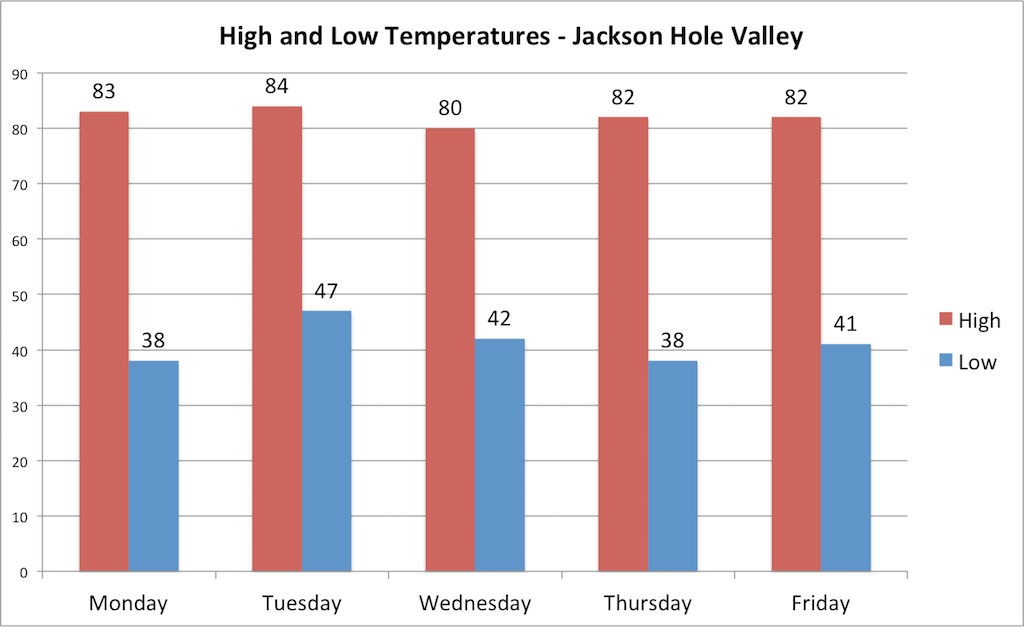
JACKSON, Wyo. — We’ve enjoyed stellar weather over the past week in Jackson Hole with decreasing thunderstorm activity, blue skies and valley high temperatures in the 80s each day. Wildflowers have been peaking above 9,000 feet as well, making it a perfect time to be explore the higher elevations.
We do have a few issues to take a look at this week, though, including our recent dry spell along with increasing fire weather concerns.
A Very Dry July and August but Cooler than Average
June was cooler and slightly wetter than average across Northwest Wyoming this year, and a period of wet weather at the end of June in particular has helped to prevent our vegetation from drying out to critical levels this summer.
Also, temperatures have been running a little cooler than average across Northwest Wyoming since July 1 and temperatures have been near to below average across all of the Northern Rockies and Pacific Northwest as well.
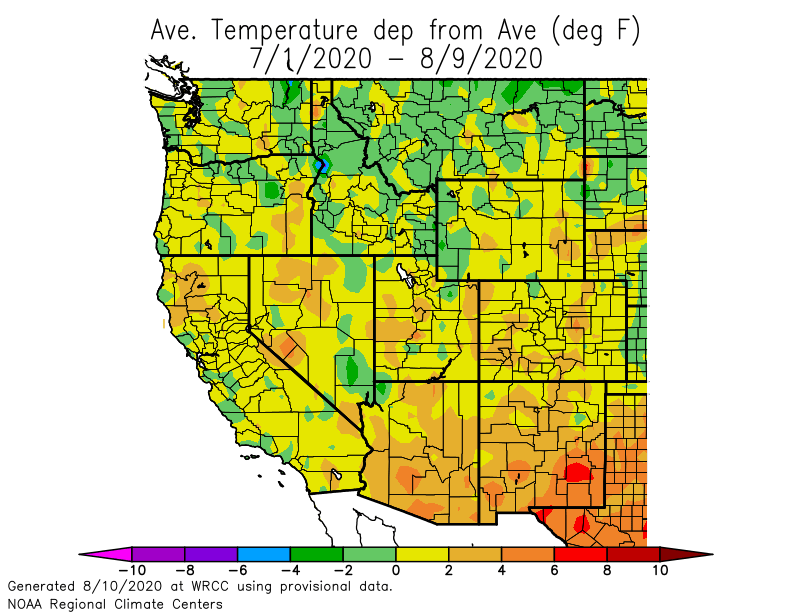
As a result, relative humidity in this region has been higher than average and fire activity has been limited. In Teton County, we haven’t had any wildfire or smoke issues so far this summer, which has been wonderful!
However, rainfall has been well below average in July and August with no signs of change on the horizon. The lack of rain is bound to catch up with us at some point as vegetation continues to dry out.
Since July 1, the Town of Jackson weather station has only received 0.52 inches of rain, and only a trace of rain through the first nine days of August. The average rainfall during this time period in Jackson is 1.67 inches. So in Jackson, rainfall since July 1 is only 31% of average.
North of town, Grand Teton National Park is not doing much better either. The Moose weather station has recorded 0.66 inches of rain since July 1, which is only 38% of average for the period July 1-August 9. Even at Grand Targhee, only 0.9 inches of rain has fallen since July 1.
The map below shows the percent of average precipitation across the Western U.S. since July 1. Nearly the entire west has been drier than average, thanks in a large part due to a lack of a seasonal monsoon.
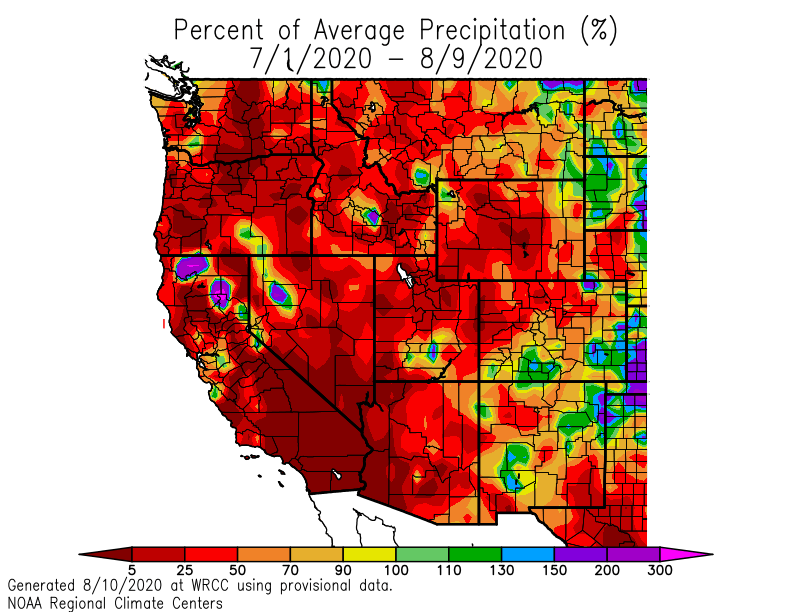
The North American Monsoon, which typically brings beneficial rains to the Four Corners states, has been almost nonexistent this year — one of the weakest monsoon seasons in a long time.
Fire Danger on the Rise this Week
Over the upcoming week, a series of low pressure troughs will pass just north of Jackson Hole. This will keep our temperatures near seasonal averages as high pressure will be suppressed to the south, but it will also lead to windy conditions each afternoon, especially late in the week.
Gusty afternoon winds and low relative humidity will lead to increasing fire weather concerns throughout the week.
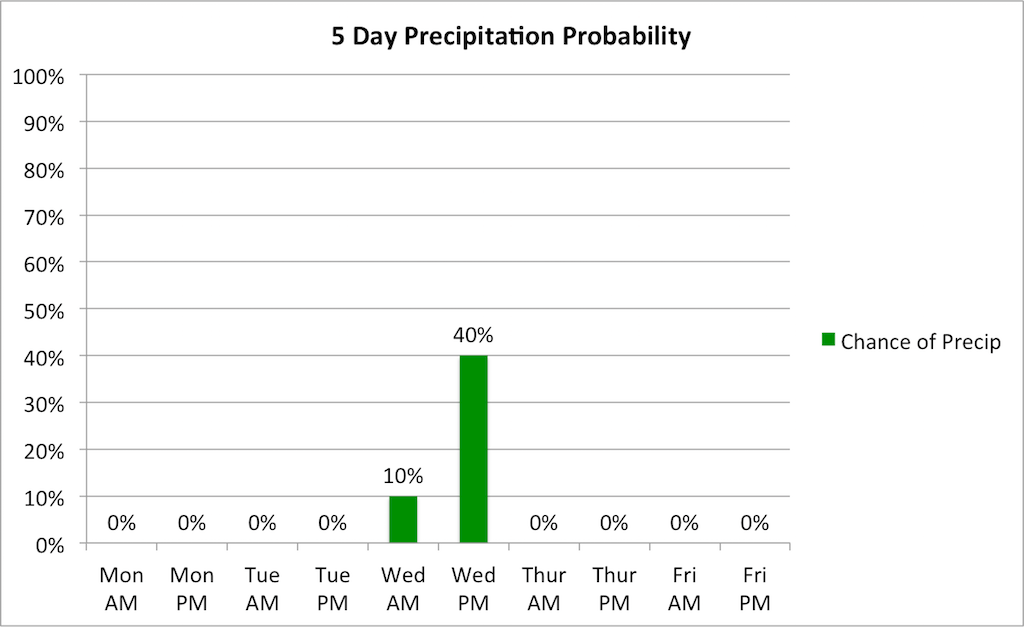
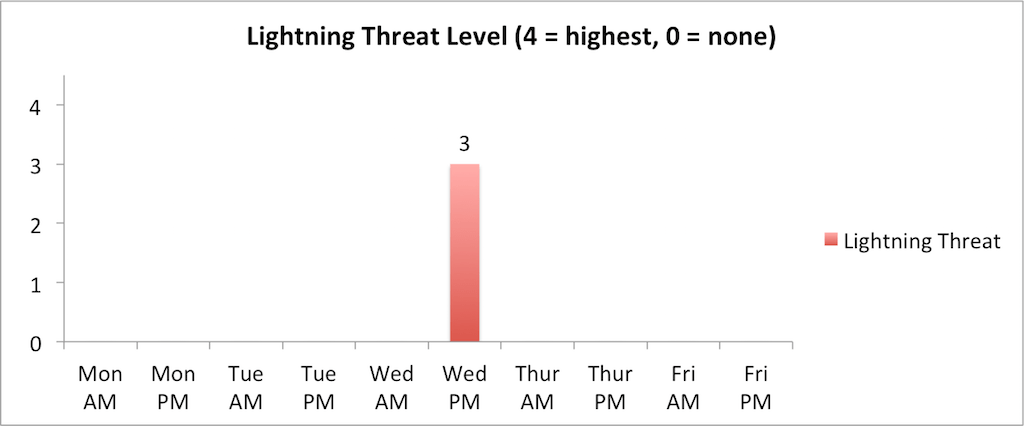
Most of the week is looking sunny and dry, but a cold front will move through the area on Wednesday with enough moisture and instability for afternoon thunderstorms to develop.
Rainfall amounts on Wednesday will be on the lighter side overall with most areas picking up less than a tenth of an inch with very localized higher amounts of 0.1-0.2 inches possible under stronger storms.
The main concern on Wednesday will be lightning-triggered wildfires. The National Interagency Fire Center has already highlighted this threat in its outlook for Wednesday as well.

Late in the week, winds will be strong on Thursday and Friday which will continue to result in high fire danger.
Heating up Late this Weekend and into Early Next Week
As we head into the weekend, winds should start to relax on Saturday with temperatures continuing to be comfortable for mid-August.
Starting on Sunday and continuing into early next week, a warm-up is likely as high pressure builds in from the south. We could see high temperatures pushing into the upper 80s to near 90 during this time.
Dry conditions will continue through at least early next week. By mid to late next week, some models are hinting at moisture from Tropical Storm Elida in the Pacific reaching our area and leading to an increasing threat of thunderstorms. However, given that this is almost 10 days out, confidence is very low.
Alan Smith, Meteorologist