


JACKSON HOLE, WYO – The Geologists of Jackson Hole are expanding their universe. Truly!

Local stargazer Dr. Samuel Singer, founder and executive director of the nonprofit Wyoming Stargazing, will present “Extraordinary in the Ordinary: The Hubble telescope–great images, incredible science” tomorrow as the GJH monthly program.
Numerous advances in technology have helped open the universe to scientists here on Earth, but perhaps none is as important as the Hubble Telescope.
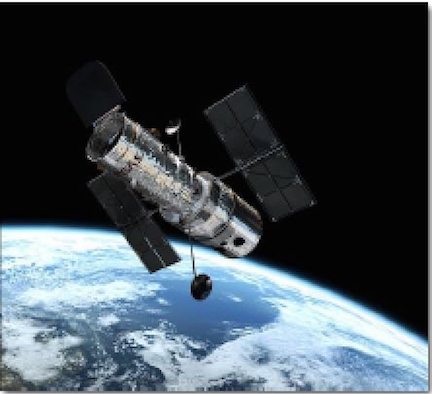
Did you know that until the early 1920s most astronomers believed the Milky Way contained all the stars in the universe? In fact, until the Hubble Space Telescope was put into orbit in 1990, no one knew there were planets beyond those in our own solar system.
“We had no idea about the number of stars in our galaxy or the number galaxies in the universe,” Singer says. “For well over 20 years now Hubble has provided what are arguably the most mesmerizing images of space ever taken, and it has contributed greatly to our understanding of the universe.”
GJH treasurer PJ Starich admits his own fascination with astronomy began in 1967 during a campout in Wisconsin with Troop 99 of the Boy Scouts.
“The next time you get a chance to look at the night sky on a dark moonless night, contemplate the dynamic geological processes underway on trillions of planetary bodies orbiting hundreds of billions of stars in the Milky Way Galaxy alone. The universe is a big place indeed,” Starich said. “If you join us for Samuel Singer’s talk this month, be prepared for a mind-blowing experience!”
Geologists of Jackson Hole presentation is Thursday, December 14 at 6pm in the Ordway Auditorium.










