


JACKSON, Wyo. – The warmest air of the early spring will reach Jackson Hole late this week with highs soaring into the 60s in the valley from Friday to Sunday. Skies will partly cloudy with isolated showers possible in the afternoons.
In typical spring rollercoaster fashion, a strong cold front will arrive next week along with a good chance of snow.
Recent Weather
During the first 10 days of April, we have seen a little bit of everything, ranging from cold and snowy conditions to warm and sunny conditions. Snowpack has lingered in the town of Jackson later than usual this year but is gradually melting away.
The snowiest day of the month was on the morning of April 1, when we woke up to 5-10 inches of new snow in the Tetons and 2-3 inches of new snow in the valley.
Dry weather and warmer temperatures prevailed from April 2-5, then we saw a few rounds of snow move through from April 6-8 with three-day snow totals of 7-13 inches in the Tetons.
Jackson managed to crack 60ºF for the first time this year on April 4, but temperatures cooled significantly last weekend with a high of 35ºF on Saturday and highs in the 40s from Sunday to Tuesday. As of this writing, we have just hit 50ºF on Wednesday afternoon.
Upcoming Weather
Big changes are heading our way late this week, with the warmest temperatures since October set to arrive.
A ridge of high pressure is building over the West Coast of the U.S. and is gradually moving eastward. Sunshine has become more abundant across the area on Wednesday as this drier and more stable airmass works its way into the area.

The high pressure ridge will work its way into the Rockies on Thursday with more significant warming occurring in the days to follow. On Thursday, high temperatures will reach the mid 50s in the valley, before warming up into the low to mid 60s from Friday through Sunday.
An area of low pressure moving into California will help to spread just enough moisture into our area from Friday to Sunday to result in afternoon cumulus cloud build-ups along with isolated showers developing.
Any shower activity will be very light and spotty, and precipitation could fall as rain up to about 9,000 feet or so.
Despite the occasional isolated showers, spring conditions will prevail on the slopes for Jackson Hole Mountain Resort’s closing weekend.
One downside of the warming is that overnight low temperatures may struggle to fall below freezing in the mountains from Friday through Sunday. As a result, a significant rise in avalanche danger is expected. Check the Bridger-Teton Avalanche Center for more details.
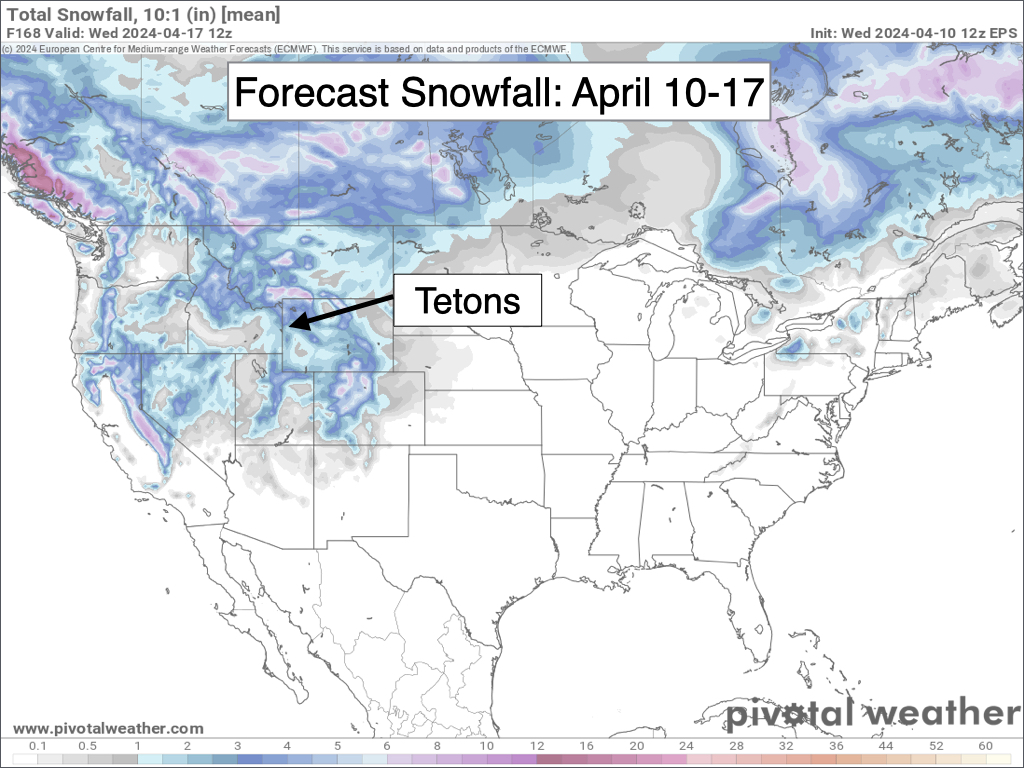
Heading into early next week, a storm is expected to approach from the northwest around Tuesday (April 16). A strong cold front will also arrive, and the result will be a significant drop in temperatures along with a good chance of snow for the Tetons.
Season Snowfall and Snowpack Update
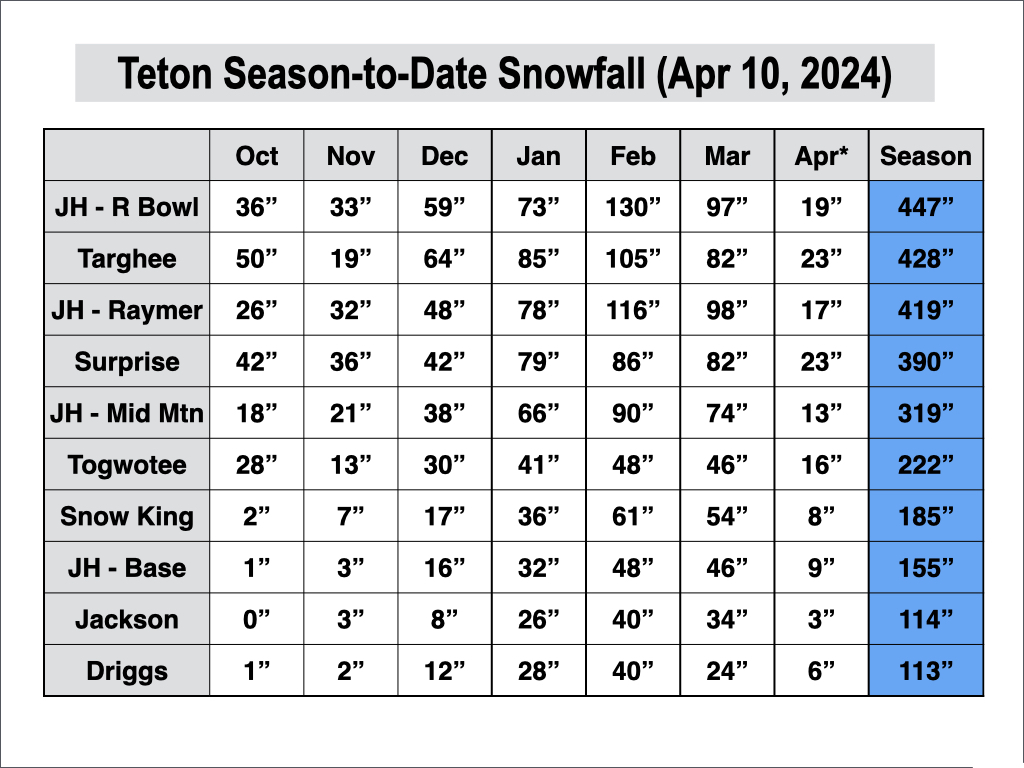
This winter started slow and finished strong with most areas ending up near to above average for the season in terms of snowfall.
Here is the monthly breakdown as of April 10:
Jackson Hole Mountain Resort closes for the season on Sunday, and minimal to no snow is expected between now and then. So let’s go ahead and take a look at this season’s snowfall compared to past seasons.
As of April 10, then Rendezvous Bowl Plot at Jackson Hole’s upper mountain has received 447 inches of snow. This is above the 30-year average of 429 inches but is below the 10-year average of 469 inches, as we have actually seen an increase in snowfall over the past 10 years compared to previous decades.
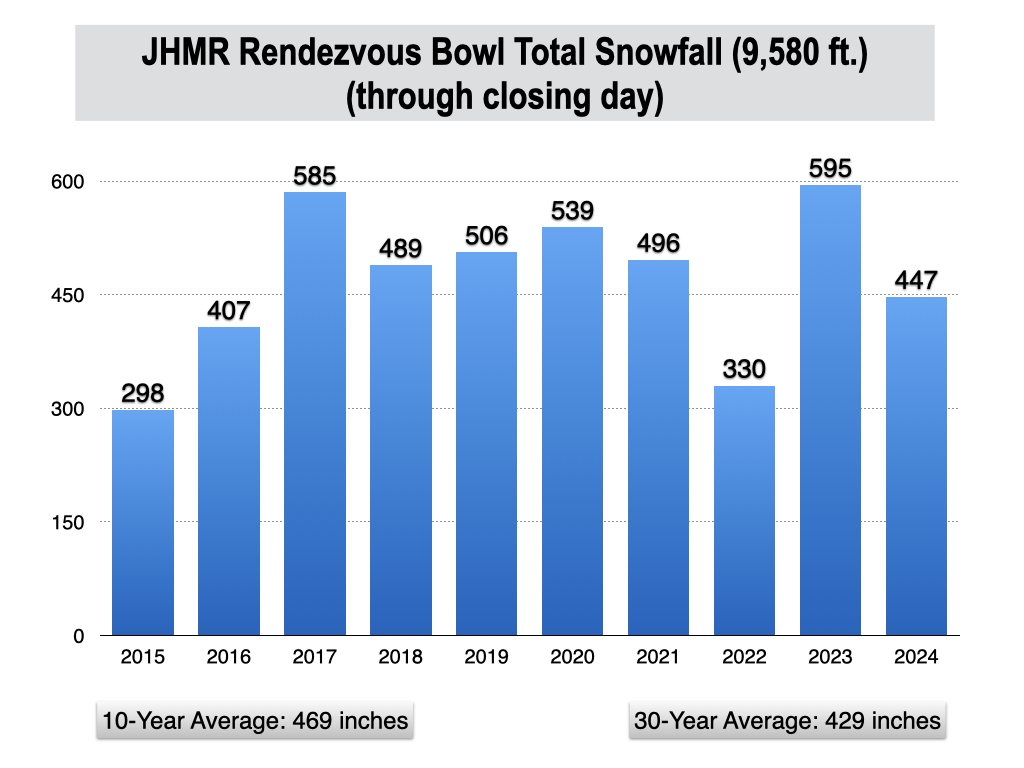
Note: For 2020, the projected closing day was used since JHMR closed early in mid-March due to COVID-19
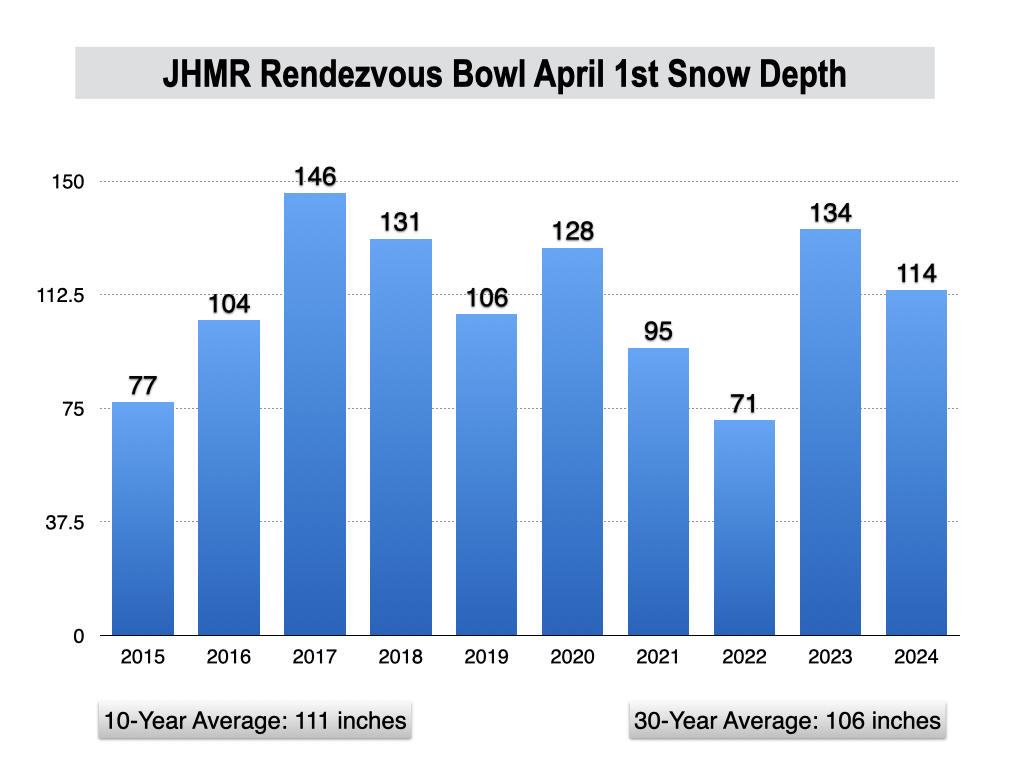
In terms of snow depth (the height of the snow on the ground), April 1 is the date typically used for season evaluation. On April 1 of this year, snow depth at the Rendezvous Bowl Plot was above the 10-year average and the 30-year average.
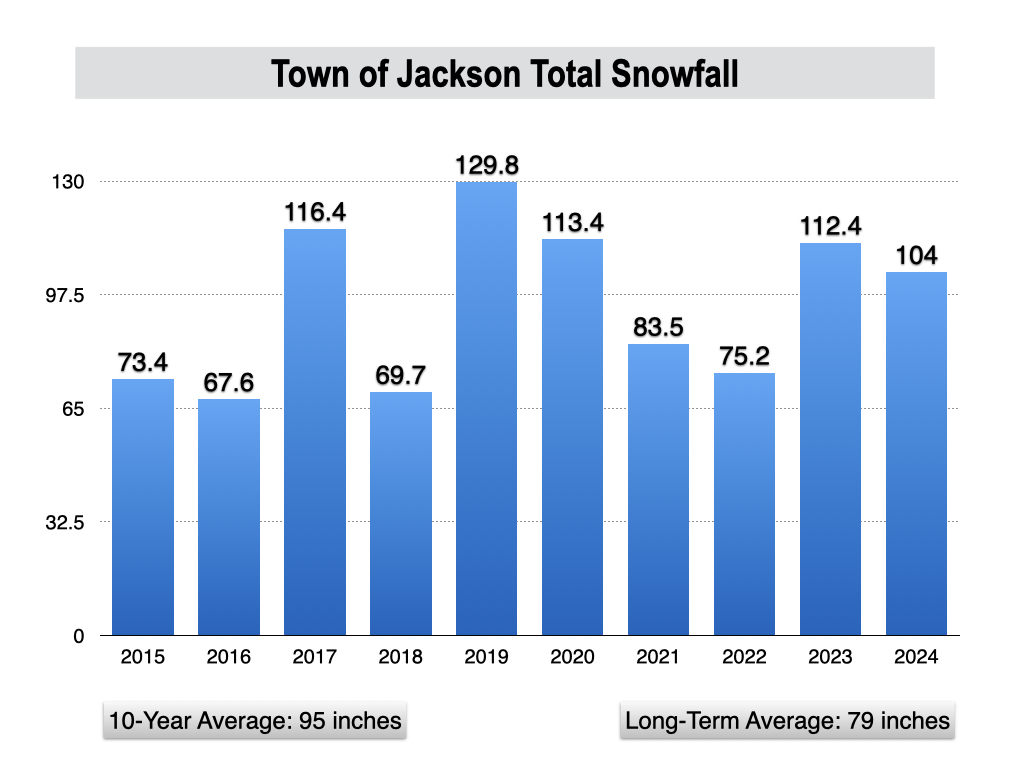
For the town of Jackson, we have picked up over 100 inches of snow this season, which is hard to believe since we had received less than a foot of snow by New Year’s.
The Cocorahs location in East Jackson has received 114 inches of snow this season as of April 10, while the official climate station near the visitor center in Jackson has received 104 inches.
Snowfall in town has been above the 10-year average and the long-term average, and snowpack has lingered much later in usual in town since the winter was backloaded (with the heaviest snow falling in February and early March).
In terms of snow water equivalent (i.e. the water content of the snowpack), we are right around average in the Upper Snake River Basin. In other words, we have a healthy snowpack heading into the spring.
Whether or not the snowpack melts at a faster rate compared to average will be dependent on temperature and precipitation in April, May and June.

Alan Smith, Meteorologist










