ROCKY MOUNTAIN WEST — On Thursday, Feb. 15, the Western Watersheds Project released a scientific report revealing livestock as the key factor in cheatgrass spread across the northwestern United States.
The report, which reviews over 500 studies spanning a century of scientific research, outlines the causes of cheatgrass spread, and compares the effectiveness of various methods to restore invaded plant communities.
According to Western Watersheds Project, cheatgrass is a widespread invasive weed occupying millions of acres in the Intermountain West, and its invasions fuel large-scale fires that degrade wildlife habitats and wipe out sagebrush communities key to the survival of sage grouse and dozens of other native wildlife species.
While cheatgrass is widespread in Teton County, Teton County Weed and Pest Entomologist Mikenna Smith told Buckrail in August 2023, that the invasive species is not as out of control here as it is in other parts of the state.
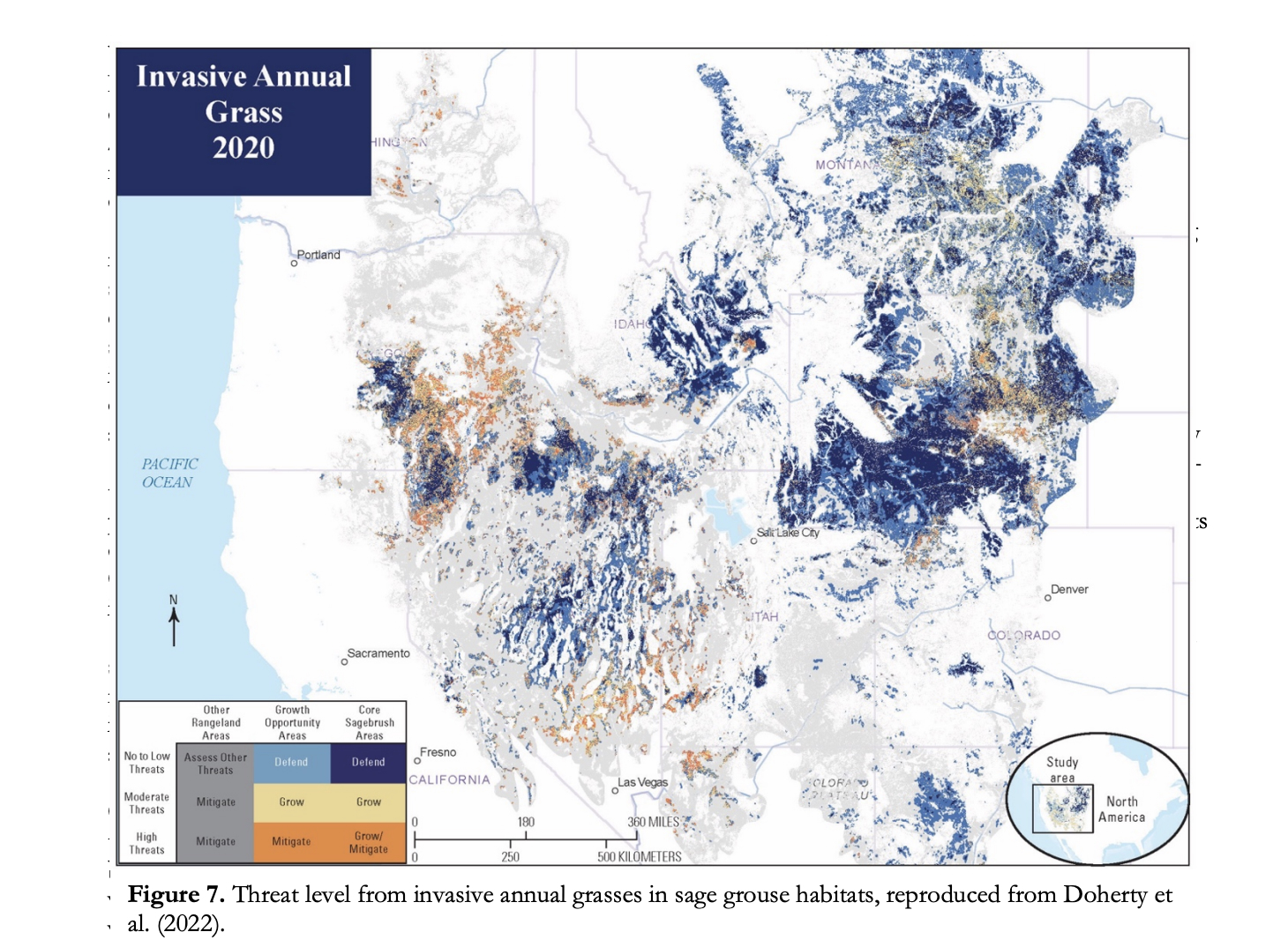
“There is a massive and comprehensive body of scientific findings specific to cheatgrass invasions, showing that disturbance from commercial activities, most notably overgrazing by domestic livestock, is the key factor in causing the spread of this invasive and flammable weed,” Erik Molvar of Western Watersheds Project said in a statement. “Conversely, in areas where land managers have maintained healthy natural ecosystems, cheatgrass is a negligible component of the plant community and is unable to establish dominance, even after fires.”
Key findings of the report include:
- Cheatgrass requires disturbance of native plant communities to gain a foothold.
- Disturbance from heavy grazing by domestic livestock is an ‘ecological switch’ that is the key trigger of widespread cheatgrass invasions.
- Industrial disturbance from road construction, oil and gas development, mining and fuelbreak construction can also cause localized cheatgrass irruptions.
- Once soils and vegetation are disturbed, cheatgrass seedlings out-compete the seedlings of native grasses for soil nutrients and water.
- Because cheatgrass is an annual that dies in early summer providing highly combustible fuel, cheatgrass infestations fuel unnaturally large range fires.
- Fire itself is not a direct cause of cheatgrass spread, and fires that occur in healthy natural ecosystems result in native bunchgrass communities post-fire, not cheatgrass monocultures.
- Healthy perennial bunch-grasses and undisturbed biological soil crusts provide a natural defense against cheatgrass invasions.
- Cheatgrass continues to expand over recent decades facilitated by land management that prescribes unsustainably heavy levels of domestic livestock grazing.
“The science on cheatgrass is similar to many other weeds,” retired state botanist for the Bureau of Land Management Roger Rosentreter said via press release. “The more soil disturbance, the more weeds.”
According to the report, it becomes difficult to eliminate cheatgrass once it has become established. Some methods, like herbicides and biological agents, have been ineffective when hundreds of thousands of acres have cheatgrass infestation. Other methods, like mechanical treatments, burning or targeted livestock grazing, risk exacerbating cheatgrass infestations. The authors recommend the sequential removal of livestock from large areas until native vegetation is re-established.