WYOMING — While fish and shellfish are an important part of a healthy diet, the Wyoming Department of Health (WDH), in cooperation with the Wyoming Game and Fish Department (WGFD), have shared recommendations on the amount and type of Wyoming-caught fish to consume to ensure safe mercury levels.
Consistent with guidance from the Environmental Protection Agency (EPA) and the Food and Drug Administration (FDA), this advisory is geared towards sensitive individuals, including those who might become or are pregnant or breastfeeding, and children under 12 years of age. The EPA and FDA have not issued general consumption guidelines for men and young people older than age 12.
“This advice can help people make informed choices about the types of fish that are nutritious and safe to eat,” the WGFD said in the announcement.
According to the WGFD, these recommendations are based on sampling from waters throughout the state where fish tissue has been tested for the presence of mercury. The samples were sent to the EPA laboratory in Golden, Colorado, for testing. Some fish contain much more methylmercury than others. Humans can safely metabolize small amounts of consumed methylmercury. At high levels, mercury can adversely affect developing fetuses and the growing brains of children.
The guidelines recommend up to two to three servings of fish a week from the “best choices” list or one serving from the “good choices” list for adults. The department recommends that children eat two servings per week from the “best choices” list.
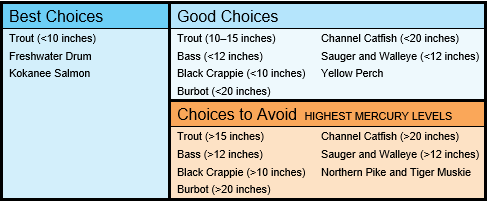
“Mercury levels increase as fish get larger and older,” WGFD said on it’s website. “As a general rule, keep smaller Wyoming-caught fish for eating. Predatory fish, such as walleye, burbot and large trout often accumulate more mercury because they eat other fish. There is no method of cooking or cleaning fish that will reduce the amount of mercury in a meal.”
The department also released a diagram about mercury levels in store bought and fish supplied to restaurants.
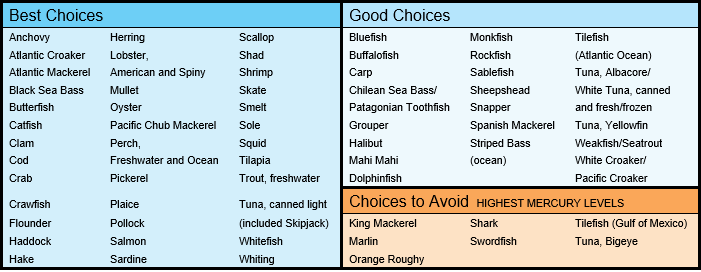
The WDH and WGFD still recommend eating a diet consisting of omega-3 rich fish.
“A well-balanced diet that includes a variety of fish and shellfish can contribute to heart health and children’s proper growth and development,” the WGFD said in the advisory. “Thus, women and young children in particular should include fish or shellfish in their diets due to the many nutritional benefits.”